Northern Lights May Be Visible in 15 States Tonight
•January 16, 2026
0
Companies Mentioned
Why It Matters
The event highlights how solar activity can directly affect public sky‑watching experiences and drive demand for space‑weather services, while also underscoring the broader impact of geomagnetic storms on communications and power grids.
Key Takeaways
- •High-speed solar wind from coronal hole triggers auroras
- •NOAA forecasts G1‑G2 geomagnetic storms across 15 states
- •Visibility peaks between 1 a.m.‑7 a.m. EST
- •Dark, clear skies increase chances of spotting auroras
- •Mobile apps provide real‑time aurora alerts
Pulse Analysis
Solar activity cycles produce coronal holes—regions of open magnetic field that spew fast‑moving plasma into space. When this high‑velocity solar wind collides with Earth’s magnetosphere, it compresses the magnetic field and induces geomagnetic disturbances. The current stream, classified as a G1‑G2 event, is strong enough to trigger visible auroral emissions at lower latitudes than usual, offering a rare chance for mid‑latitude observers to witness the phenomenon.
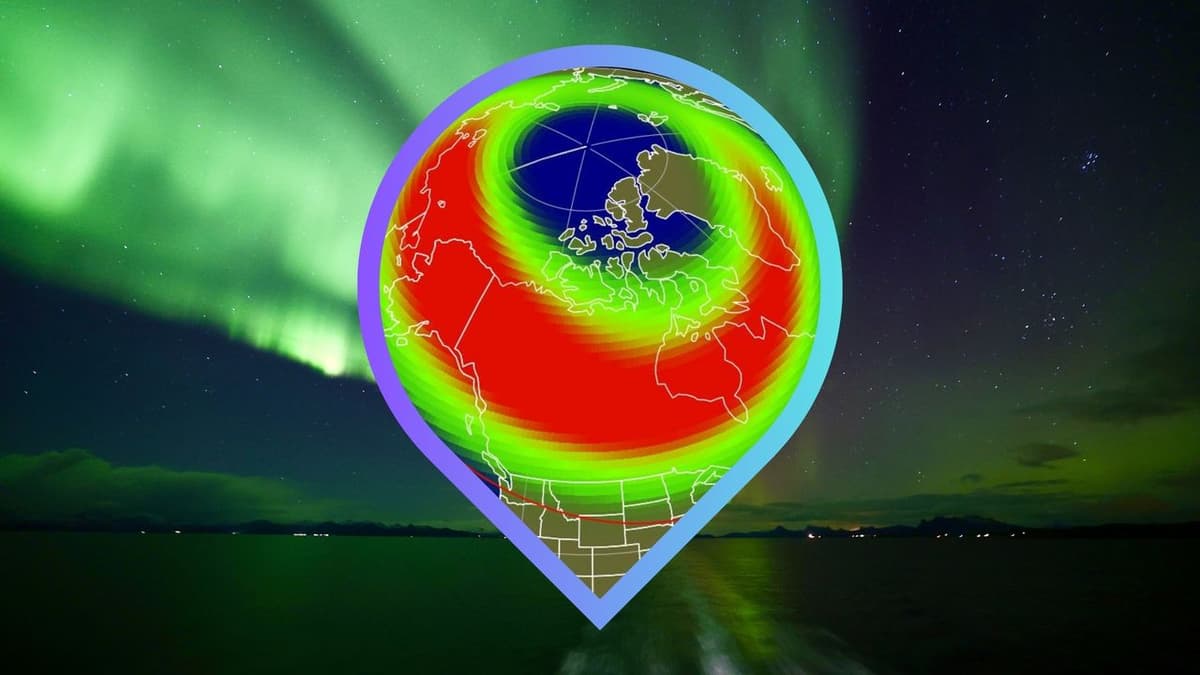
NOAA’s Space Weather Prediction Center has mapped a provisional aurora view line that stretches from Alaska through the Upper Midwest to the Northeast, encompassing fifteen states. The most favorable window falls between 1 a.m. and 7 a.m. EST, when the night sky is darkest and the geomagnetic activity peaks. Enthusiasts are encouraged to seek out dark, unobstructed locations, let their eyes adapt for at least thirty minutes, and leverage dedicated aurora‑forecast apps that push real‑time alerts based on live solar‑wind data.
Beyond the visual spectacle, such geomagnetic events have tangible economic and operational implications. Power grid operators monitor G‑level storms to mitigate transformer stress, while satellite and radio communications can experience brief disruptions. The growing market for space‑weather analytics and astrotourism services reflects both the commercial potential and the need for resilient infrastructure in an increasingly space‑weather‑aware society.
Northern lights may be visible in 15 states tonight
0
Comments
Want to join the conversation?
Loading comments...