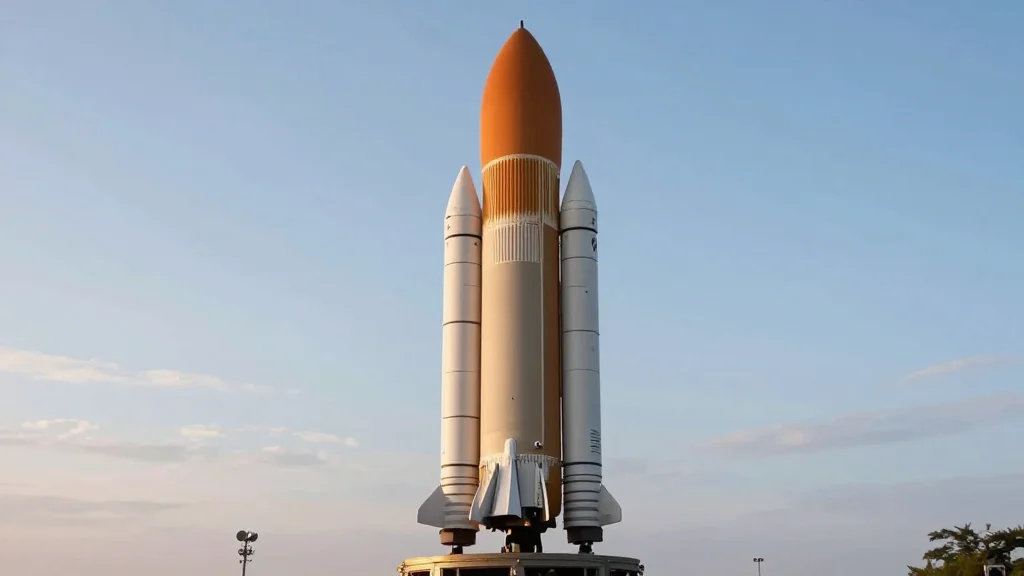
Skyroot Aerospace Hits $1 B Unicorn Valuation Ahead of First Orbital Launch

Companies Mentioned
Why It Matters
Skyroot’s elevation to unicorn status marks a watershed moment for India’s private space sector, demonstrating that domestic deep‑tech firms can attract sovereign‑wealth and institutional capital at levels previously reserved for Western incumbents. The funding not only underwrites the imminent Vikram‑1 launch but also signals that investors view India’s regulatory reforms as durable, encouraging further capital inflows into launch‑vehicle development, ground infrastructure, and satellite services. A successful Vikram‑1 mission would give India its first privately operated orbital launch capability, diversifying the global small‑sat launch market and potentially lowering costs for regional customers. It would also create a competitive pressure point for established players, prompting them to reassess pricing and service models in the Asia‑Pacific region. Conversely, any setbacks could temper the momentum of private investment and slow the policy-driven liberalisation that has underpinned the sector’s growth.
Key Takeaways
- •Skyroot Aerospace reaches >$1 bn valuation, becoming India’s first space‑tech unicorn
- •Funding round led by GIC, Temasek and BlackRock‑managed funds, adds Greenko and Mukesh Bansal to cap table
- •Valuation more than doubles from $519 million after 2023 $51 million Series B
- •Vikram‑1 launch scheduled for June 2026 from Sriharikota, 480 kg payload to 500 km sun‑synchronous orbit
- •Round will finance Vikram‑1 commercial ops, development of Vikram‑2, and repeat‑mission infrastructure
Pulse Analysis
Skyroot’s unicorn leap is less about a single financing event and more about the maturation of an ecosystem that has only existed for a handful of years. The 2020 regulatory liberalisation created a pipeline for private firms, but capital was the missing piece. By securing sovereign‑wealth backing from GIC and Temasek, Skyroot has effectively validated the Indian market for deep‑tech investors who traditionally shy away from high‑risk, long‑horizon aerospace projects.
Historically, India’s launch capability has been state‑driven, with ISRO delivering low‑cost services but retaining full control. Skyroot’s model—private development, public launch facilities, and commercial customers—mirrors the hybrid approach seen in the United States with SpaceX and Rocket Lab. The key differentiator is cost: solid‑fuel rockets like Vikram‑1 promise lower production complexity, which could translate into competitive pricing for the burgeoning small‑sat segment, especially for regional customers in Asia, Africa and the Middle East.
Looking ahead, the real test will be the operational reliability of Vikram‑1. A clean launch will unlock a cascade of contracts, enable a faster rollout of Vikram‑2, and likely attract a second wave of financing. Failure, however, could reinforce the perception that private launch in India remains experimental. Either outcome will shape the strategic calculus of global launch providers eyeing the Indian market and will influence how Indian policymakers balance support for incumbents like ISRO with the growth of private entrants.
Skyroot Aerospace Hits $1 B Unicorn Valuation Ahead of First Orbital Launch
Comments
Want to join the conversation?
Loading comments...