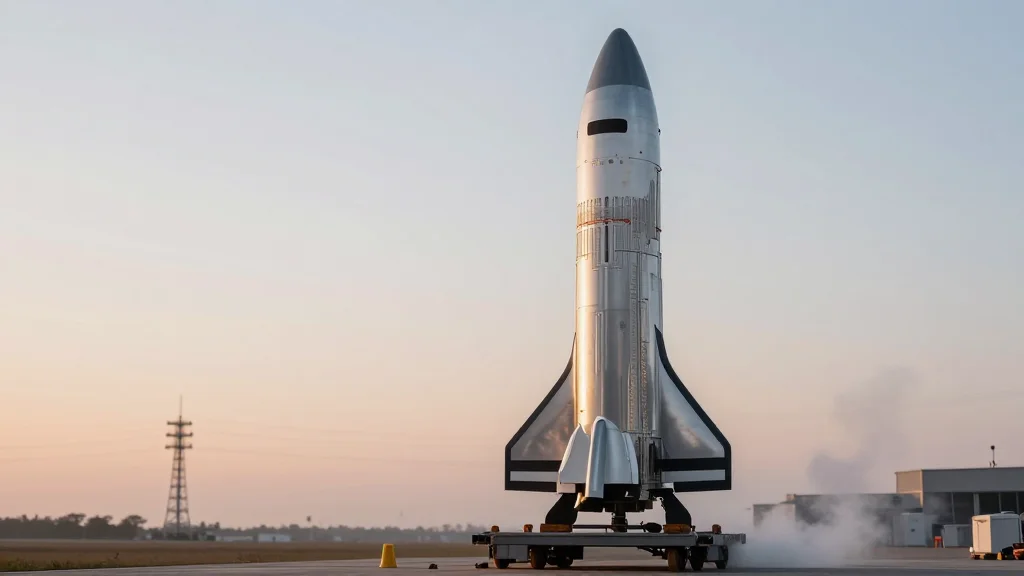
South Korean Rocket Startup Unastella Secures $24 Million Series B After First Domestic Launch

Why It Matters
Unastella’s $24 million Series B underscores a broader shift in the space industry: capital is flowing to regional players that can demonstrate end‑to‑end launch capability on home soil. By validating a domestically built rocket, the startup reduces reliance on foreign launch services and strengthens South Korea’s strategic autonomy in space. The funding also signals confidence from both venture capital and state‑linked investors in the commercial viability of small‑satellite launch markets, a segment projected to grow alongside the overall launch services industry. The success of Unastella could catalyze a virtuous cycle for Asia’s space sector. A reliable, low‑cost launch provider would attract satellite operators, stimulate ancillary supply chains, and encourage further government‑industry collaborations. As the region competes with established players like SpaceX and emerging rivals such as Rocket Lab, Unastella’s progress may influence policy decisions, regulatory frameworks, and the allocation of public research funds toward private launch initiatives.
Key Takeaways
- •Unastella closed a $24 million Series B, total funding now $44 million
- •Founded four years ago, the startup launched UNA EXPRESS‑I from Korean soil in May 2025
- •Uses kerosene/LOX propulsion with an electric‑motor turbopump, trading payload capacity for simplicity
- •22‑person team handles design, manufacturing, ground operations and flight data in‑house
- •Global launch services market projected to grow from $15 billion in 2023 to $41 billion by 2030
Pulse Analysis
Unastella’s latest financing round reflects a maturing Asian launch ecosystem that is moving beyond proof‑of‑concept toward commercial scalability. The company’s decision to adopt an electric‑motor pump—mirroring Rocket Lab’s Electron—offers a cost advantage but also imposes a payload penalty, positioning Unastella squarely in the niche of ultra‑small satellite delivery. This focus aligns with the burgeoning demand for constellations of nanosatellites, where launch frequency and price per kilogram are more critical than sheer lift capacity.
Historically, South Korea’s launch capability has been state‑driven, epitomized by the Nuri program. Unastella’s private‑sector model, backed by both venture capital and the Korea Development Bank, signals a hybrid financing approach that could become a template for other Asian startups. By keeping the entire value chain internal, the firm reduces dependency on foreign suppliers, a strategic benefit given geopolitical tensions in the region. However, the trade‑off is operational risk; scaling from a single sub‑orbital test to a reliable commercial cadence will require rigorous testing, certification and a steady pipeline of paying customers.
Looking forward, Unastella’s success will hinge on its ability to convert technical milestones into commercial contracts. If UNA EXPRESS‑II achieves the 100‑km sub‑orbital flight and demonstrates rapid turnaround, it could attract payloads from Korean defense firms and regional satellite operators seeking a domestic launch option. Conversely, failure to meet launch cadence or cost targets could dampen investor enthusiasm and slow the broader momentum of Asia’s private launch sector. The next 12‑18 months will therefore be a litmus test for whether South Korea can nurture a sustainable, privately funded launch industry that competes on the global stage.
South Korean Rocket Startup Unastella Secures $24 Million Series B After First Domestic Launch
Comments
Want to join the conversation?
Loading comments...