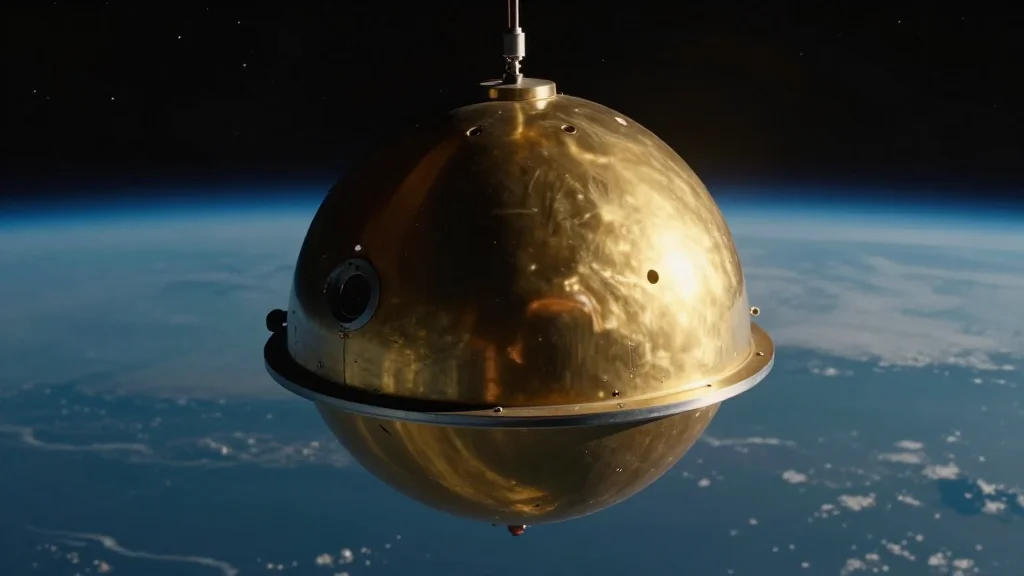
Space Force Issues Twelve Companies Golden Dome Contracts Worth $3.2 Billion
Companies Mentioned
Why It Matters
The funding accelerates the U.S. push for space‑based missile defense, reshaping strategic deterrence and creating a new market for defense innovators.
Key Takeaways
- •$3.2 billion awarded to twelve firms for Golden Dome prototypes.
- •Contracts use OTA mechanism to speed innovation.
- •Major defense primes and startups compete side‑by‑side.
- •Goal: intercept missiles from space after launch.
- •Program could reshape U.S. missile‑defense architecture.
Pulse Analysis
The Golden Dome initiative marks the most ambitious effort yet to place missile‑intercept capability in orbit. By targeting threats after launch, the system promises a faster, higher‑altitude layer that complements ground‑based THAAD and Aegis assets. Analysts see this as a logical evolution of the U.S. strategic deterrent, especially as adversaries develop hypersonic glide vehicles that challenge traditional defenses. The program also reflects a broader shift toward integrating space as an active warfighting domain, a concept that has gained traction since the establishment of the Space Force in 2019.
The $3.2 billion award leverages the Other Transaction Authority, a flexible contracting tool that sidesteps some of the Federal Acquisition Regulation’s constraints. OTA contracts encourage rapid prototyping, risk‑sharing, and collaboration with non‑traditional defense firms. By mixing legacy primes—Lockheed Martin, Northrop Grumman, Raytheon—with agile newcomers such as Anduril, True Anomaly, and GITAI USA, the Space Force hopes to harvest a spectrum of ideas, from AI‑driven targeting to modular satellite architectures. This competitive blend is designed to shorten development cycles and lower costs while preserving high‑performance standards.
If successful, Golden Dome could redefine the United States’ missile‑defense posture, offering a credible shield against ballistic and hypersonic threats launched from anywhere on the globe. The program’s scale also signals to allies and rivals that the U.S. is willing to invest heavily in space‑centric security solutions, potentially spurring allied procurement and prompting adversaries to accelerate counter‑space capabilities. Budgetary scrutiny will intensify as the Department of Defense balances this high‑tech ambition against other priorities, but the strategic payoff—protecting critical assets and maintaining deterrence superiority—makes the investment hard to ignore.
Space Force issues twelve companies Golden Dome contracts worth $3.2 billion
Comments
Want to join the conversation?
Loading comments...