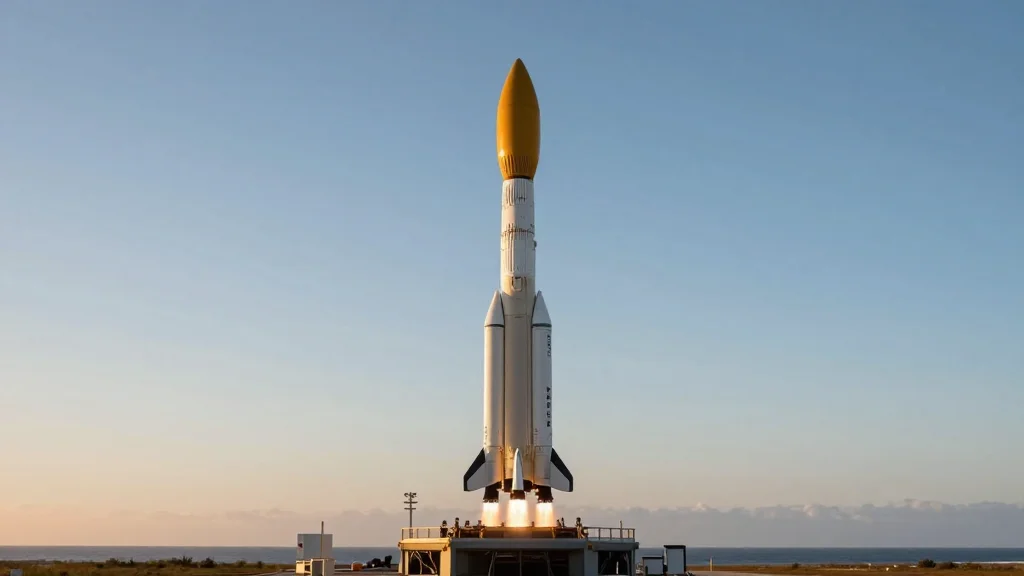
SpaceX Adds 24 Starlink Satellites From Vandenberg, Boosting Constellation Past 10,000

Companies Mentioned
Why It Matters
The addition of 24 satellites brings the Starlink network beyond the 10,000‑satellite mark, a scale that translates into broader global coverage and higher redundancy for broadband services. For consumers in remote or underserved areas, the expanded constellation promises faster, more reliable internet access, narrowing the digital divide. From an industry perspective, the launch underscores SpaceX’s ability to sustain a rapid launch cadence while reusing boosters at scale. This operational model pressures competitors to accelerate their own reusable launch capabilities and to secure orbital slots, potentially reshaping the economics of satellite broadband and low‑Earth‑orbit services.
Key Takeaways
- •SpaceX launched 24 Starlink satellites from Vandenberg on May 6, 2026
- •Booster B1081 completed its 24th flight and landed on ‘Of Course I Still Love You’
- •The landing was the 195th on the drone ship and the 609th overall for SpaceX
- •Starlink constellation now exceeds 10,000 operational satellites
- •Launch demonstrates high‑tempo, dual‑coast launch strategy
Pulse Analysis
SpaceX’s latest Vandenberg launch illustrates the company’s mastery of a high‑frequency, dual‑coast launch cadence that few rivals can match. By reusing booster B1081 for a 24th flight, SpaceX continues to push the envelope on hardware longevity, driving down per‑launch costs and enabling a price‑competitive broadband offering. This operational efficiency is a strategic lever that not only fuels growth in the Starlink subscriber base but also creates a barrier to entry for newer constellations that lack comparable reuse infrastructure.
The 10,000‑satellite milestone is more than a numeric bragging point; it signals a network density that can support higher throughput and lower latency, essential for emerging applications like remote education, telemedicine, and edge‑computing services. As the network matures, SpaceX will likely transition from pure broadband provision to value‑added services, leveraging its global footprint to bundle connectivity with data analytics and IoT platforms.
Regulatory scrutiny remains a wildcard. While SpaceX’s debris‑mitigation record is strong, the sheer volume of satellites raises concerns about orbital congestion and spectrum interference. How the Federal Communications Commission and international bodies respond could influence launch licensing, spectrum allocation, and ultimately the pace at which SpaceX can continue to expand. The company’s ability to navigate these policy challenges while maintaining its launch cadence will be a decisive factor in whether Starlink can sustain its market dominance in the next decade.
SpaceX adds 24 Starlink satellites from Vandenberg, boosting constellation past 10,000
Comments
Want to join the conversation?
Loading comments...