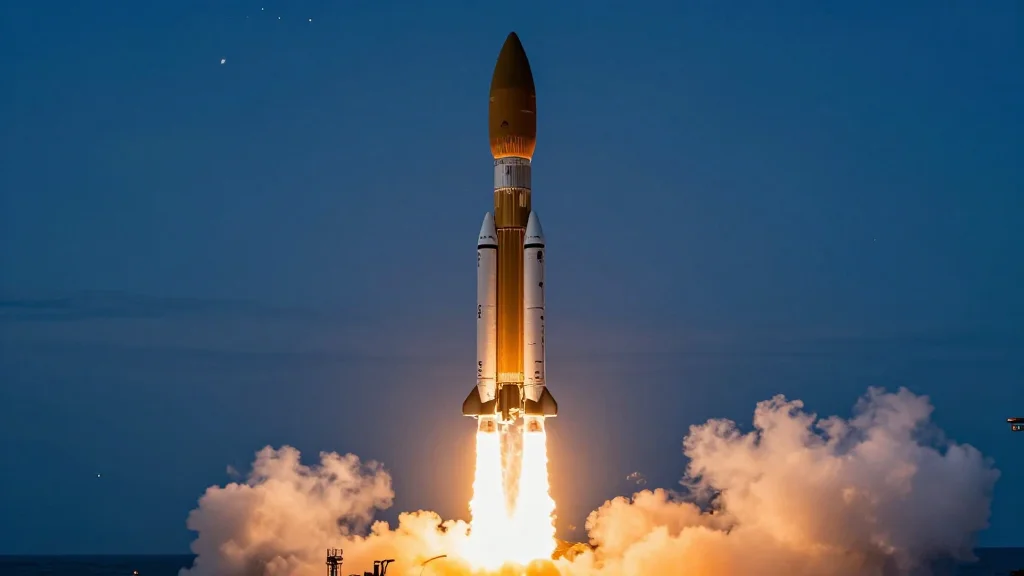
SpaceX Launches 46th Starlink Mission, Adding 29 Broadband Satellites

Companies Mentioned
Why It Matters
The addition of 29 V2 Mini satellites pushes Starlink beyond the 10,000‑satellite mark, a symbolic threshold that signals the transition from a rapid‑deployment phase to a mature, service‑oriented network. By expanding coverage and redundancy, SpaceX can deliver more reliable internet to remote communities, disaster zones, and mobile platforms, narrowing the digital divide on a global scale. The launch also intensifies competition in the burgeoning LEO broadband market. With OneWeb and Project Kuiper still scaling up, SpaceX’s ability to launch frequently and at lower cost pressures rivals to accelerate their own timelines, potentially leading to price competition and faster innovation across the sector. Regulators will watch the growing constellation closely, balancing spectrum management, orbital debris mitigation, and national security considerations.
Key Takeaways
- •SpaceX launched 29 V2 Mini Starlink satellites on May 21, 2026.
- •The mission, Starlink 10‑31, was the 46th Starlink launch of the year.
- •Starlink constellation now exceeds 10,000 operational satellites.
- •Launch occurred at 6:04 a.m. EDT (1004 UTC) from SLC‑40, Cape Canaveral.
- •Weather conditions were 90 % favorable, with minimal cloud interference.
Pulse Analysis
SpaceX’s relentless launch cadence is reshaping the economics of satellite broadband. By vertically integrating rocket manufacturing, satellite production, and ground infrastructure, the company can undercut traditional launch providers and pass cost savings to downstream services. This vertical integration also reduces lead times; the 29‑satellite batch was ready for flight within weeks of final assembly, a speed that legacy aerospace firms struggle to match.
Historically, LEO constellations have suffered from high churn rates and limited service quality due to sparse coverage. Starlink’s current trajectory—adding roughly 150 satellites per month—means the network can achieve near‑global coverage faster than any predecessor. The V2 Mini platform, with its lighter mass and improved propulsion, further accelerates deployment while lowering per‑satellite cost. As the constellation densifies, the marginal benefit of each new satellite diminishes, shifting the competitive focus to software, ground‑station density, and user‑terminal technology.
Looking forward, the key risk for SpaceX lies in regulatory and orbital‑debris constraints. While the company has a strong safety record, the sheer volume of satellites raises concerns about collision risk and long‑term sustainability. If international bodies impose stricter debris‑mitigation rules or limit spectrum allocations, SpaceX may need to adapt its launch schedule or invest in active de‑orbit technologies. Nonetheless, the current momentum suggests that Starlink will remain the dominant player in LEO broadband for the foreseeable future, compelling rivals to innovate or consolidate.
SpaceX launches 46th Starlink mission, adding 29 broadband satellites
Comments
Want to join the conversation?
Loading comments...