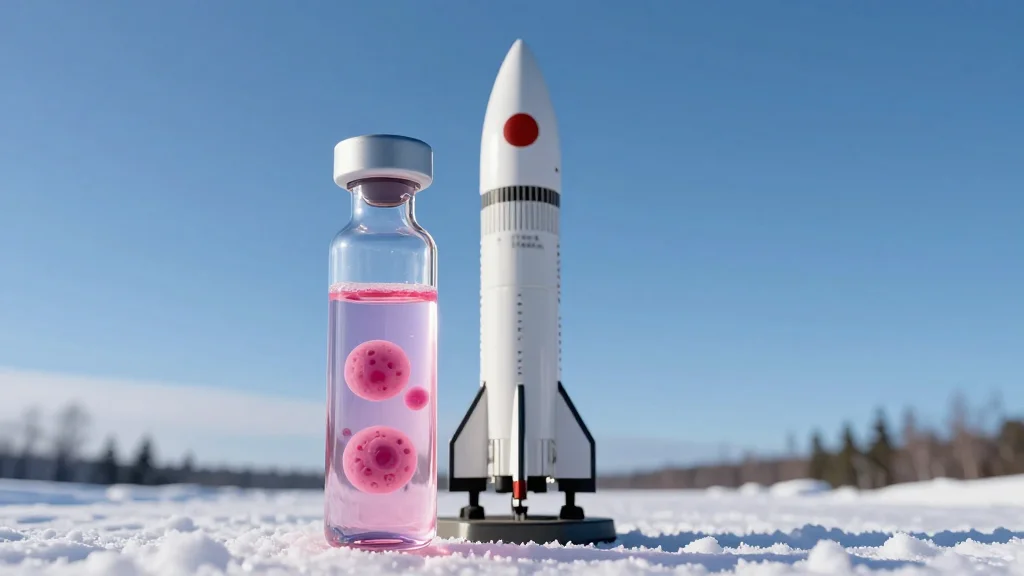
SPARK Microgravity to Launch Live Cancer Cells in Microgravity Test Flight

Why It Matters
The SPARK Microgravity flight tackles a core bottleneck in oncology drug development: the lack of physiologically relevant in‑vitro models. By leveraging microgravity to grow tumor spheroids that better mimic human tissue architecture, researchers hope to obtain more predictive data on drug efficacy and toxicity, shortening the time to market for promising therapies. Moreover, the mission showcases how small‑sat platforms can democratize access to space for life‑science experiments, expanding the ecosystem of space‑based biotech startups. If the BIOBOX system proves reliable, it could catalyze a shift toward routine microgravity experiments for a range of biomedical applications, from tissue engineering to infectious‑disease modeling. This would deepen the integration of space technology into mainstream pharmaceutical R&D, blurring the line between traditional lab work and orbital research.
Key Takeaways
- •SPARK Microgravity’s BIOBOX payload, size of an oat‑milk carton, carries live triple‑negative breast cancer cells
- •First oncology‑focused microgravity flight, launching from Esrange, Sweden, in May 2026
- •Allison Bajet highlights how microgravity eliminates the flat‑dish distortion that causes 90% of drug failures in early testing
- •Helogen’s Shishir Bankapur stresses the need for 3‑D tumor models to assess drug penetration
- •Success could open a $5 billion market for space‑based life‑science platforms by 2030
Pulse Analysis
SPARK’s microgravity experiment arrives at a moment when the economics of low‑Earth orbit are finally aligning with the needs of biotech. The dramatic reduction in launch costs—driven by reusable rockets and standardized small‑sat buses—means that a single flight can now be priced in the low‑hundreds of thousands of dollars, a fraction of the expense of traditional animal studies. This cost shift is likely to accelerate adoption among mid‑size pharma firms that previously could not justify the capital outlay for space experiments.
Historically, space‑based biology has been the domain of national labs and large aerospace contractors. SPARK’s approach—packaging a fully autonomous, crew‑free laboratory into a micro‑payload—represents a paradigm shift toward commercial, on‑demand research. If the mission validates the BIOBOX’s ability to maintain cell viability and deliver high‑resolution data, it will set a technical benchmark that competitors will scramble to match, potentially spawning a new niche of orbital contract research services.
From a strategic perspective, the venture also underscores the growing convergence of two traditionally separate sectors: oncology and space technology. By positioning microgravity as a solution to the high attrition rates that plague drug pipelines, SPARK is not just selling a flight; it is selling a risk‑mitigation tool. Investors and pharmaceutical executives will likely view the upcoming flight as a litmus test for the broader viability of space‑enabled drug discovery, influencing future funding allocations and partnership strategies across the industry.
SPARK Microgravity to Launch Live Cancer Cells in Microgravity Test Flight
Comments
Want to join the conversation?
Loading comments...