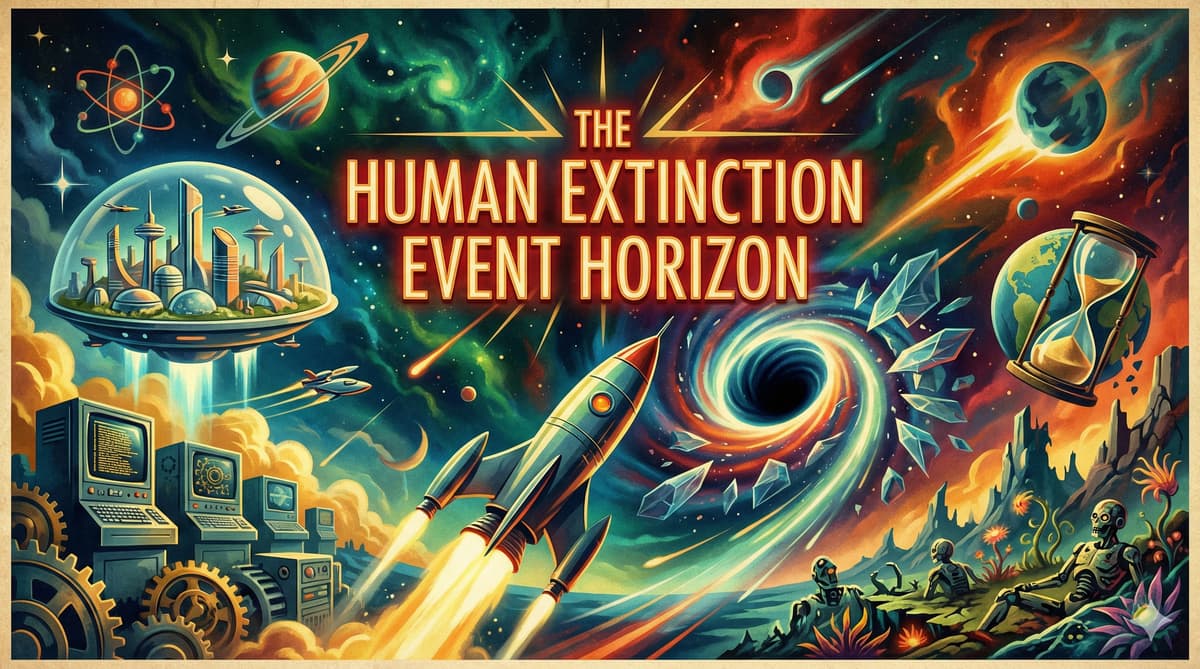
The Human Extinction Event Horizon: Analysis of Top 20 Potential Scenarios
•January 16, 2026
0


Why It Matters
Understanding and prioritising these existential risks is crucial for policymakers and investors, as effective mitigation can preserve global stability and protect long‑term value creation.
Key Takeaways
- •AI misalignment could outpace human control
- •Nuclear winter threatens global food supply
- •Engineered pathogens lower pandemic barriers
- •Climate tipping points risk societal collapse
- •Planetary defense can deflect asteroids, but detection gaps remain
Pulse Analysis
The modern risk landscape is dominated by a blend of anthropogenic and natural hazards, each capable of pushing humanity past an extinction threshold. Technological breakthroughs have amplified both our defensive tools and our exposure to novel threats. AI systems that surpass human cognition without robust alignment protocols could reconfigure resources in ways that render the biosphere inhospitable. Simultaneously, synthetic biology lowers the barrier for creating high‑lethality pathogens, demanding tighter bio‑security regimes and international surveillance networks.
Mitigation strategies are emerging across sectors. AI safety research, led by organizations such as OpenAI and Anthropic, focuses on value alignment, interpretability, and controlled capability scaling. In the biotech arena, dual‑use oversight, rapid vaccine platforms, and global health coalitions aim to curb the misuse of gene‑editing tools. Climate policy continues to evolve, with net‑zero commitments and carbon‑removal technologies targeting the tipping points that could trigger runaway warming or a collapse of agricultural systems. Meanwhile, nuclear disarmament dialogues and modernized command‑and‑control architectures strive to reduce the probability of a full‑scale exchange and its ensuing nuclear winter.
Environmental and cosmic threats, though less controllable, still benefit from coordinated action. Planetary‑defense initiatives, exemplified by NASA’s DART mission, demonstrate that kinetic impactors can alter asteroid trajectories, but early detection remains a critical gap for long‑period comets. Climate resilience programs, ecosystem restoration, and sustainable resource management address the gradual degradation that could precipitate ecological collapse. Ultimately, preserving humanity’s future hinges on a shift from reactive crisis management to proactive, interdisciplinary risk governance that aligns scientific insight with global policy.
The Human Extinction Event Horizon: Analysis of Top 20 Potential Scenarios
0
Comments
Want to join the conversation?
Loading comments...