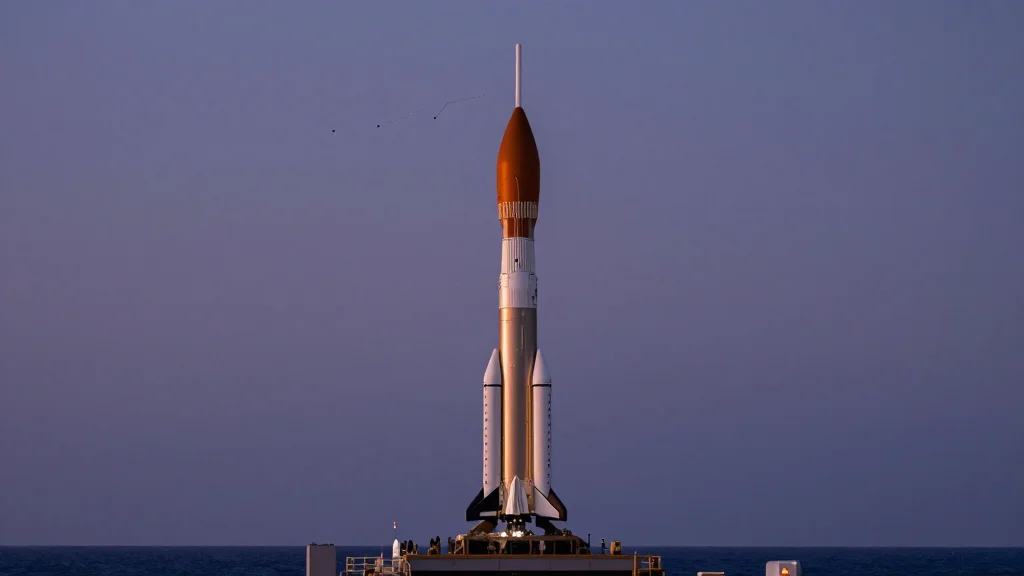
ULA’s Atlas-5 Rocket Launches 29 Leo Satellites for Amazon
Companies Mentioned


Why It Matters
Amazon’s inability to meet the FCC deployment schedule threatens its broadband constellation timeline, while ULA’s accelerated Atlas‑5 usage highlights supply‑chain pressures in the launch market.
Key Takeaways
- •Amazon now has 331 of 1,616 required LEO satellites.
- •Only seven Atlas‑5 rockets remain; one reserved for Amazon launches.
- •Vulcan and New Glenn rockets grounded, delaying Amazon’s schedule.
- •FCC is reviewing Amazon’s request for a launch‑deadline extension.
Pulse Analysis
Amazon’s Project Kuiper aims to deploy a 3,236‑satellite broadband constellation, but the FCC has mandated that at least 1,616 satellites be in orbit by July 2026. The recent Atlas‑5 launch adds 29 units, nudging the total to 331, yet the gap remains substantial. Delays stem from multiple sources: ULA’s legacy Atlas‑5 fleet is dwindling, its Vulcan successor is grounded for technical issues, and Blue Origin’s New Glenn is also offline. Consequently, Amazon’s launch cadence relies heavily on a patchwork of providers, creating scheduling uncertainty and pressuring the company to seek regulatory relief.
ULA’s decision to accelerate the final Atlas‑5 missions reflects both a strategic push to monetize remaining inventory and a response to the launch market’s bottlenecks. With only seven rockets left—one earmarked for Kuiper—the company is spacing launches roughly a month apart, a tempo that rivals newer entrants but cannot sustain long‑term demand. Meanwhile, SpaceX continues to dominate with 63 launches in 2026, underscoring the competitive advantage of reusable vehicles and a robust launch manifest. The Atlas‑5’s retirement will shift more payloads to Vulcan once it clears certification, but the current grounding prolongs reliance on older hardware.
Regulators are now weighing Amazon’s request for an extension, a move that could set precedent for other satellite operators facing similar supply constraints. An approved extension would give Kuiper additional months to secure launch slots, potentially reshaping its rollout strategy and market entry timeline. For investors, the situation highlights the fragility of satellite‑constellation timelines and the importance of diversified launch options. As the industry awaits Vulcan’s return and new entrants like Arianespace’s Ariane‑6 to fill gaps, the balance of power among launch providers may shift, influencing pricing, capacity, and ultimately the speed at which global broadband ambitions materialize.
ULA’s Atlas-5 rocket launches 29 Leo satellites for Amazon
Comments
Want to join the conversation?
Loading comments...