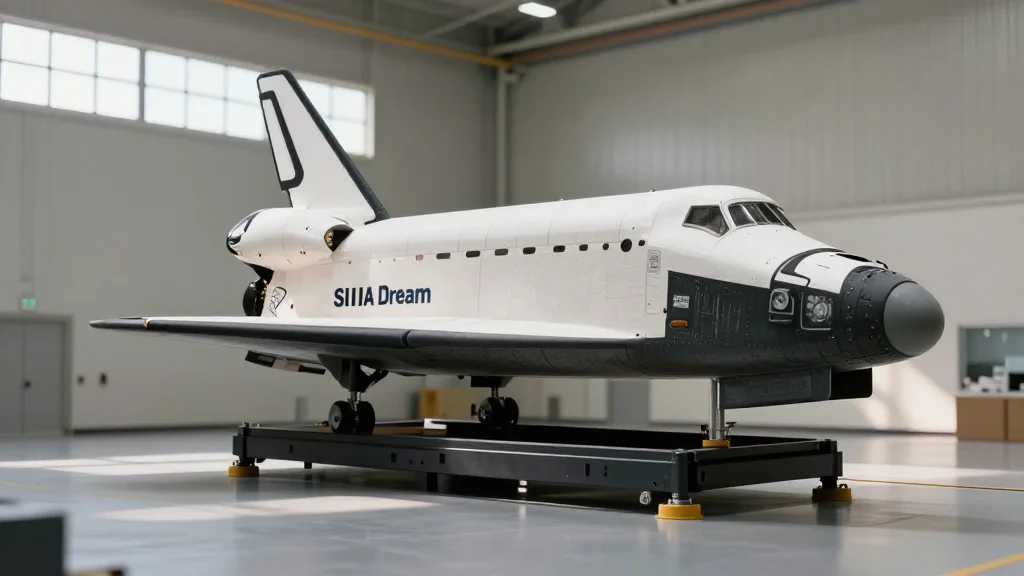
Why Is Sierra Space’s Dream Chaser Spacecraft Not Ready for Flight?
Companies Mentioned
Why It Matters
The setback undermines Sierra Space’s bid for a foothold in the lucrative low‑Earth‑orbit cargo sector and signals potential reliability concerns for future NASA and commercial customers.
Key Takeaways
- •Dream Chaser completed vibration tests but returned to Colorado for modifications.
- •Launch originally slated for 2024 now postponed indefinitely after NASA contract cancellation.
- •Delays jeopardize Sierra Space's position in the emerging commercial cargo market.
- •Potential hidden technical issues could erode investor confidence and partner trust.
- •Competitors like SpaceX and Northrop Grumman gain advantage as Sierra stalls.
Pulse Analysis
The Dream Chaser program, a reusable mini‑shuttle designed to deliver cargo to the International Space Station, was once a flagship project for Sierra Space, a spin‑off from Boeing. Leveraging a lifting‑body design, the vehicle promised gentle, runway‑style landings and rapid turnaround, positioning it as a versatile alternative to traditional capsules. Initial milestones, including a successful drop‑test and integration with United Launch Alliance’s Vulcan rocket, generated optimism among investors and NASA officials who expected a 2024 debut under the CRS‑2 contract.
Recent developments, however, have cast doubt on that trajectory. While Sierra Space confirmed the completion of ground vibration tests at Kennedy Space Center, the decision to ship the spacecraft back to Colorado for "final modifications and mission‑specific upgrades" suggests the tests revealed deficiencies that could not be remedied on site. Coupled with NASA’s abrupt cancellation of the cargo contract, the move signals deeper technical or integration challenges. Industry analysts note that such setbacks erode confidence, especially when a competitor’s schedule—like SpaceX’s Dragon or Northrop Grumman’s Cygnus—remains on track, potentially diverting future payloads away from Sierra.
The broader commercial launch ecosystem is increasingly competitive, with customers demanding reliability, cost‑effectiveness, and rapid delivery. Sierra Space’s delay not only jeopardizes its immediate revenue stream but also hampers its long‑term strategic positioning as a reusable cargo provider. To regain momentum, the company may need to accelerate redesign efforts, secure alternative launch partners, or pivot toward niche markets such as in‑orbit servicing. Investors will be watching closely for transparent updates, as the ability to resolve these technical hurdles will determine whether Dream Chaser becomes a market disruptor or a cautionary tale.
Why is Sierra Space’s Dream Chaser spacecraft not ready for flight?
Comments
Want to join the conversation?
Loading comments...