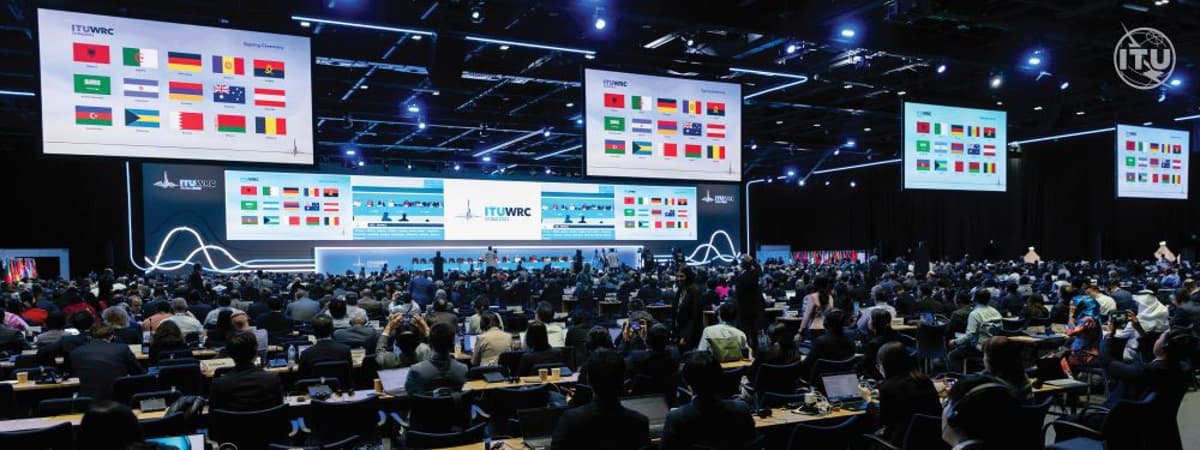
WRC-27: The Next Arena for U.S.-China Space Competition
Companies Mentioned
Why It Matters
WRC‑27 will determine the regulatory architecture that underpins global satellite services, directly affecting U.S. commercial competitiveness, national security, and the broader balance of power in the emerging space economy.
Key Takeaways
- •China filed for 200,000 additional satellites, intensifying NGSO competition.
- •WRC‑27 will allocate spectrum for satellite‑to‑device and lunar communications.
- •“Unauthorized” agenda could force U.S. constellations to shut down over nations.
- •U.S. FCC leads EPFD reforms; global push needed before 2027 conference.
Pulse Analysis
The upcoming World Radiocommunication Conference in Shanghai represents more than a technical meeting; it is the arena where the rules of the rapidly expanding space economy will be written. As China accelerates its NGSO ambitions with a massive satellite filing, the United States faces a narrowing window to cement its leadership. Spectrum allocations for direct‑to‑device services and lunar links are especially critical, because they enable the next generation of broadband connectivity and support the Artemis lunar program. Securing favorable bands will not only boost U.S. commercial offerings but also reinforce strategic partnerships with allies who rely on interoperable communications.
A contentious point on the WRC‑27 docket is the so‑called “unauthorized” services proposal, championed by Iran and other authoritarian regimes. If adopted, it would compel satellite operators to silence transmissions over jurisdictions that have not granted permission, effectively extending geopolitical censorship into space. Such a precedent threatens the global reach of U.S. constellations like Starlink, Amazon’s Project Kuiper, and emerging players, potentially fragmenting the market and limiting the digital‑divide‑closing promise of satellite broadband. The United States must therefore marshal a coordinated diplomatic campaign, leveraging the State Department and allied regulators to counter this narrative before the conference.
Technical standards also loom large. The existing electronic power flux density limits, set two decades ago, constrain NGSO satellite power and spectrum efficiency. The FCC’s recent shift toward interference‑based assessments positions the U.S. as a forward‑looking regulator, but without a concerted push at the ITU, other nations may retain outdated constraints that hinder innovation. By accelerating domestic rulemaking, hosting an international spectrum summit, and aligning with partner countries, the United States can shape a flexible, future‑proof regulatory framework that sustains its commercial edge and safeguards national security interests in the contested realm of space.
WRC-27: the next arena for U.S.-China space competition
Comments
Want to join the conversation?
Loading comments...