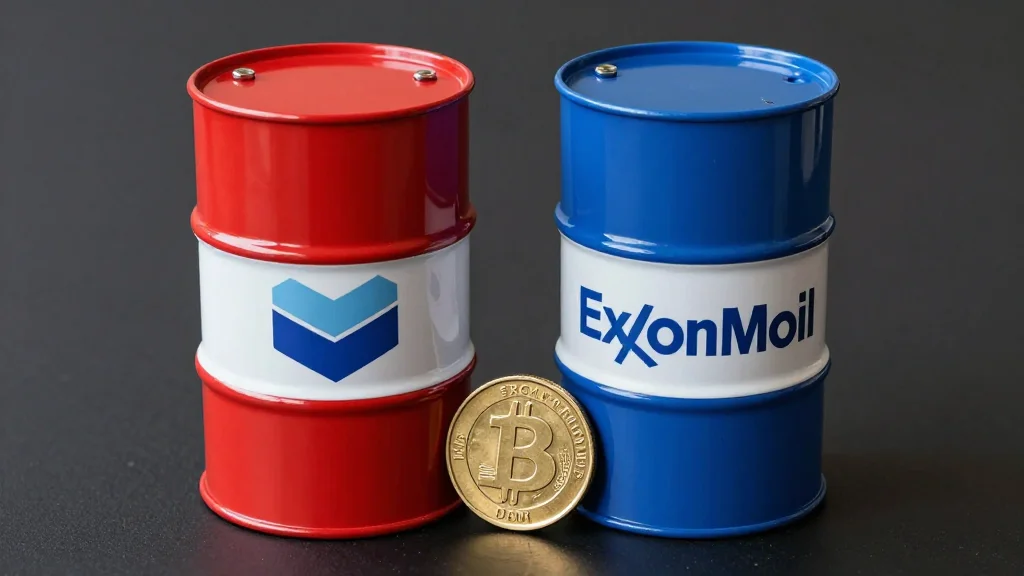
Chevron's 3.7% Yield Beats ExxonMobil's 2.7%, Making It the Favored Income Stock

Companies Mentioned
Why It Matters
The dividend yield spread between Chevron and ExxonMobil reshapes the hierarchy of income‑generating stocks in the energy sector. For portfolio managers, the higher yield translates into a tangible boost to total return, especially in a low‑interest‑rate environment where fixed‑income alternatives offer modest yields. Moreover, the gap underscores how subtle differences in payout policy can outweigh size or market‑cap considerations when investors prioritize cash flow. Beyond individual holdings, the yield differential influences the composition of sector‑focused ETFs and the allocation decisions of dividend‑oriented funds. As oil prices remain volatile, the ability of integrated majors to sustain and grow dividends becomes a litmus test for financial resilience, making Chevron's higher payout a decisive factor for many income investors.
Key Takeaways
- •Chevron's dividend yield stands at 3.7% versus ExxonMobil's 2.7%, a 37% income advantage.
- •Both companies have low debt‑to‑equity ratios (Exxon 0.2x, Chevron 0.25x) at the end of 2025.
- •Chevron's market cap is $375 billion; ExxonMobil's is $625 billion.
- •Chevron's recent $53 billion Hess merger adds execution risk but expands production.
- •Energy Select Sector SPDR ETF (XLE) gains 28.5% YTD, driven largely by these two stocks.
Pulse Analysis
From a strategic standpoint, Chevron's higher yield is more than a numbers game; it reflects a deliberate capital allocation philosophy that favors shareholder cash returns even amid ongoing merger integration. The company’s ability to sustain a 3.7% payout while targeting $3‑$4 billion in cost reductions suggests a disciplined approach to free cash flow generation. By contrast, ExxonMobil, despite its larger scale, has opted for a more conservative dividend trajectory, perhaps preserving flexibility for future acquisitions or capital projects.
Historically, integrated oil majors have used dividend growth as a defensive tool during commodity downturns. Chevron’s commitment to a 40‑year streak of dividend increases signals confidence in its cash‑flow outlook, which could attract a broader base of income‑focused investors, including retirees and yield‑hungry funds. This influx of capital may further buoy the stock, creating a positive feedback loop that reinforces its premium valuation relative to peers.
Looking forward, the dividend gap will likely intensify if oil prices remain elevated or if Chevron successfully leverages its Hess assets to boost earnings. However, any sharp correction in crude prices or a prolonged recession could compress cash flows, testing both companies' ability to maintain payouts. Investors should monitor quarterly earnings, dividend announcements, and macro‑economic indicators to gauge whether the yield advantage translates into sustained outperformance or merely a temporary premium.
Chevron's 3.7% Yield Beats ExxonMobil's 2.7%, Making It the Favored Income Stock
Comments
Want to join the conversation?
Loading comments...