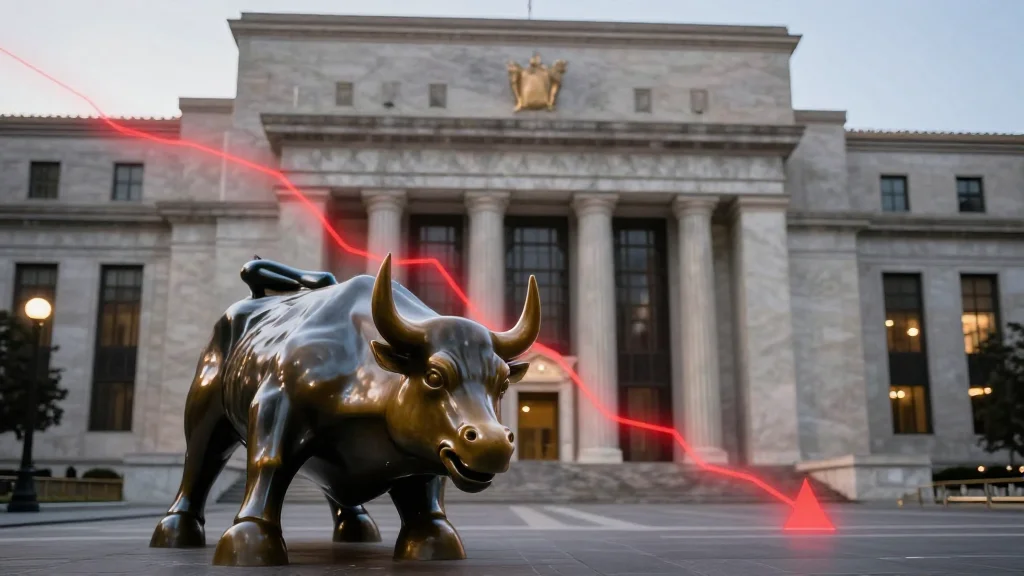
Fed’s New Chair Kevin Warsh Signals Potential End to Bull Market

Companies Mentioned
Why It Matters
Warsh’s early signals matter because the Fed’s policy direction is the single most influential driver of equity valuations. A pivot to tighter monetary policy would increase borrowing costs for corporations, compress profit margins, and raise discount rates used in stock valuation models, potentially eroding the multi‑year gains seen in the S&P 500. Moreover, Warsh’s skepticism about the core PCE index could shift the Fed’s communication framework, making future inflation data less predictable for investors. The interplay between monetary policy and geopolitical risk adds another layer of complexity. Higher oil prices feed into broader inflation, which could force the Fed to act sooner, while a stronger dollar may hurt export‑oriented sectors. Together, these forces could reshape portfolio allocations, prompting a shift from growth‑heavy tech positions to defensive sectors such as utilities and consumer staples.
Key Takeaways
- •Kevin Warsh sworn in as Fed chair on June 2, 2026, and signaled a willingness to tighten policy.
- •Warsh questioned the reliability of the core PCE gauge, suggesting broader inflation metrics may guide future moves.
- •S&P 500 slipped 0.1% in early trading; Treasury yields rose as markets priced in higher rates.
- •Oil prices surged to $94 a barrel amid Iran‑related Strait of Hormuz tensions, adding inflation pressure.
- •Fed’s next policy meeting on June 16‑17 will be the first test of Warsh’s hawkish stance.
Pulse Analysis
Warsh’s arrival marks a stark departure from the dovish tone that has dominated the Fed since the pandemic. Historically, a new chair’s early remarks have set market expectations for months. For example, when Ben Bernanke signaled a commitment to low rates in 2005, equity markets rallied for years. Warsh, however, is confronting a different macro backdrop: persistent supply‑chain disruptions, a resurging energy shock, and an AI‑driven equity premium that has inflated valuations in the mega‑cap sector. His willingness to challenge the core PCE index suggests a broader, more flexible approach to inflation, which could lead to a faster‑than‑expected rate hike cycle.
If the Fed raises rates by 25 basis points at the June meeting, the cost of capital for high‑growth tech firms would rise sharply, compressing forward earnings multiples that currently sit above 30x for many AI‑linked stocks. This would likely trigger a rotation toward value‑oriented sectors that are less sensitive to financing costs. Conversely, if Warsh adopts a more cautious stance to avoid derailing the fragile recovery, the market may continue its rally, but with heightened volatility as investors price in the risk of a sudden policy shift.
Investors should also monitor the geopolitical dimension. The Strait of Hormuz remains a flashpoint; any escalation could push oil above $100 a barrel, feeding into core inflation and forcing the Fed’s hand. In that scenario, Warsh’s early hawkish tone would be vindicated, and a rapid market correction could follow. Portfolio managers would be wise to diversify across asset classes, increase cash positions, and consider hedging strategies such as Treasury Inflation‑Protected Securities (TIPS) to mitigate inflation‑driven risk.
Overall, Warsh’s policy outlook injects uncertainty into an already complex environment. The next two weeks will be critical in determining whether the bull market can survive a potential policy tightening or whether investors will need to recalibrate expectations for a new, higher‑rate era.
Fed’s New Chair Kevin Warsh Signals Potential End to Bull Market
Comments
Want to join the conversation?
Loading comments...