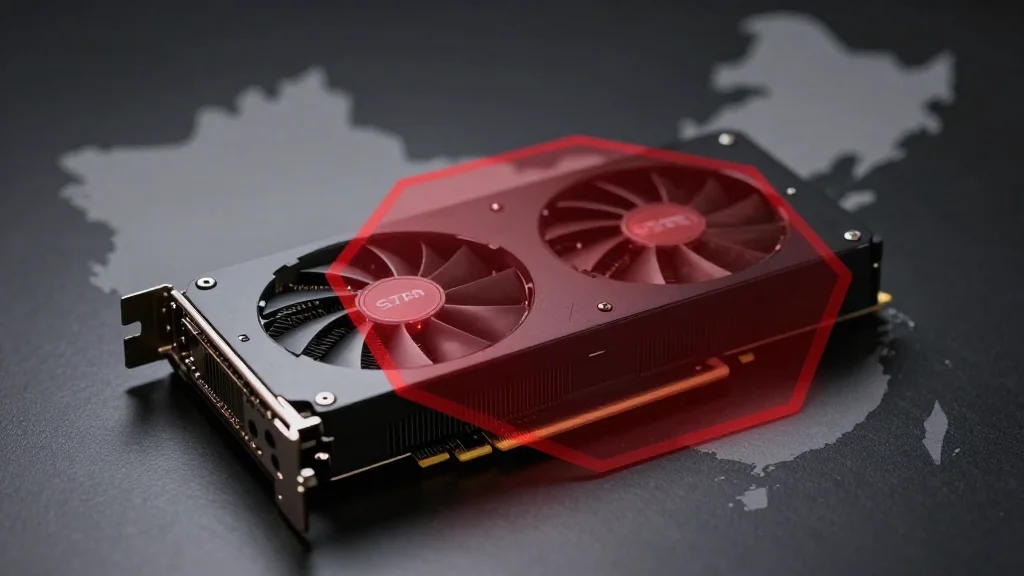
Nvidia Beats Earnings but China Bans RTX 5090D V2, Sparking Valuation Concerns

Companies Mentioned
Why It Matters
The Chinese ban on Nvidia’s RTX 5090D V2 illustrates how export‑control regimes and domestic industrial policies can reshape the revenue outlook for a company that dominates the global AI chip market. For stock investors, the episode adds a layer of geopolitical risk to Nvidia’s valuation, which has been buoyed by soaring AI demand. A sustained restriction could force Nvidia to re‑engineer its product roadmap for China, potentially slowing its growth trajectory and affecting the performance of large institutional portfolios heavily weighted in the stock. Furthermore, the stalled H200 approvals reveal a disconnect between U.S. licensing decisions and Chinese implementation, highlighting the complexity of cross‑border semiconductor commerce. If the licensing bottleneck persists, Nvidia may miss out on a lucrative segment of the Chinese AI market, prompting a re‑allocation of capital toward other regions or product lines. The situation serves as a bellwether for other U.S. chipmakers that rely on China for sales, emphasizing the need for diversified market exposure and proactive regulatory engagement.
Key Takeaways
- •Nvidia beat earnings estimates with record semiconductor revenue (exact figure not disclosed).
- •China added the RTX 5090D V2 gaming chip to its banned‑goods list during a high‑level diplomatic visit.
- •Chinese share of Nvidia’s revenue fell to roughly 5% from over 20% before export controls tightened.
- •U.S. approved conditional sales of up to 75,000 H200 AI chips to ten Chinese firms, but none have shipped.
- •Nvidia must remit 25% of any Chinese H200 revenue to the U.S. government, based on a $27,000 per‑chip price.
Pulse Analysis
Nvidia’s earnings beat underscores the company’s robust AI momentum, yet the Chinese ban on the RTX 5090D V2 injects a geopolitical variable that could temper investor enthusiasm. Historically, Nvidia has leveraged its GPU leadership to capture market share across gaming, data‑center, and automotive segments. The Blackwell architecture, while engineered to meet U.S. export limits, inadvertently created a dual‑use product that Chinese regulators deemed too risky, prompting the ban. This reflects a broader trend where China is tightening its semiconductor import policies to accelerate domestic capability development.
From a valuation perspective, the market must now price in a higher probability of revenue volatility from China. The 4% post‑earnings share dip, despite strong top‑line performance, signals that investors are discounting future growth prospects in the world’s largest consumer market for GPUs. Institutional holders, such as Vanguard and BlackRock, will likely reassess their exposure, potentially leading to a rebalancing of tech‑heavy portfolios.
Looking forward, Nvidia’s ability to navigate the licensing maze for its H200 AI chips will be a litmus test for its China strategy. If the company can secure clearer, less restrictive terms, it may restore some of the lost revenue potential. Conversely, prolonged uncertainty could accelerate Nvidia’s shift toward other regions, prompting a strategic pivot that may involve deeper investments in Europe and Southeast Asia. For stock investors, the key takeaway is that Nvidia’s upside is now intertwined with diplomatic outcomes as much as with product innovation, making geopolitical risk a central component of any investment thesis.
Nvidia Beats Earnings but China Bans RTX 5090D V2, Sparking Valuation Concerns
Comments
Want to join the conversation?
Loading comments...