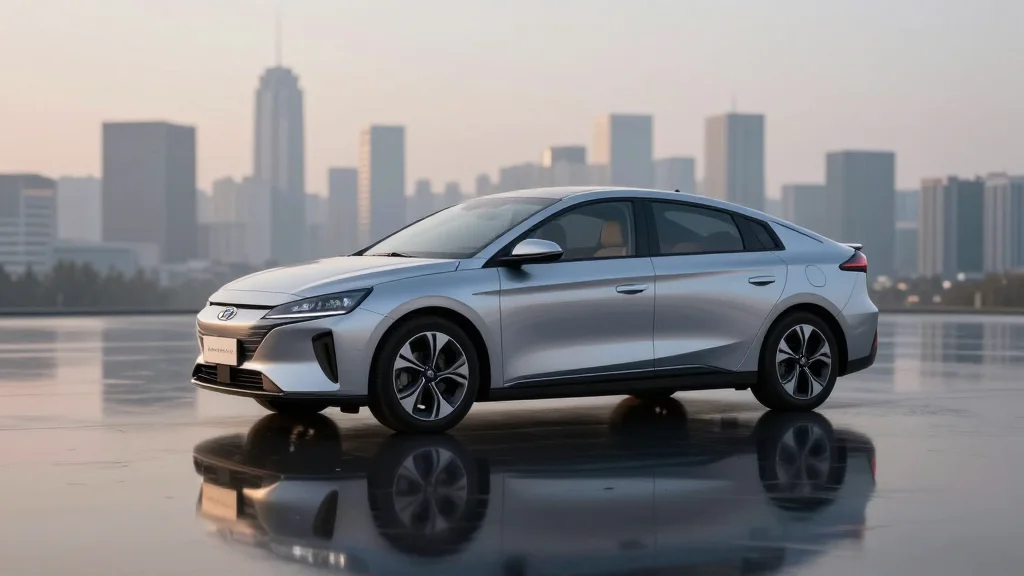
Hyundai Launches IONIQ V, Puts $1.1B Into China EV Supply Chain

Companies Mentioned
Why It Matters
Hyundai’s $1.1 billion investment signals a decisive pivot toward a China‑first supply‑chain model, where vehicle design, battery sourcing, and software development are co‑located with the end market. This reduces exposure to geopolitical tariffs, shortens product development cycles, and gives the automaker a competitive edge in a market that now accounts for over half of global EV sales. The scale of the commitment also pressures rivals to deepen their own local footprints, potentially accelerating the consolidation of battery and semiconductor supply chains within China. For suppliers, the announcement translates into a surge of demand for locally produced modules, power electronics, and high‑density battery packs. Companies that can meet Hyundai’s quality and volume requirements stand to secure multi‑year contracts, while those reliant on export‑oriented production may need to re‑evaluate their market strategies. The ripple effect could reshape investment flows across the broader automotive ecosystem, from raw‑material miners to software firms specializing in vehicle telematics.
Key Takeaways
- •Hyundai unveils IONIQ V at Auto China 2026, the first dedicated IONIQ model for the market
- •Commits 8 billion yuan ($1.1 billion) to Beijing Hyundai joint venture for localized EV production
- •Plans to launch 20 new EV and EREV models in China over the next five years
- •Sets a sales target of 500,000 vehicles annually from the Beijing plant
- •Aims to secure ~150 GWh of battery capacity annually, deepening ties with Chinese cell makers
Pulse Analysis
Hyundai’s China‑centric rollout reflects a maturation of the global EV supply chain, where proximity to the consumer is becoming as critical as cost efficiency. By anchoring design, battery assembly, and software development within Beijing, Hyundai reduces the latency that has plagued Western OEMs reliant on cross‑border logistics. This vertical integration also insulates the brand from the volatility of U.S.-China trade tensions, a factor that has forced rivals to reconsider their sourcing strategies.
Historically, automakers have used China primarily as a volume outlet, importing key components from Europe or the United States. Hyundai’s approach flips that model, treating China as a cradle of innovation and a source of critical inputs. The 8 billion‑yuan infusion is not merely a capital spend; it is a strategic bet that the Chinese ecosystem—spanning battery megafactories, semiconductor fabs, and AI‑driven vehicle software—will deliver faster iteration cycles and lower total cost of ownership.
Looking ahead, the success of the IONIQ V and subsequent models will hinge on Hyundai’s ability to secure stable battery supplies amid fierce competition for CATL and BYD capacity. If the automaker can lock in favorable terms, it may achieve economies of scale that allow price‑competitive offerings in both domestic and export markets. Conversely, any bottleneck in battery or semiconductor availability could delay model rollouts, eroding the advantage Hyundai seeks. The next quarter’s sales figures for the IONIQ V will be a litmus test for the viability of this China‑first supply‑chain paradigm.
Hyundai Launches IONIQ V, Puts $1.1B into China EV Supply Chain
Comments
Want to join the conversation?
Loading comments...