Norfolk Southern Focuses on Freight Growth in Latest Partnership
Companies Mentioned
Why It Matters
The upgrade strengthens first‑ and final‑mile service in a key market, positioning NS to capture shifting freight from trucking to rail. It underscores the company’s readiness for its pending merger with Union Pacific, enhancing competitive advantage.
Key Takeaways
- •Jaguar to manage Doraville transload, adding local switching capacity
- •Facility upgrade targets higher freight volumes in metro Atlanta
- •Partnership aligns with NS's push for first‑ and final‑mile services
- •Rising fuel costs boost intermodal demand, benefiting rail operators
- •Expansion supports NS's planned merger with Union Pacific
Pulse Analysis
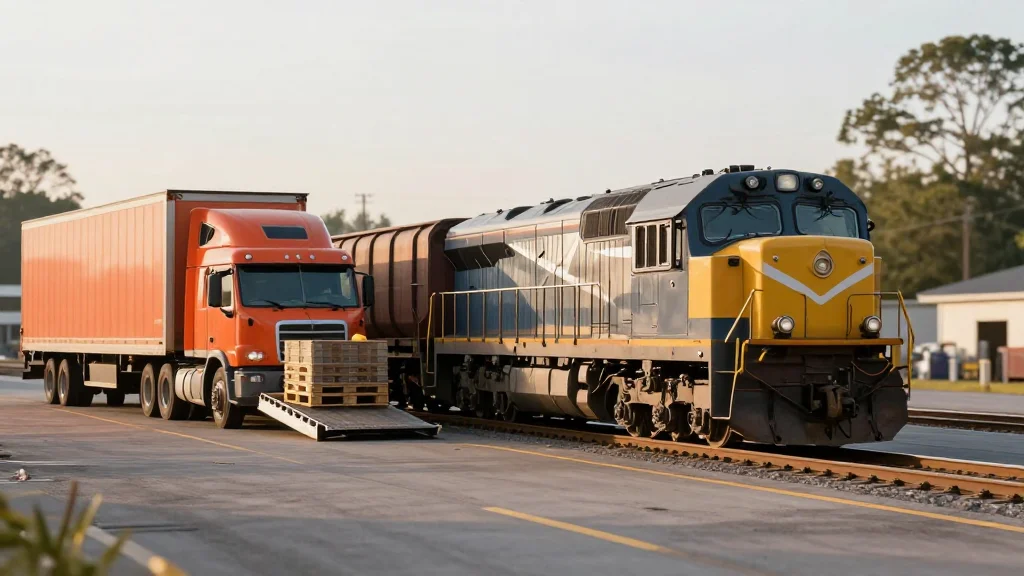
Norfolk Southern’s latest move in the Southeast centers on a strategic partnership with Jaguar Transport Holdings to revamp the Doraville transload facility near Atlanta’s I‑285 and I‑85 corridors. Jaguar, which operates a network of short‑line railroads and transload sites, will assume responsibility for local switching and invest in yard expansions, new track, and equipment upgrades. The collaboration is designed to lift the facility’s handling capacity, streamline truck‑to‑rail transfers, and improve service reliability for regional shippers that depend on first‑and final‑mile connectivity.
The timing of the deal coincides with heightened uncertainty in global energy markets after the Iran‑Houthi conflict forced the closure of the Strait of Hormuz, sending fuel prices soaring. Higher diesel costs have eroded trucking margins, prompting many shippers to reconsider intermodal solutions that combine rail efficiency with truck flexibility. Industry analysts, including C.H. Robinson, argue that intermodal is evolving from a contingency plan to a core component of logistics strategy, a shift that directly benefits rail carriers poised to capture the redirected volume.
For Norfolk Southern, the Doraville upgrade is a building block in its broader ambition to create an end‑to‑end rail network with Union Pacific. By strengthening first‑ and final‑mile links in a high‑growth market like Atlanta, NS can feed more freight into its long‑haul corridors, improve asset utilization, and enhance competitive positioning against trucking firms. As the merger progresses, the combined entity will likely leverage such localized partnerships to expand intermodal capacity nationwide, accelerating the industry’s shift toward more sustainable, cost‑effective rail‑centric supply chains. The move also signals to investors that NS is proactively addressing capacity constraints ahead of the merger.
Norfolk Southern focuses on freight growth in latest partnership
Comments
Want to join the conversation?
Loading comments...