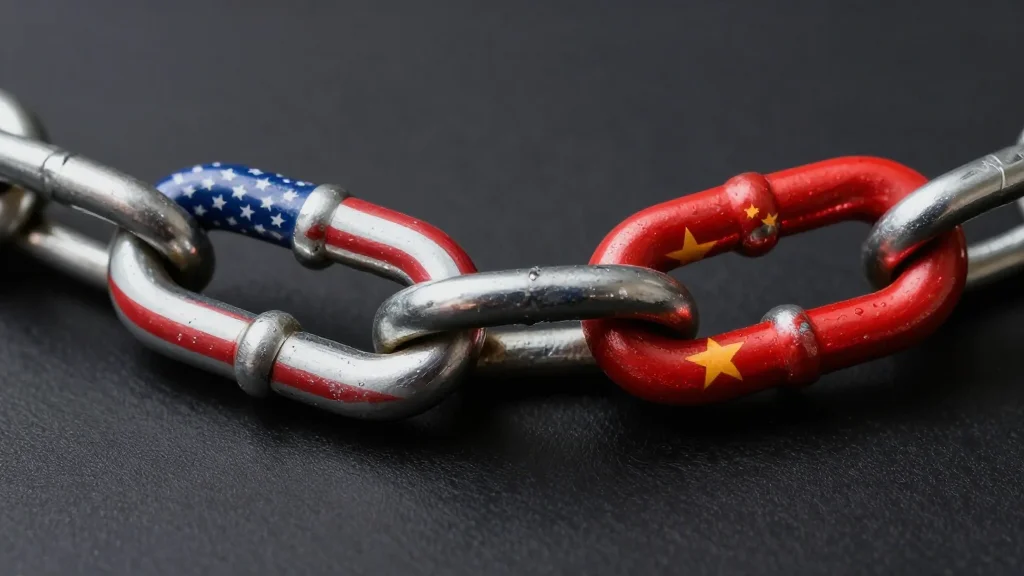
Pentagon Bars Alibaba, Baidu, BYD From U.S. Defense Contracts in Expanded Military List

Companies Mentioned
Why It Matters
The Pentagon’s expanded blacklist directly impacts the global defense supply chain by cutting off some of China’s most influential tech and automotive firms from U.S. military procurement. This forces U.S. defense contractors to seek alternative suppliers, potentially accelerating the shift toward domestic or allied sources for AI chips, cloud services, and electric‑vehicle components. The move also heightens geopolitical risk for investors, as inclusion on the list can depress stock prices and limit access to U.S. capital markets. Beyond immediate procurement concerns, the designation underscores the U.S. strategy of countering China’s “military‑civil fusion” policy, which seeks to leverage civilian innovation for military advantage. By publicly naming firms across a wide range of sectors, Washington is drawing a line that could lead to further trade restrictions, export controls, and investment curbs, reshaping the competitive landscape for high‑tech industries worldwide.
Key Takeaways
- •Pentagon adds Alibaba, Baidu and BYD to the 1260H list, expanding it to ~200 Chinese firms
- •Designation bars listed companies from direct U.S. defense contracts and indirect purchases after 2027
- •Alibaba ADRs fell 1% to $119.84; Baidu down 2.1% to $119.14; BYD ADRs slipped 0.7%
- •U.S. lawmakers cite national‑security risk; Chinese embassy calls the move discriminatory
- •WuXi AppTec, among others, vows to challenge its inclusion as a "mistake"
Pulse Analysis
The Pentagon’s latest blacklist reflects a strategic pivot from reactive sanctions to proactive supply‑chain policing. By targeting firms whose core businesses are civilian—e‑commerce, AI search, and electric vehicles—the U.S. is signaling that any technology with potential dual‑use value will be scrutinized, regardless of whether the firm has a formal defense contract today. This approach mirrors the broader U.S. effort to decouple critical technology supply chains from China, a trend that began with semiconductor export controls and now extends to AI, robotics and renewable‑energy components.
Historically, U.S. defense procurement has relied on a global vendor base to drive down costs and spur innovation. The new restrictions will force the Pentagon to re‑engineer parts of its supply chain, likely increasing reliance on domestic firms such as Nvidia, Intel and U.S. battery manufacturers, while also opening opportunities for allied companies in Japan, South Korea and Europe. However, the transition will not be seamless; many of the Chinese firms on the list provide cost‑effective, high‑volume components that are not easily replaced.
In the longer term, the blacklist could serve as a prelude to more aggressive measures, such as outright export bans or secondary sanctions on third‑party firms that continue to do business with the listed companies. Companies now face a strategic dilemma: invest in compliance and legal challenges to regain market access, or pivot toward non‑U.S. customers. For investors, the signal is clear—exposure to Chinese tech and EV firms carries heightened geopolitical risk, and portfolio managers will need to reassess weightings in light of potential supply‑chain disruptions and regulatory headwinds.
Pentagon Bars Alibaba, Baidu, BYD from U.S. Defense Contracts in Expanded Military List
Comments
Want to join the conversation?
Loading comments...