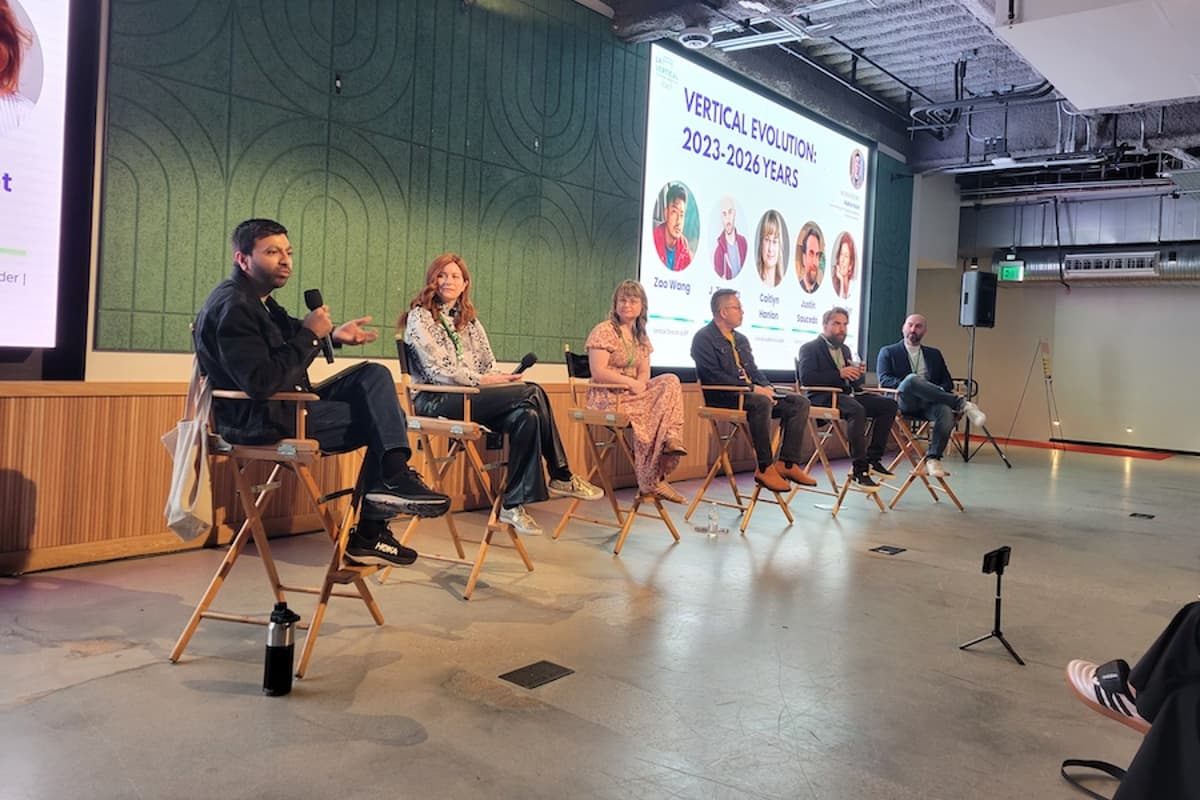
LA Vertical Drama Market Panelists Discuss Evolution, Creation and Explosion of New Mobile Medium
Why It Matters
Vertical microdramas represent a new revenue stream that redefines how studios monetize short‑form, mobile‑first content, forcing legacy players to adapt or lose relevance. Their growth signals a lasting shift in consumer entertainment habits toward on‑the‑go, episodic experiences.
Key Takeaways
- •Vertical microdramas grew post‑COVID, leveraging 9:16 mobile format.
- •Hollywood strike pushed creators like Zao Wang into vertical storytelling.
- •Audience retention hinges on cliffhangers and comfort‑driven escapism.
- •AI production threatens noise overload; fans demand transparent labeling.
- •Genre expansion beyond romance remains challenging, limiting broader market appeal.
Pulse Analysis
The vertical video boom is reshaping the entertainment landscape, as creators pivot to 9:16 formats that fit the average user’s phone screen. Panels at the LA Vertical Drama Market highlighted how the 2023‑24 Hollywood strike forced directors like Zao Wang to explore microdramas, while the pandemic accelerated mobile‑first consumption. These short, cliff‑hanger driven episodes attract viewers who spend roughly 80% of their working hours on smartphones, creating a fertile environment for advertisers and subscription models that monetize high‑frequency engagement.
From a business perspective, vertical microdramas offer a compelling cost advantage. Production budgets can hover around $20,000 per series, a fraction of traditional TV costs, especially when AI tools generate visual effects or background assets. This affordability encourages rapid content iteration, but it also risks saturating the market with low‑quality output. Audiences are vocal about preserving authentic performances, demanding clear labeling when AI alters actors’ likenesses. Brands and platforms that balance AI efficiency with transparency are likely to capture the most sustainable viewership and premium ad spend.
Looking ahead, the medium’s future hinges on genre diversification and audience trust. While romance and light‑hearted drama dominate, attempts at horror or thriller formats have underperformed, suggesting that narrative depth may be harder to achieve in ultra‑short episodes. Meanwhile, AI‑driven fantasy productions could spark a new wave of high‑production value content, provided creators address fan concerns about deep‑fake misuse. Industry leaders who invest in hybrid storytelling—combining human emotion with selective AI enhancement—stand to shape the next chapter of mobile entertainment, turning vertical microdramas from a niche novelty into a mainstream revenue engine.
LA Vertical Drama Market Panelists Discuss Evolution, Creation and Explosion of New Mobile Medium
Comments
Want to join the conversation?
Loading comments...