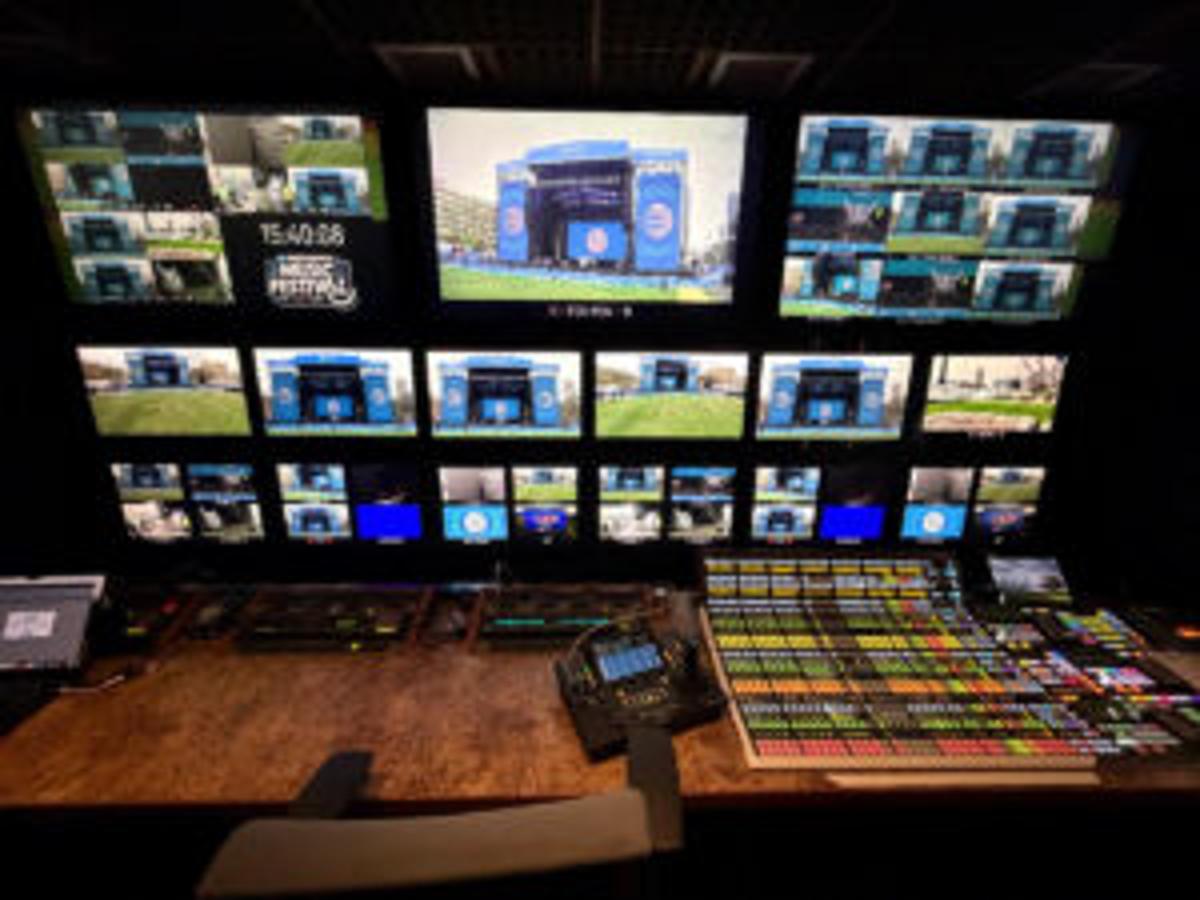
Multi-Truck Production Power for Final Four Concert Broadcasts
Companies Mentioned
Why It Matters
The integrated, HDR‑enabled concert broadcast raises the production bar for sports‑entertainment hybrids, showing broadcasters how to blend live music and game coverage while meeting rising audience expectations.
Key Takeaways
- •TNDV used three trucks to cover festival and in‑stadium concert.
- •First HDR concert broadcast aired between Final Four games.
- •Dual‑truck workflow enabled simultaneous music mixing, production, streaming.
- •20% of venue’s mobile units deployed, showing fleet scale.
- •Headliners included 21 Pilots, Zac Brown Band, Post Malone, The Chainsmokers.
Pulse Analysis
The NCAA Final Four has evolved beyond pure basketball, becoming a week‑long entertainment platform that demands sophisticated broadcast solutions. TNDV’s multi‑truck strategy—leveraging the Aspiration, Vibration and Exclamation units—allowed the company to capture three nights of the March Madness Music Festival and a historic in‑stadium concert without compromising either music quality or game coverage. By allocating one truck exclusively to audio mixing and another to production and delivery, TNDV ensured clean, broadcast‑ready feeds while maintaining the festival’s sonic integrity.
Technical innovation was at the core of the operation. Inside Lucas Oil Stadium, an eight‑camera rig, including Sony HDC‑4300s, a Skycam, robotic units and a drone, recorded The Chainsmokers’ performance in 1080p HDR—a first for Final Four‑related concerts. The AJA FS‑HDR processor handled SDR‑to‑HDR conversion, while Evertz NEXX routing provided flexible multi‑view and embedded audio workflows. This dual‑truck, multi‑camera architecture not only delivered a seamless HDR experience but also supported simultaneous streaming, VIP feeds, and international commentary inserts, showcasing the scalability of modern mobile production fleets.
From a business perspective, the seamless integration of live music into a marquee sports broadcast opens new revenue streams and audience engagement opportunities. Brands can sponsor hybrid segments, advertisers gain access to a broader demographic, and broadcasters differentiate themselves with premium HDR content. The success of TNDV’s workflow signals that future sports events will likely embed concerts, esports or other live experiences, prompting production companies to invest in versatile, high‑capacity mobile units to stay competitive in an increasingly convergent entertainment landscape.
Multi-Truck Production Power for Final Four Concert Broadcasts
Comments
Want to join the conversation?
Loading comments...