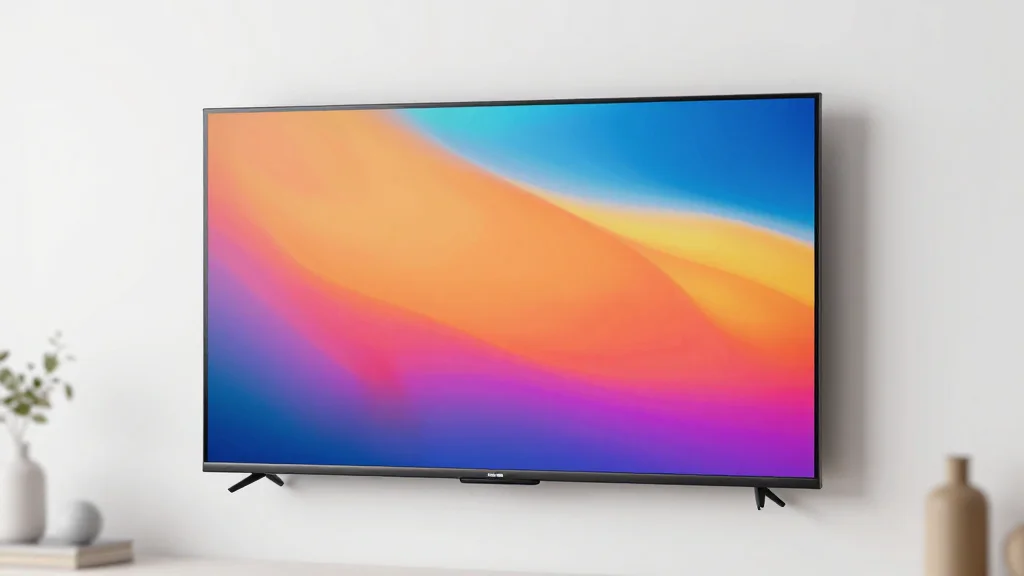
TCL QM9K Mini‑LED TV Debuts at $1,499, Targeting Bright‑Room Buyers

Companies Mentioned
Why It Matters
The QM9K’s aggressive pricing forces rivals to reassess the value proposition of their own Mini‑LED offerings, potentially accelerating price drops across the segment. For consumers, the availability of a high‑brightness TV at sub‑$1,500 expands access to premium picture quality without the premium price tag, influencing buying cycles ahead of the 2026 refresh. Additionally, TCL’s bundling of streaming services with hardware could reshape how manufacturers monetize content, nudging the industry toward tighter hardware‑software integration. From a broader industry perspective, the QM9K illustrates how manufacturers are leveraging discount cycles to manage inventory ahead of generational shifts. The move may pressure supply chains to accelerate production of newer Mini‑RGB panels, while also prompting content providers to negotiate more favorable placement on hardware platforms, ultimately affecting the economics of OTT distribution.
Key Takeaways
- •TCL QM9K Mini‑LED TV launched in September 2025 with four sizes (65‑, 75‑, 85‑, 98‑inch).
- •Current promotional pricing: $1,499 for 75‑inch, $1,999 for 65‑inch, $2,499 for 85‑inch, $3,999 for 98‑inch.
- •Features QD‑Mini‑LED backlight, up to 6,000 dimming zones, four HDMI 2.1 ports, ATSC 3.0 tuner and Dolby Atmos FlexConnect.
- •Competes directly with Hisense U8QG, Samsung QN90F and LG C5 OLED, undercutting them by roughly 25‑30%.
- •TCL plans a next‑gen Mini‑RGB panel for 2026, using the QM9K as a bridge product to maintain market share.
Pulse Analysis
TCL’s QM9K launch is a textbook case of price‑driven market segmentation in the premium TV arena. By delivering a QD‑Mini‑LED panel—once the preserve of higher‑priced Samsung and Sony models—at a sub‑$1,500 price point, TCL forces competitors to either slash prices or double‑down on differentiators such as OLED contrast or advanced AI upscaling. The move also reflects a broader industry trend: manufacturers are increasingly using hardware discounts to lock consumers into proprietary ecosystems. TCL’s optional streaming bundle, though not detailed in the review, hints at a strategy to capture recurring revenue beyond the one‑time hardware sale.
Historically, Mini‑LED adoption accelerated after 2022 when Samsung and LG introduced high‑end models that justified premium pricing. As panel costs have fallen, the technology is spilling into mid‑tier devices, eroding the price premium that once protected high‑margin products. TCL’s timing—offering a bright‑room‑optimized TV just before the rollout of Mini‑RGB—positions it to reap short‑term volume while preparing for a potential shift in consumer expectations toward even higher color fidelity and lower power draw.
Looking ahead, the QM9K’s success will hinge on two factors: first, whether the discount window can sustain sales momentum without cannibalizing future higher‑margin releases; second, how effectively TCL can integrate its own content services to create a sticky ecosystem. If the bundle gains traction, we may see a new competitive axis emerge, where hardware price, display technology, and bundled content become inseparable in the consumer decision matrix, reshaping the OTT landscape and pressuring rivals to rethink their own bundling strategies.
TCL QM9K Mini‑LED TV Debuts at $1,499, Targeting Bright‑Room Buyers
Comments
Want to join the conversation?
Loading comments...