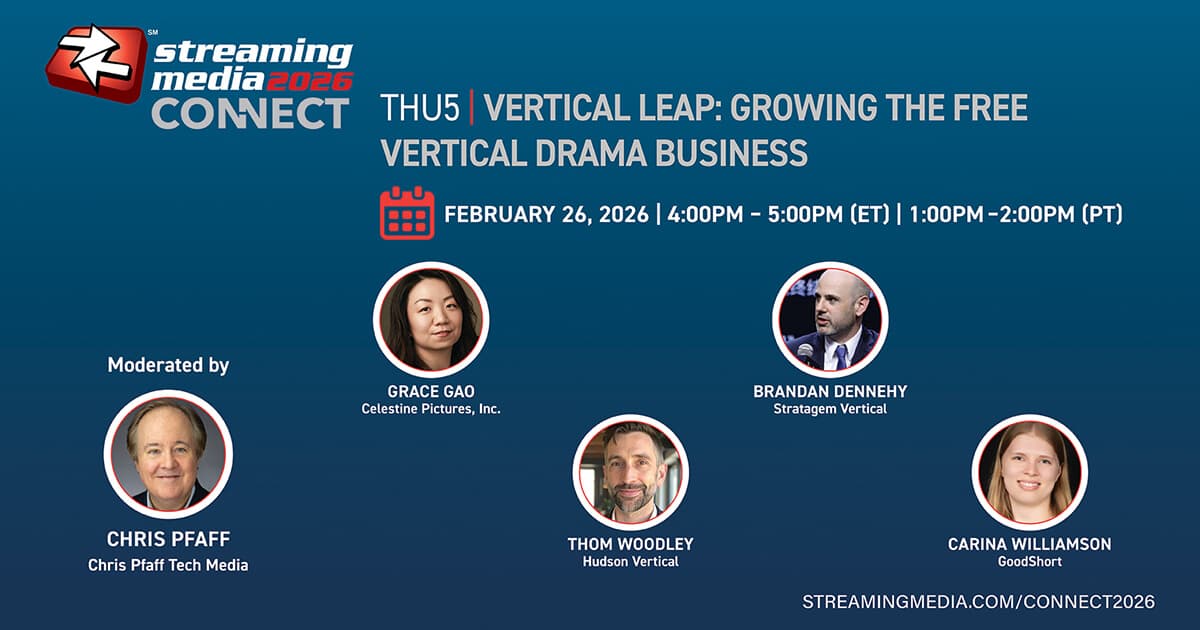
Vertical Leap: Growing the Free Vertical Drama Business at Streaming Media Connect
•March 2, 2026
0
Why It Matters
Vertical drama is reshaping content economics, offering brands instant series‑level exposure and creators a low‑cost path to audience engagement, signaling a shift in the streaming ecosystem.
Key Takeaways
- •Vertical microdramas emerging as new mass‑media format
- •AI tools streamline scriptwriting, production, and distribution pipelines
- •Brands can embed entire series for rapid ROI
- •Fast cycles enable real‑time audience data feedback
- •Graduates favor verticals over traditional Hollywood pathways
Pulse Analysis
The surge of vertical microdramas reflects a broader migration toward mobile‑first consumption. Short, portrait‑oriented stories fit naturally into the thumb‑scroll habits of Gen Z and Gen Alpha, while bingeable episode lengths keep viewers glued to free platforms. This format’s scalability is attracting investors who see a low‑budget, high‑volume model that can rival traditional TV in reach, especially as global creators tap into multilingual pipelines.
Artificial intelligence is accelerating every stage of the vertical drama workflow. From AI‑assisted screenwriting that generates multilingual drafts to automated editing tools that compress post‑production timelines, creators can launch episodes within days. This efficiency not only cuts costs but also enables brands to embed products directly into narrative arcs, turning a single series into a measurable advertising vehicle. Companies like Procter & Gamble and Maybelline are already testing full‑season integrations, proving that branded entertainment can move beyond one‑off placements.
Talent pipelines are adapting quickly, with recent film graduates opting for vertical studios over legacy Hollywood routes. The rapid turnaround—from script to release—provides immediate audience feedback, allowing creators to iterate in near real‑time. This data‑driven approach fuels a virtuous cycle: higher engagement informs smarter content decisions, which in turn attract more advertisers and investors. As vertical drama matures, it promises to redefine content creation economics and reshape the competitive landscape of streaming media.
Vertical Leap: Growing the Free Vertical Drama Business at Streaming Media Connect
0
Comments
Want to join the conversation?
Loading comments...