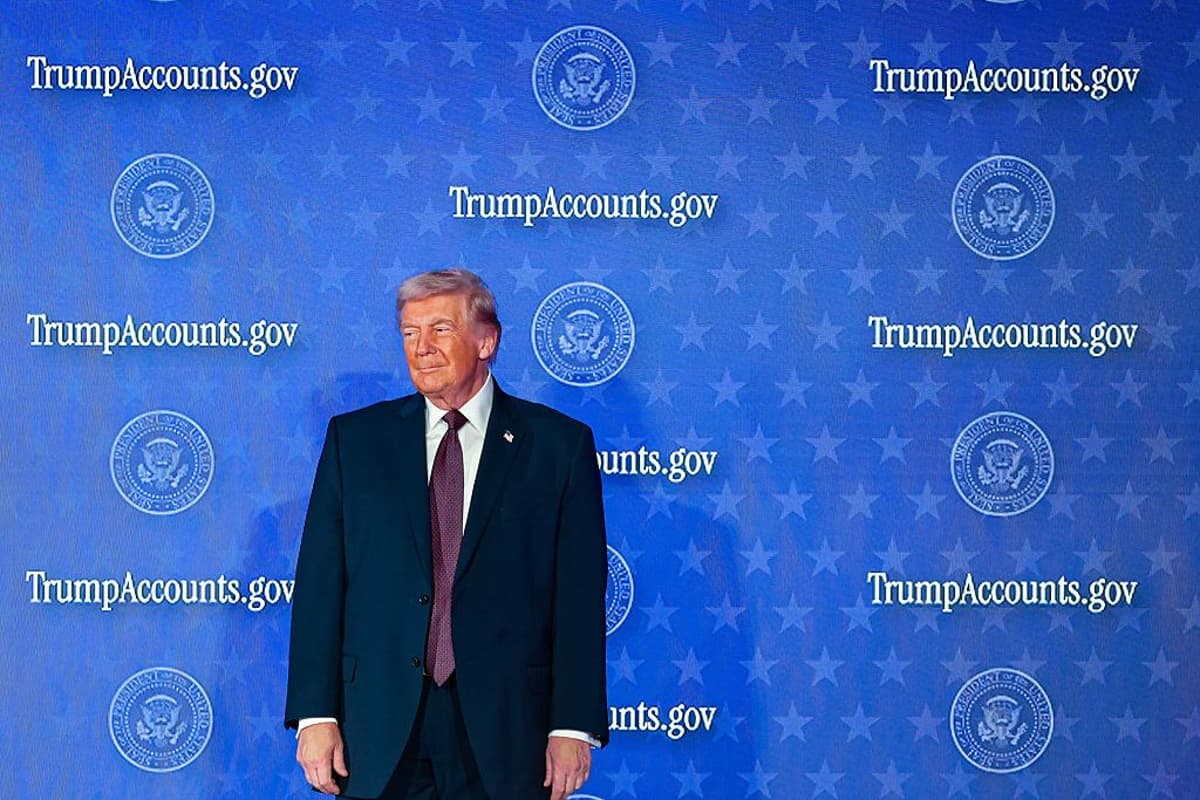
Is a Trump Account Worth It? Projected Growth — and Who Should Skip It
Why It Matters
Trump Accounts offer a new pathway for intergenerational wealth building, leveraging tax deferral and government‑backed seed money, but their suitability hinges on long‑term goals versus more flexible education‑focused options.
Key Takeaways
- •Children can receive $1,000 government seed money if born 2025‑2028
- •Annual contributions up to $5,000 could grow to $4.6 million by age 59½
- •529 plans still outperform for education‑specific savings due to higher limits
- •Employers like Bank of America match contributions, boosting account growth
Pulse Analysis
The Trump Account represents a significant policy shift, extending the retirement‑savings framework to minors without requiring earned income. Created by the One Big Beautiful Bill Act of 2025, the vehicle mirrors a traditional IRA but adds a $1,000 federal seed grant for children born between 2025 and 2028. Contributions—capped at $5,000 per year and indexed to inflation—must be placed in low‑cost index funds, growing tax‑deferred until the child reaches adulthood. This structure aims to give families a low‑cost, long‑term wealth‑building tool that compounds over decades.
Projected growth figures illustrate the account’s power: a modest $1,000 annual contribution could approach $1 million by age 59½, while a $5,000 yearly input may surpass $4.5 million, assuming an 8% average return. Corporate match programs from firms such as Bank of America, Intel, and Uber, along with philanthropic contributions from the Dells, can further accelerate balances. However, withdrawals before age 59½ incur a 10% penalty unless used for qualified expenses like education or a first home, and earnings are taxed as ordinary income upon distribution.
For families whose primary objective is college funding, 529 plans remain the more efficient choice due to higher contribution limits and tax‑free earnings when used for qualified education costs. The Trump Account shines for those seeking a diversified, long‑term asset that can supplement retirement savings, provided they have already met other financial priorities. Evaluating the trade‑offs—penalties, tax treatment, and potential impact on financial aid—will determine whether the Trump Account is a strategic addition or a niche offering.
Is a Trump Account Worth It? Projected Growth — and Who Should Skip It
Comments
Want to join the conversation?
Loading comments...