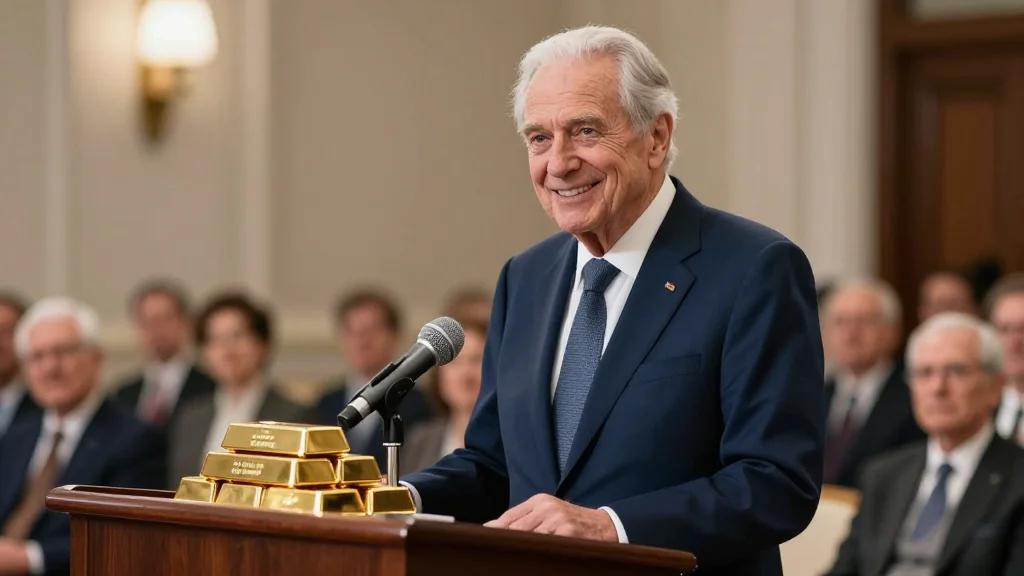
Warren Buffett, 95, Steps Aside at Berkshire Meeting, Shares Six Timeless Rules

Companies Mentioned
Why It Matters
Buffett’s distilled principles provide a benchmark for wealth‑management firms that counsel clients on portfolio construction. His emphasis on operating within a circle of competence and the willingness to hold large cash balances challenges the industry’s recent tilt toward high‑frequency, short‑term strategies. Moreover, the leadership transition to Greg Abel offers a real‑time test of whether Berkshire will maintain its disciplined, value‑focused approach or adapt to newer market dynamics, a decision that could influence asset‑allocation trends for institutional and private wealth alike. For advisors, the message reinforces the need to educate clients about the risks of speculative trading and the benefits of patience. As the market continues to attract participants with a gambling mindset, Buffett’s warnings serve as a counterweight, encouraging a return to fundamentals that could stabilize volatility and improve long‑term outcomes for investors.
Key Takeaways
- •Warren Buffett, 95, watched Berkshire's 2026 meeting from the audience for the first time in 60+ years.
- •He outlined six investing rules emphasizing patience, discipline, and staying within areas of expertise.
- •Berkshire's cash reserves were estimated at $380‑$400 billion, highlighting limited attractive opportunities.
- •Buffett warned that short‑term options trading resembles gambling, not investing.
- •Leadership visibility shifted toward successor Greg Abel, signaling a potential strategic transition.
Pulse Analysis
Buffett’s rare audience‑only appearance is more than a symbolic gesture; it underscores a strategic inflection point for the world’s largest conglomerate. By publicly acknowledging the enormity of Berkshire’s cash pile, Buffett signals that the firm will continue to prioritize capital preservation over aggressive deployment, a stance that runs counter to the current market frenzy of rapid, speculative trades. Wealth‑management firms can leverage this narrative to reinforce the value of a long‑term, fundamentals‑driven approach, especially for clients who feel pressure to chase short‑term gains.
The transition to Greg Abel is also pivotal. Abel has been groomed as the operational heir, but his public profile remains modest compared with Buffett’s. How he interprets the “stay in your circle” mantra will shape Berkshire’s future asset allocation. If Abel maintains the status quo, the industry may see a continued emphasis on cash as a strategic asset, prompting advisors to re‑evaluate liquidity buffers in client portfolios. Conversely, a shift toward more aggressive investments could validate a broader market move toward higher‑risk, higher‑return strategies.
Finally, Buffett’s critique of the “gambling” mindset highlights a cultural shift in market participation. The proliferation of one‑day options and retail speculation has eroded the traditional investor‑advisor relationship, where trust and patience were once the cornerstones. Wealth managers who internalize Buffett’s warnings can differentiate themselves by offering disciplined, research‑backed advice, positioning themselves as the antidote to market volatility. In an era where short‑term noise dominates headlines, Buffett’s six‑point playbook may become the new gold standard for prudent wealth stewardship.
Warren Buffett, 95, Steps Aside at Berkshire Meeting, Shares Six Timeless Rules
Comments
Want to join the conversation?
Loading comments...