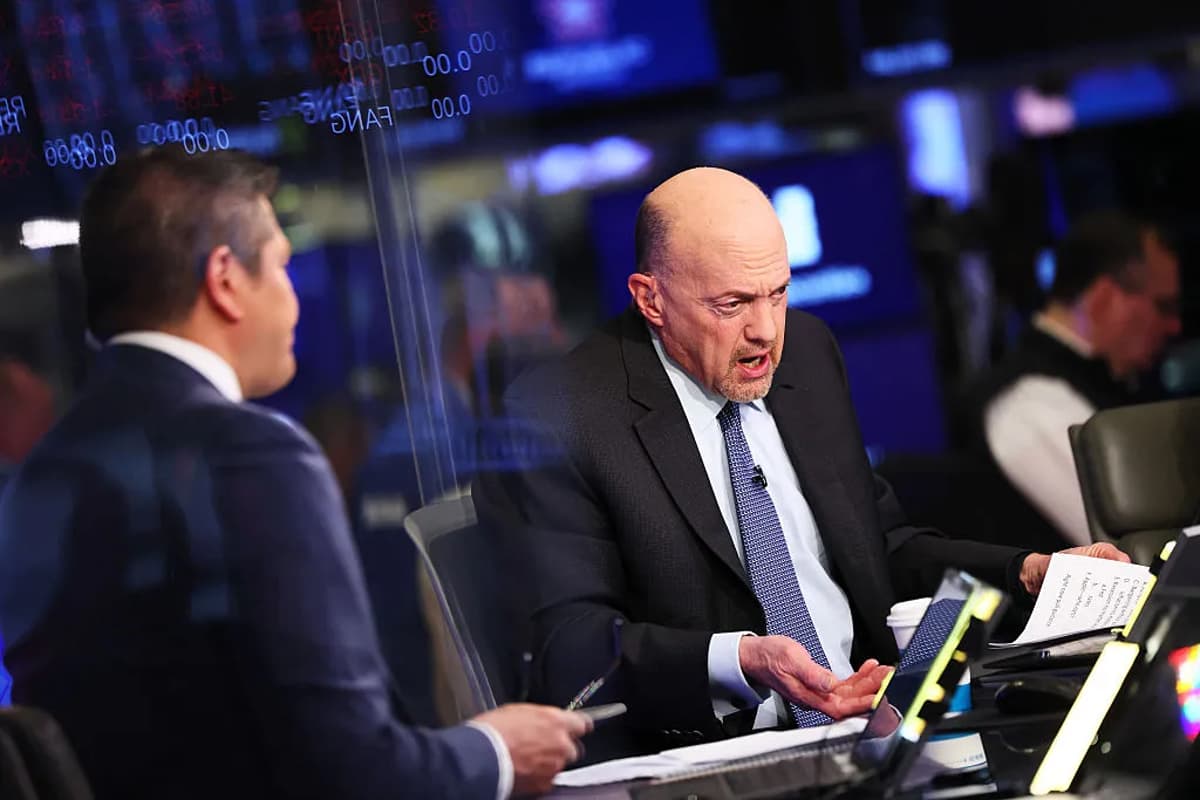
What Jim Cramer’s Investing Misses Can Teach You
Companies Mentioned

Why It Matters
Cramer’s track record highlights the broader truth that most investors cannot reliably beat the market, making a fundamentals‑based, diversified strategy essential for preserving and growing wealth.
Key Takeaways
- •Active stock picks beat S&P only 12% of time over 15 years
- •Buying on hype often leads to buying high, selling low
- •Index funds provide low-cost diversification across thousands of stocks
- •Align portfolio with risk tolerance and investment horizon
- •Dollar‑cost averaging smooths market volatility
Pulse Analysis
The stark underperformance of active managers is not a new revelation, but Cramer’s televised recommendations bring it into the public eye. Data from S&P Global shows that merely 12% of large‑cap active funds have outperformed the S&P 500 in the last decade and a half, a figure that mirrors the odds faced by individual stock pickers. Cramer’s penchant for timing momentum stocks amplifies the inherent risk of trying to outguess market sentiment, a strategy that even seasoned professionals struggle to execute consistently.
Behavioral finance explains why many investors are drawn to the hype Cramer promotes. Momentum‑driven buying often means entering positions at inflated valuations, while premature exits can lock in losses just before a rebound—exactly what happened with the AI infrastructure stock IREN. A more resilient approach emphasizes fundamentals and systematic investing, such as dollar‑cost averaging, which spreads purchases over time and reduces the impact of short‑term volatility. This method allows investors to accumulate shares during market dips and stay invested during rallies, aligning with the long‑run growth of the broader market.
Diversification remains the cornerstone of risk management. Rather than concentrating capital in a handful of high‑profile picks, allocating assets to broad‑based index funds offers exposure to hundreds or thousands of equities, smoothing out company‑specific shocks. Coupled with a clear understanding of one’s time horizon—whether decades for a young professional or a shorter window for retirees—investors can tailor asset mixes that balance growth potential with capital preservation. By integrating these principles, investors can sidestep the pitfalls of headline‑driven trading and build portfolios designed for sustainable, long‑term returns.
What Jim Cramer’s Investing Misses Can Teach You
Comments
Want to join the conversation?
Loading comments...