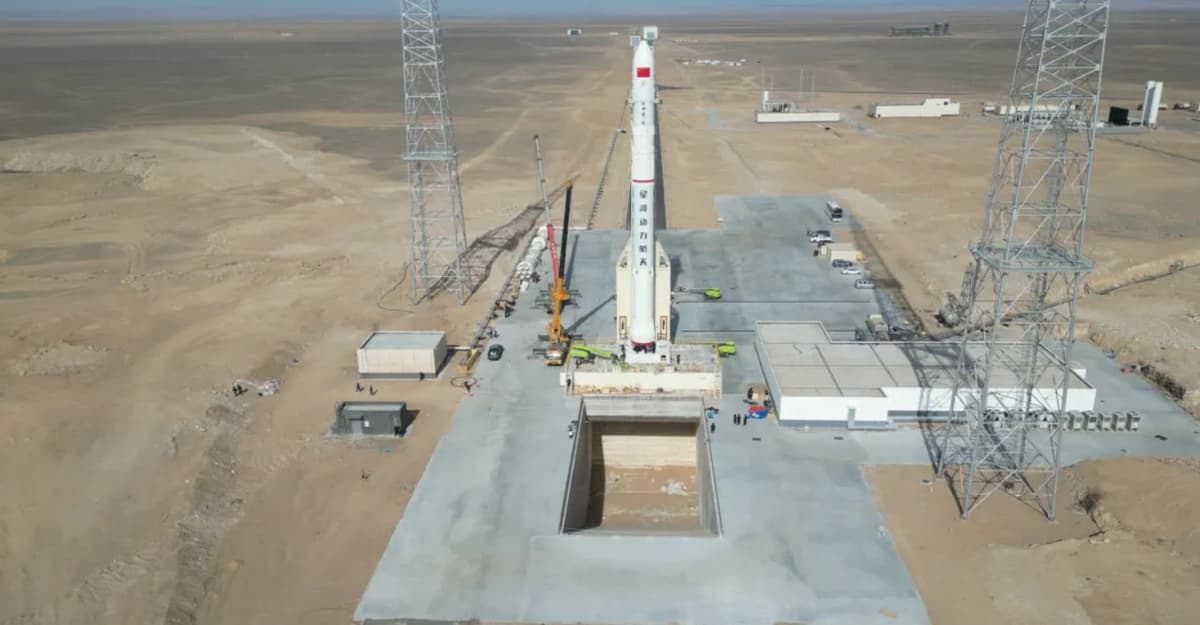
China’s Latest Batch of New and Reusable Rockets Are Close to Launch
Companies Mentioned
Why It Matters
Successful first‑stage recoveries would dramatically cut launch costs and relieve the bottleneck threatening China’s satellite megaconstellations, while also positioning Chinese providers as credible competitors in the global launch market.
Key Takeaways
- •Long March 12B targets first half 2026 launch with 20‑ton LEO capacity
- •Galactic Energy's Pallas‑1 aims 7,000 kg payload, first flight without recovery
- •iSpace's Hyperbola‑3 completed sea‑recovery ground tests; launch before end‑2026
- •Long March 10B prepares sea‑catch recovery for lunar crew missions
- •Landspace plans second Zhuque‑3 first‑stage landing attempt in Q2 2026
Pulse Analysis
China is accelerating its launch cadence as it builds the infrastructure needed for dozens of megaconstellations. The government‑backed China Aerospace Science and Technology Corporation (CASC) and a growing cadre of private firms such as Galactic Energy, iSpace and Landspace have announced a wave of new vehicles slated for 2026. By diversifying propulsion families—kerosene/LOX for Long March 12B and Pallas‑1, methane for Long March 12A, and sea‑based recovery concepts—China aims to reduce launch bottlenecks that have hampered satellite deployment. This push mirrors the United States’ commercial boom, but with a tighter state‑industry partnership that can mobilize resources quickly.
The Long March 12B, a 4‑meter‑diameter kerosene/LOX booster, is positioned to lift roughly 20 tonnes to low‑Earth orbit, though exact payloads for expendable versus recoverable configurations remain undisclosed. Its sibling, the methane‑powered Long March 12A, demonstrated a failed first‑stage recovery in December 2025, underscoring the technical learning curve. Commercial entrants are not far behind: Galactic Energy’s Pallas‑1 will carry up to 7 tonnes to a 200‑km orbit on its maiden flight, while iSpace’s Hyperbola‑3 has validated a sea‑recovery system through full‑scale drop tests. Meanwhile, the cargo‑focused Long March 10B and Landspace’s Zhuque‑3 are both targeting sea‑catch or powered‑descent recoveries in mid‑2026, linking reusability to China’s lunar crew program.
The flurry of test flights coincides with robust financing; iSpace secured a $729 million Series D++ round in February, signaling investor confidence in Chinese reusable launch technology. If the upcoming recovery attempts succeed, China could offer competitive pricing and higher launch cadence for both domestic satellite constellations and international customers, challenging the dominance of SpaceX’s Falcon 9 and emerging players like Arianespace’s Ariane 6. Moreover, the integration of sea‑based recovery and grid‑fin control systems suggests a maturing ecosystem that may soon support rapid turnaround, a key factor for the next generation of low‑cost space logistics.
China’s latest batch of new and reusable rockets are close to launch
Comments
Want to join the conversation?
Loading comments...