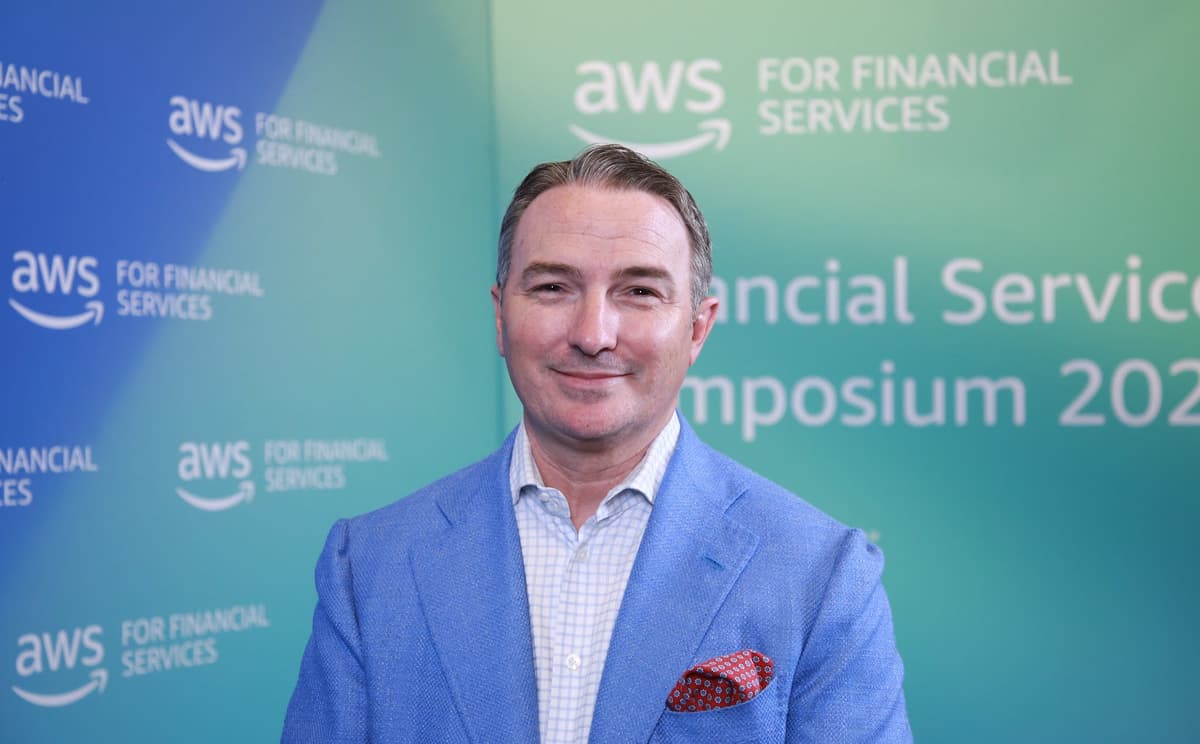
18 Ways AI Is Rewriting the Future of Financial Services: Key Insights From the AWS Financial Services Symposium
Companies Mentioned


Why It Matters
AI is no longer a pilot project; it’s becoming a core operating capability that determines competitive advantage, risk management efficiency, and revenue growth in the financial sector.
Key Takeaways
- •45% of IT leaders rank generative AI as top 2025 budget priority
- •Amazon Bedrock AgentCore enables autonomous AI payments via Coinbase and Stripe
- •Unified observability platforms cut incident volume by ~50% for banks
- •Vanguard compressed inheritance processing from weeks to a single day using Bedrock
- •AI agents reduce commercial loan turnaround from days to hours, accelerating credit
Pulse Analysis
The financial services industry is accelerating its AI investments, with generative models now topping budget lists for nearly half of IT decision‑makers. This shift reflects a broader realization that AI must move from experimental labs into production environments to deliver measurable outcomes. Firms are allocating capital to build continuous research pipelines, unified observability stacks, and data‑centric platforms that can sustain AI workloads at scale, ensuring that risk detection and decision‑making keep pace with market volatility.
At the AWS symposium, several breakthrough use cases illustrated how AI is redefining core processes. Amazon Bedrock’s AgentCore now lets autonomous agents handle payments through integrations with Coinbase and Stripe, paving the way for AI‑driven commerce. Nasdaq’s market‑twin simulations enable traders to stress‑test strategies against realistic order‑book dynamics, while Vanguard’s Bedrock‑powered workflow slashed inheritance processing from weeks to a single day. In banking, unified observability tools such as Datadog and Dynatrace are cutting incident volumes by up to 50%, turning fire‑fighting teams into revenue protectors.
These advances carry strategic implications. As AI becomes embedded in compliance, credit underwriting and legacy code modernization, firms must pair sophisticated models with robust data governance and model validation to meet regulatory standards. The ability to predict incidents, automate routine tasks, and deliver real‑time decision fabrics gives early adopters a decisive edge in speed, cost efficiency and customer experience. Looking ahead, the industry’s focus will shift from "should we use AI" to "how safely and quickly we can scale AI into production," making operational readiness the new competitive frontier.
18 ways AI is rewriting the future of financial services: Key insights from the AWS Financial Services Symposium
Comments
Want to join the conversation?
Loading comments...