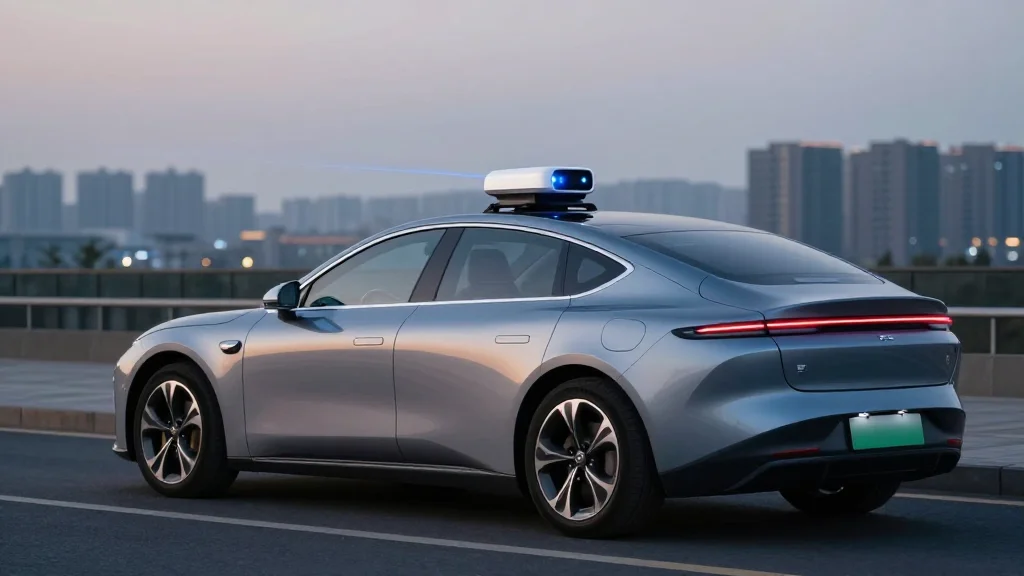
How AI Is Powering the Next Generation of Robotaxis
Companies Mentioned


Why It Matters
The breakthrough proves that generative‑AI techniques can deliver real‑time safety gains in autonomous driving, accelerating commercial rollout and intensifying competition for a market projected to reach $1 trillion in the United States.
Key Takeaways
- •Waymo's fifth‑gen driver uses Gemini‑trained foundation model for perception.
- •AI enables prediction of hidden pedestrians, boosting safety in dense urban traffic.
- •Competitors like Wayve and Waabi pursue cheaper, camera‑only AI stacks.
- •Waymo aims 1 million weekly paid rides in 17 cities by year‑end.
- •Industry investment exceeds $10 billion, targeting a $1 trillion U.S. market.
Pulse Analysis
Waymo’s latest autonomous platform marks a turning point for robotaxis, leveraging a Gemini‑trained foundation model that fuses visual language understanding with predictive decoding. By interpreting subtle cues—such as a pedestrian’s foot motion beneath a bus—the system can anticipate movements that traditional sensor stacks miss, dramatically improving safety in cluttered urban environments. This AI‑first architecture creates a self‑reinforcing loop: data from every mile refines the model, which in turn enhances perception, planning, and the internal critic that rates performance. The result is a driver that can generalise across geographies without exhaustive hand‑coding.
The competitive landscape is rapidly evolving as new entrants adopt leaner, AI‑centric designs. Wayve’s end‑to‑end deep‑learning stack claims to learn driving behaviour directly from human data, eliminating the need for costly lidar arrays. Waabi follows a similar philosophy, relying on high‑resolution cameras and radar to cut hardware expenses. Meanwhile, Zoox and Tesla are experimenting with purpose‑built vehicle platforms that integrate larger batteries and bespoke sensor layouts, aiming to maximise operating hours and lower per‑mile costs. These divergent approaches underscore a broader industry debate: whether the premium of Waymo’s custom hardware is justified against the scalability of cheaper, AI‑only solutions.
Financial backing reflects the high stakes. Uber alone has pledged over $10 billion toward autonomous vehicle development, while venture capital pours into startups promising rapid, cost‑effective deployment. Waymo’s ambition to deliver one million paid rides weekly across 17 cities positions it to capture more than 7% of the U.S. rideshare market by 2030, a slice of an estimated $1 trillion opportunity. As regulators tighten safety standards and cities open their streets to driverless fleets, the firms that can marry robust AI perception with economically viable hardware will likely dominate the next decade of mobility.
How AI is powering the next generation of robotaxis
Comments
Want to join the conversation?
Loading comments...