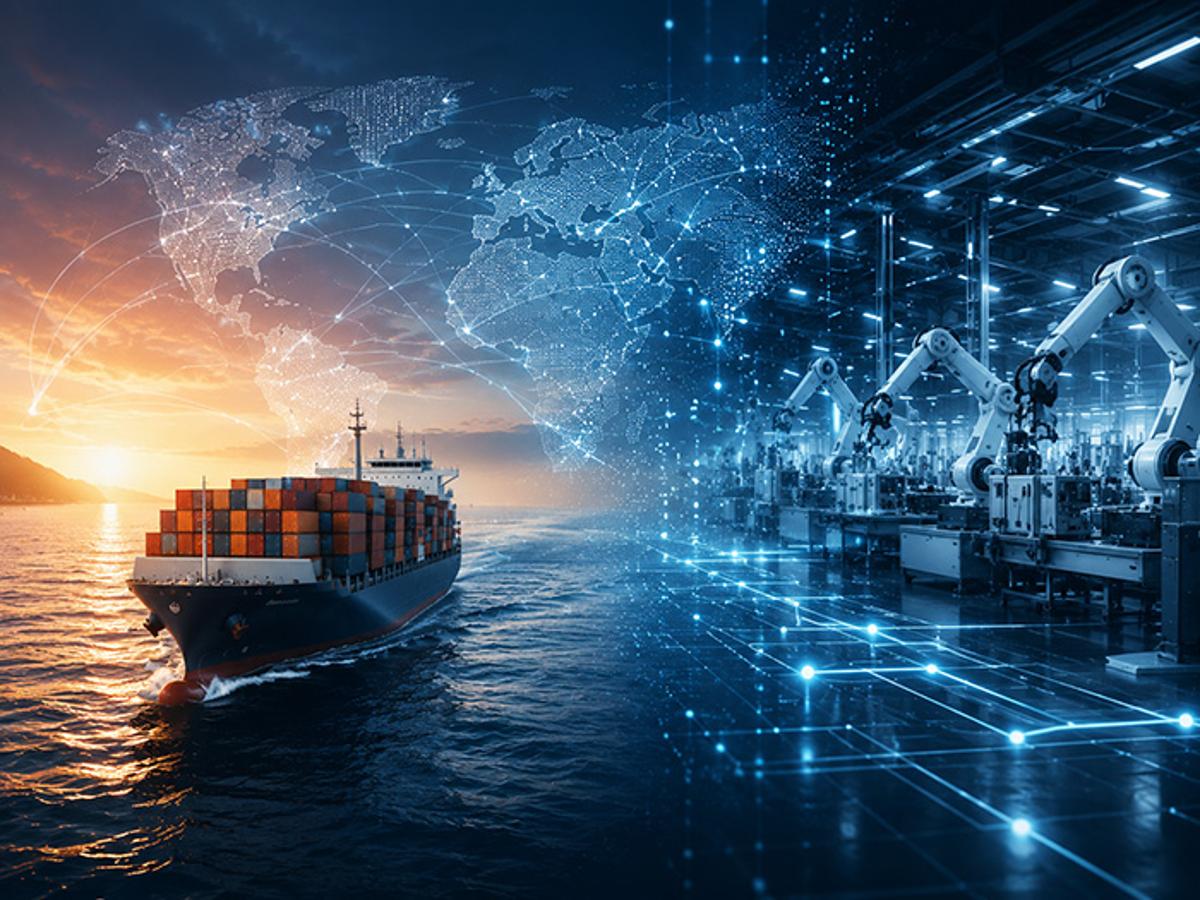
Op-Ed: AI and the Future of International Marine Transportation
Companies Mentioned



Why It Matters
A shift toward AI‑driven, on‑shore manufacturing would upend global supply chains, forcing the maritime industry to redesign vessels, routes, and workforce planning. Nations that fail to develop these technologies risk strategic vulnerability in trade and security.
Key Takeaways
- •AI-driven manufacturing could localize production, reducing long-haul container traffic
- •Quantum computing may accelerate design, enabling smaller, more efficient vessels
- •Regional trade may focus on bulk energy and raw materials
- •Nations without AGI risk reliance on limited maritime imports
- •Maritime strategy must prioritize domestic shipbuilding and crew training
Pulse Analysis
The convergence of artificial intelligence, quantum computing and advanced computer‑aided design is poised to rewrite the economics of production. By automating design cycles and optimizing material usage, these technologies can shrink the time and cost required to fabricate complex goods. As a result, wealthy economies with robust AI ecosystems could shift from importing mass‑produced items to manufacturing them within national borders, dramatically reducing the volume of finished‑goods cargo that currently traverses the world’s major container lanes.
For the maritime sector, this paradigm shift translates into a reallocation of capacity from ultra‑large container vessels to smaller, more versatile ships that move raw materials, energy products and regionally produced goods. Trade routes that once spanned the Pacific and Atlantic may contract, emphasizing intra‑regional corridors and bulk carriers for oil, gas and agricultural commodities. Shipbuilders will need to prioritize modular designs, fuel efficiency and adaptability to serve a market where cargo profiles are more diversified but less voluminous, potentially extending vessel lifespans through retrofits rather than new mega‑builds.
Policymakers and industry leaders must therefore craft a forward‑looking maritime strategy that invests in domestic shipbuilding, crew training and port infrastructure capable of handling a broader mix of vessel sizes. Collaboration with AI and quantum research institutions can accelerate the development of next‑generation propulsion and logistics platforms. Nations that lag in AI adoption risk becoming dependent on a narrow set of maritime imports, exposing them to supply‑chain shocks and geopolitical leverage. Proactive adaptation will safeguard trade resilience and preserve strategic autonomy in an era of rapid technological disruption.
Op-Ed: AI and the future of international marine transportation
Comments
Want to join the conversation?
Loading comments...