OpenAI Ratchets up Codex’s Agentic Capabilities to Rival Claude Code
Companies Mentioned


Why It Matters
The upgrade positions OpenAI to reclaim leadership in AI‑powered development tools, offering developers seamless automation and broader enterprise flexibility.
Key Takeaways
- •Codex can run background agents that click and type on Mac
- •New in‑app browser lets Codex fetch web data for frontend work
- •Memory preview enables Codex to recall prior coding sessions
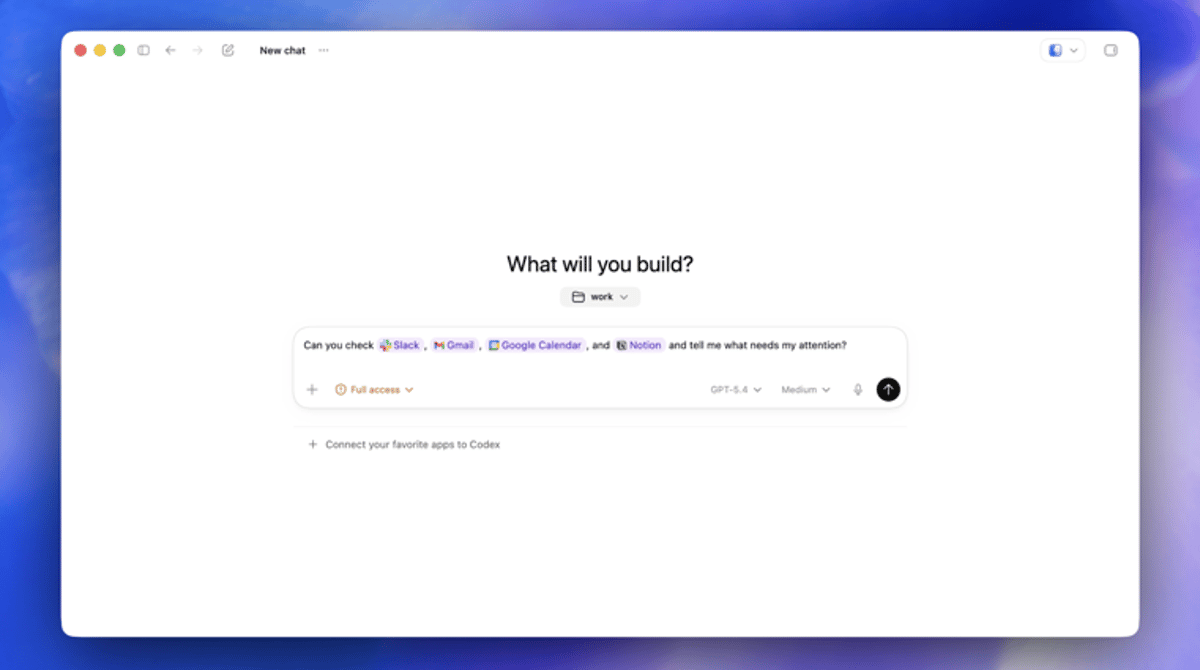
- •Over 90 plugins added, integrating GitLab, Slack, Google Calendar
- •Pay‑as‑you‑go pricing introduced for ChatGPT Enterprise and Business
Pulse Analysis
The AI coding landscape has become a high‑stakes arena, with OpenAI’s Codex and Anthropic’s Claude Code vying for dominance among developers and enterprises. Claude Code’s recent surge in adoption has pressured OpenAI to accelerate feature parity, prompting today’s announcement that transforms Codex from a static code generator into an autonomous assistant. By enabling background agents that can manipulate a user’s computer without interrupting other tasks, OpenAI addresses a core productivity bottleneck: the need to switch contexts between coding, testing, and ancillary chores.
The new capabilities extend beyond mere automation. An integrated in‑app browser allows Codex to pull live web data, a boon for frontend developers who must reference documentation or scrape assets on the fly. The memory preview feature gives the model a temporal awareness, recalling prior sessions to maintain continuity across complex projects. Coupled with an image‑generation module that can produce design mockups and presentation graphics, Codex now serves as a multi‑disciplinary creative partner. The rollout of over 90 plugins—spanning GitLab Issues, Slack, and Google Calendar—further embeds the assistant into existing developer workflows, turning routine clerical tasks into automated actions.
For enterprises, the strategic shift is twofold. First, the expanded toolset promises faster development cycles and reduced overhead, translating into tangible cost savings. Second, the introduction of a pay‑as‑you‑go pricing model lowers the barrier for organizations to experiment with Codex’s advanced features without committing to large, upfront licenses. As AI coding assistants become integral to software delivery pipelines, OpenAI’s aggressive enhancements could reshape market dynamics, compelling competitors to innovate or risk losing relevance in a rapidly evolving tech ecosystem.
OpenAI ratchets up Codex’s agentic capabilities to rival Claude Code
Comments
Want to join the conversation?
Loading comments...