Companies Mentioned



Why It Matters
The enhancements position Codex as a direct competitor to Anthropic’s Claude Code, expanding OpenAI’s foothold in AI‑assisted software development and enterprise automation. Faster, context‑aware coding agents can accelerate product cycles and reduce manual testing overhead.
Key Takeaways
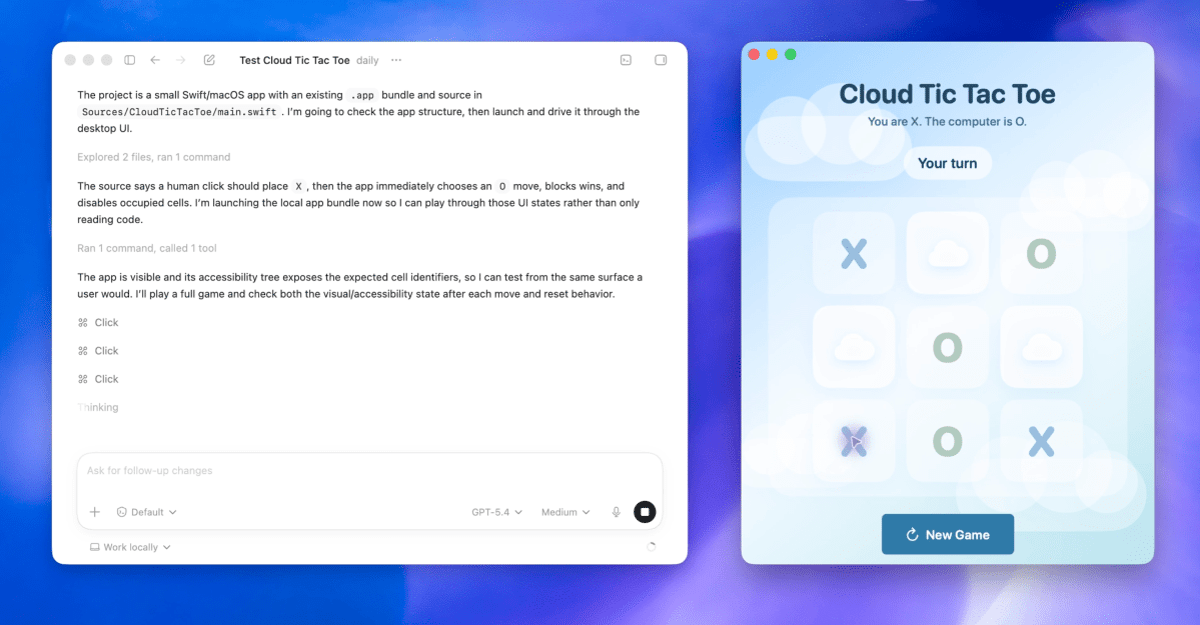
- •Codex can control macOS apps directly, running in background
- •New gpt-image-1.5 adds image generation and iteration capabilities
- •Memory feature lets Codex retain preferences and past corrections
- •Parallel agents enable simultaneous task execution for faster testing
- •Enterprise, Edu, and EU users get early access to personalization
Pulse Analysis
OpenAI’s latest Codex upgrade marks a strategic push into the agentic coding arena, where Anthropic’s Claude Code has recently set a high bar. By allowing the model to manipulate native macOS applications, OpenAI blurs the line between code generation and direct system interaction, offering developers a hands‑free testing environment that can iterate on UI changes without manual clicks. This capability, combined with parallel agent execution, promises to cut development cycles and lower the friction of integrating AI into existing toolchains.
Beyond desktop control, the update bundles gpt‑image‑1.5 for on‑the‑fly image creation, expanding Codex’s utility for UI mockups and design‑centric workflows. New plug‑ins for GitLab, Atlassian Rovo and Microsoft Suite embed the assistant deeper into the software stack, while an in‑app browser lets users annotate web pages and issue precise instructions. The memory preview, an opt‑in feature for enterprise and education customers, stores user preferences and prior corrections, enabling the model to deliver more accurate outputs over time and to resume long‑running tasks autonomously.
For businesses, these enhancements translate into tangible productivity gains. Development teams can offload repetitive testing, UI tweaking, and documentation generation to a self‑learning agent, freeing engineers to focus on higher‑value work. The rollout’s initial macOS focus mirrors a broader industry trend of AI‑first desktop experiences, and the upcoming EU and enterprise availability signals OpenAI’s intent to capture market share in regulated environments. As AI agents become more autonomous, the competitive dynamics with Claude Code will likely intensify, driving rapid innovation in code‑assistant ecosystems.
OpenAI’s big Codex update is a direct shot at Claude Code
Comments
Want to join the conversation?
Loading comments...