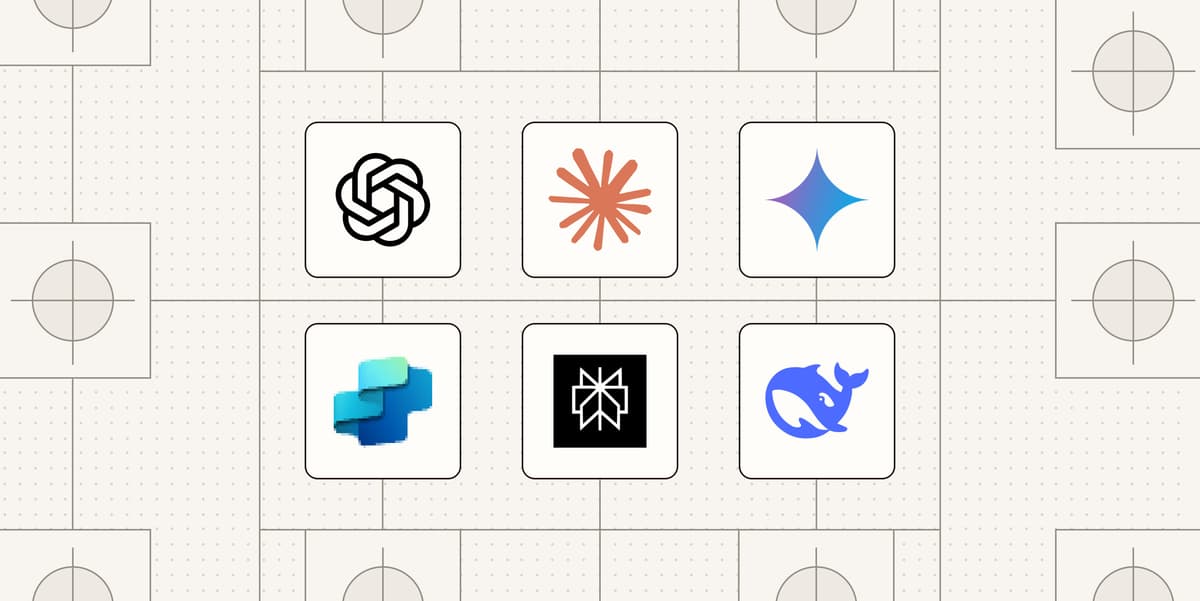
Companies Mentioned




Why It Matters
Choosing the right chatbot can boost productivity, streamline integrations, and protect data, making it a strategic decision for enterprises navigating the AI‑first workplace.
Key Takeaways
- •ChatGPT leads overall with Agent mode and broad integrations.
- •Claude excels at writing and code with Claude Code and Artifacts.
- •Gemini and Copilot dominate Google and Microsoft ecosystems respectively.
- •Perplexity provides real‑time web search with citations for research.
- •DeepSeek offers free open‑source reasoning; Duck.ai ensures data privacy.
Pulse Analysis
The AI chatbot market has exploded into a crowded arena where differentiation hinges on integration depth and workflow relevance. While ChatGPT remains the most versatile option, its strength now lies in advanced features like Agent mode, which automates multi‑step tasks across apps. Claude’s focus on long‑form writing and code generation makes it a favorite among content creators and developers, especially with its Claude Code and Artifacts tools that turn prompts into functional outputs. Meanwhile, niche players such as Perplexity and DeepSeek cater to research‑intensive users and open‑source enthusiasts, respectively, expanding the ecosystem beyond the big‑tech giants.
Enterprise adoption is increasingly driven by how seamlessly a chatbot plugs into existing productivity suites. Google Gemini’s native ties to Workspace and Microsoft Copilot’s embedding across Windows, Office, and Teams illustrate a shift toward AI‑augmented environments where the chatbot becomes a contextual assistant rather than a standalone app. Pricing structures reflect this trend: free tiers lure users to experiment, while tiered subscriptions—often $8 to $30 per month—unlock higher token limits, advanced tools, and enterprise‑grade security. Companies must weigh these costs against the value of reduced manual effort, faster decision‑making, and the ability to automate routine communications.
Looking ahead, the market will likely converge on multi‑model platforms that let users switch between providers within a single interface, as seen with Poe’s compute‑point system. Privacy‑focused solutions like Duck.ai and open‑source models such as DeepSeek will gain traction amid growing regulatory scrutiny. Organizations that adopt a modular chatbot strategy—pairing a generalist like ChatGPT with specialist tools for coding, research, or privacy—will be best positioned to harness AI’s productivity gains while mitigating risk.
The best AI chatbots in 2026
Comments
Want to join the conversation?
Loading comments...