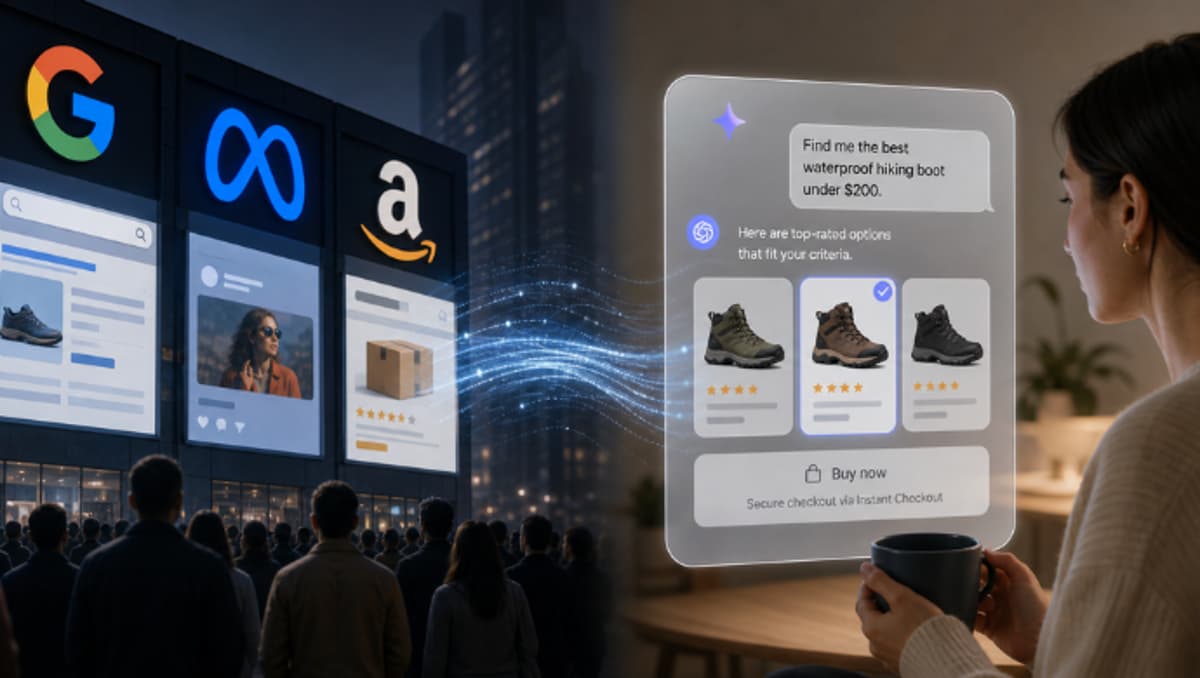
When the Buyer Is a Machine: Why Agentic Commerce Threatens the Trillion-Dollar Advertising Model
Companies Mentioned




Why It Matters
Agentic buying removes the advertising impression from the purchase funnel, potentially eroding the dominant revenue stream of the world’s biggest ad platforms and reshaping how brands reach consumers.
Key Takeaways
- •AI agents completed first programmatic ad deal during 2025 NFL playoffs
- •Zero‑click commerce bypasses search, social and marketplace ad impressions
- •AI‑attributed orders on Shopify grew elevenfold from 2025 to 2026
- •Google’s search click‑through rates fell 61% with AI overview rise
- •McKinsey projects global agentic commerce market up to $5 trillion by 2030
Pulse Analysis
The emergence of agentic commerce is more than a novel shopping channel; it signals a paradigm shift in how value is extracted from consumer attention. Traditional digital advertising monetises every click, view or impression that precedes a purchase, but AI agents can fulfill a request in a single conversational exchange, eliminating the need for a search results page, a social feed or a marketplace listing. This "zero‑click" model not only sidesteps ad inventory but also creates a blind spot for analytics platforms that rely on browser‑based tracking, inflating the perceived health of the ad ecosystem while actual spend migrates to API‑driven transactions.
Investors should watch the accelerating rollout of standards such as Google’s Universal Commerce Protocol and Shopify’s Agentic Storefronts, which embed AI‑driven checkout pathways directly into merchant ecosystems. These production‑grade integrations enable agents to source products across dozens of retailers without surfacing ads, effectively siphoning a slice of the $1 trillion ad pie. Early indicators—an elevenfold rise in AI‑attributed Shopify orders and a 670% surge in chatbot traffic during the 2025 holiday season—suggest that the growth curve is steepening, even as the overall market share remains modest.
For the dominant platforms, the strategic dilemma is clear: embrace the agentic layer and re‑engineer ad formats for AI recommendation engines, or defend existing ad inventory and risk ceding the emerging commerce frontier to competitors like OpenAI and independent startups. Companies that successfully embed sponsored content within AI agents could transform the ad model from impression‑based pricing to transaction‑oriented fees, preserving revenue streams while adapting to the new buying behavior. Conversely, firms that block or ignore agentic commerce may see a gradual compression of their advertising top line as consumers increasingly delegate purchases to machines. The timing remains uncertain, but the infrastructure is already in place, making agentic commerce a critical variable for future capital allocation decisions.
When the buyer is a machine: Why agentic commerce threatens the trillion-dollar advertising model
Comments
Want to join the conversation?
Loading comments...