From Zero to Eight Figures in 18 Months: Decagon CEO’s Playbook for AI-Native SaaS Growth. And Why They Partnered With Accel
B2B GrowthSaaSVenture CapitalSaaS PulseVenture

From Zero to Eight Figures in 18 Months: Decagon CEO’s Playbook for AI-Native SaaS Growth. And Why They Partnered With Accel

Jason Lemkin
Jason LemkinOct 28, 2025

Why It Matters

Decagon proves that AI‑native SaaS can achieve hyper‑growth when product‑market fit is validated through quantifiable ROI, reshaping how investors and founders approach enterprise AI solutions.

From Zero to Eight Figures in 18 Months: Decagon CEO’s Playbook for AI-Native SaaS Growth. And Why They Partnered With Accel

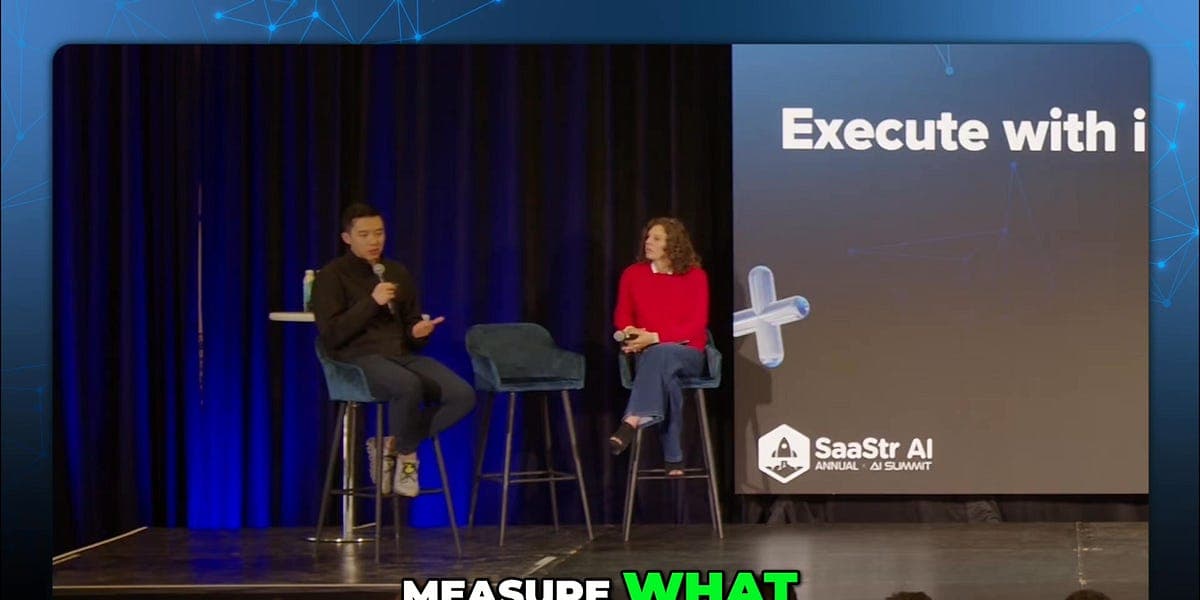
A SaaStr Annual + AI Summit conversation with Jesse Zhang, CEO of Decagon, and Sarah Ittelson, Partner at Accel

Founded in late 2023—just months after GPT‑4’s release—Decagon has become one of the fastest‑growing AI companies in history. The company builds AI customer service agents for large enterprises, automating conversations that previously required human support teams.


The Growth Trajectory

  • Founded: Late 2023

  • Time to Eight Figures ARR: ~18 months

  • Team Size: ~100 people (and scaling rapidly)

  • Location: 100% in‑person team

  • Customers: Major enterprises including Hertz, Chime, and other leading brands

  • Typical Customer ROI: $800K in savings for every $250K spent

  • Market Position: Recognized as the leading Gen‑AI native solution in customer service automation


What Makes This Growth Unprecedented

Even by venture standards, this is exceptional. Sarah Ittelson, the Accel partner who led their Series A investment, has been part of the hyper‑growth phases at Uber, Uber Eats, and Fair. Her assessment? “This current moment and the scaling that’s possible within these AI companies is unparalleled to even those hyper‑growth moments of before.” When Accel invested at the Series A, Decagon was targeting seven figures. By the time Jesse and Sarah took the stage at SaaStr to share their playbook, they’d already blown past eight figures. The headline had to be updated mid‑flight. This isn’t a story about getting lucky in a hot market. It’s a masterclass in intentional decision‑making, relentless customer focus, and building a machine that compounds growth. Let’s unpack exactly how they did it.


The Reality Most Founders Miss

Your growth rate is mostly determined by which market you’re in. Jesse and his co‑founder didn’t just pick customer service because it seemed like a good idea. They ran a rigorous discovery process—talking to roughly 100 potential customers over the course of a month. Every day packed with customer conversations. Every night cranking out product to show the next day.

Why customer service?

  • Clear, measurable ROI: Companies could point to specific dollar savings. Spend $250K, save $800K in human support costs.

  • Massive TAM: Customer service is one of those rare markets where the surface area is enormous.

  • Buyer urgency: Unlike many SaaS categories, companies were willing to move off schedule to adopt AI solutions.

The key insight: they weren’t looking for a market where AI could work. They were looking for a market where companies were already bleeding money on a problem that AI could solve today.


The Daily Cadence

  • Pack every day with as many customer conversations as possible

  • Extract commitments: “If we built this, how much would it be worth to you?”

  • Build at night based on what you learned during the day

  • Show it to customers the next day

  • Iterate ruthlessly

What They Were Really Listening For:

Not excitement. Not validation. They were listening for willingness to pay.

Jesse’s Framework:

You could talk to the wrong person who feeds you useless feedback. Or you could talk to someone who’s super excited about your pitch, but when you get to pricing, there’s nothing there. True discovery means being aggressive about understanding what customers actually value and what they’ll actually pay for.


The Anti‑Pattern They Avoided

Jesse’s previous company was a consumer startup (eventually acquired by Niantic). The biggest lesson? They spent too much time sitting by themselves thinking about good ideas, building them, launching, and getting zero traction. That’s the burnout loop. With Decagon, they flipped the script: talk first, build second, validate constantly.


Maintaining Customer Intimacy

Most companies do customer discovery well early, then lose touch as they scale. Decagon hasn’t.

  • Weekly touchpoints with every customer (they work only with larger customers, which makes this feasible)

  • Proactive outreach—don’t wait for customers to complain

  • The entire team stays involved in go‑to‑market, not just sales

  • Principle: customers might not proactively tell you what’s missing; you have to pull it out of them and understand what’s next on the horizon before they fully articulate it.


The Decagon Team Philosophy

They’re essentially 100% in‑person. That’s not an accident—it’s a forcing function for the culture they wanted to build.

What They Screen For:

  • Raw intelligence and adaptability

  • Commitment level (non‑negotiable with co‑founders and early employees)

  • Working style alignment

The Interview Process:

Ask about past experiences: “Tell me about a project where you invested the most time in your life.” Look at favorite projects, how hard people worked, the pace they maintained. Get back‑channel references. By the time someone reaches the final interview with Jesse, they’ve already opted into the in‑person culture and the intensity. There’s no hard sell needed.

Co‑Founder Alignment:

  • Similar life stage

  • Level of commitment (absolute non‑negotiable)

  • Working style and pace

  • Type of company you want to build

  • Amount of time you’re willing to invest

The Best Way to Find Out:

Build something together. Do a trial. If you’re considering co‑founding, you probably have the time to experiment. The trial will surface everything: working style, commitment level, how you handle disagreement, pace of execution. Everything else is just conversation.


Decagon’s North Star Approach

Everyone needs to know what they’re working toward. If you’re in sales or engineering, you need clear goals aligned in the same direction. If you’re not working toward one of the important goals, you’re probably not working on something important.

Metrics That Matter:

  • ARR

  • Customer count

  • Customer quality

Celebration Cadence:

They celebrate wins constantly: Customer gives great feedback → Customer goes live → Deal closes → Customer renews for two years. Every win gets shared. The team knows what they’re working toward and sees the impact in real time.


The Challenge Ahead

Jesse’s candid about this: they’re still figuring out how to maintain this culture as they scale. Right now they’re about 100 people and growing quickly. At some point, you can’t maintain culture just by talking. You need systems. They’re actively building those now.


What’s Fundamentally Changed About Selling SaaS in the AI Era

  1. ROI Must Be Provable and Fast

    Customers expect to test and see real ROI. For Decagon, that means:

    • Quantifiable conversation resolution rates

    • Measurable cost savings

    • Improved customer satisfaction scores

    If both cost savings and CSAT are going up, the business case sells itself. They’re saving money AND customers are happier.

  2. Deployment Can Be Incremental

    You don’t have to deploy all at once. Pick one surface area. Deploy to 10% of your customer base. Get live in production. If it works, ramp up. This makes buying cycles shorter and happens more frequently because you’re not waiting for massive projects with perfect test cases before commercial discussions begin.

  3. The Technology Layer Keeps Changing

    Models are improving constantly. New techniques emerge. You have to build with the assumption that everything underneath will change.

    How Decagon Handles This:

    • Build for model flexibility—instant evaluation and swapping of new models

    • Own the application layer (the final product customers buy)

    • Focus on solving the business problem, not showcasing the technology

    The business problem doesn’t change even as technology evolves. That’s the power of building at the application layer. You’re evaluated on solving the problem, and as technology improves, your product improves automatically.


Decagon’s Messaging

  1. Gen‑AI Native

    Customer service has a long history of automation. The natural question is: “How are you different from existing solutions that are now adding Gen‑AI?” Decagon’s answer: They built from the ground up for Gen‑AI. The entire paradigm of how you build these agents is different. You can do fundamentally more when you’re not retrofitting Gen‑AI onto legacy architecture.

  2. Real ROI with Real Customers

    AI is hyped. But Decagon has case studies with companies like Hertz and Chime showing:

    • Specific dollar savings

    • Support team repurposing

    • Higher NPS and retention

    The message isn’t “AI is cool.” It’s “AI actually works here, and here’s the proof.”

Comments

Want to join the conversation?

Loading comments...