BlackBerry QNX Deepens Nvidia Edge AI Tie‑up, Fuels Enterprise Growth

Companies Mentioned
Why It Matters
The QNX‑Nvidia integration signals a shift in how enterprise AI solutions are built for regulated environments, where safety and real‑time performance are non‑negotiable. By offering a single, certified software‑hardware stack, the partnership reduces development cycles and lowers barriers to entry for manufacturers of robots, medical devices and industrial equipment, potentially reshaping supply chains and accelerating digital transformation across heavy‑industry verticals. For BlackBerry, the deals diversify revenue beyond its legacy security software, anchoring the company in high‑margin, growth‑oriented B2B markets. Success could validate BlackBerry's strategic pivot to a software‑centric model and provide a template for other legacy tech firms seeking relevance in the AI‑driven enterprise era.
Key Takeaways
- •QNX OS for Safety 8.0 integrated with Nvidia IGX Thor and Halos Safety Stack announced at Hannover Messe
- •Leapmotor selects QNX SDP 8.0 and Hypervisor for Safety 8.0 for its D19 SUV, entering mass production in April 2026
- •BlackBerry shares rise 13.17% to $5.50 on news, with trading volume up 497% versus three‑month average
- •QNX sales have grown 10% annually and backlog 23% since 2022, indicating strong momentum
- •Early‑access program for Nvidia IGX Thor Developer Kit opens Q3 2026 for enterprise developers
Pulse Analysis
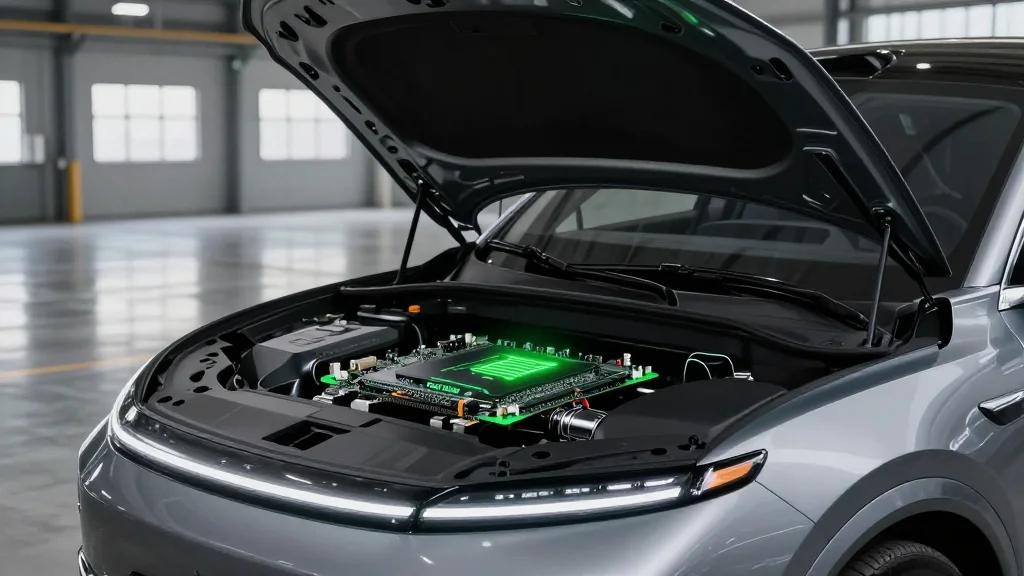
BlackBerry's QNX is leveraging its deep safety pedigree to become the connective tissue between AI compute and regulated compliance. The Nvidia partnership is more than a technology tie‑up; it creates a market‑ready, safety‑certified stack that addresses a long‑standing pain point for manufacturers who must juggle real‑time control with AI workloads. Historically, safety‑critical systems have been siloed, forcing developers to choose between deterministic RTOS environments and high‑performance GPUs. By marrying QNX's microkernel with Nvidia's IGX Thor, the combined offering eliminates that trade‑off, potentially accelerating time‑to‑market for next‑gen robots and medical devices.
From a competitive standpoint, the move pits QNX against other RTOS vendors like Green Hills and Wind River, but the Nvidia integration gives it a unique hardware advantage. If early adopters can certify products faster and at lower cost, QNX could capture a disproportionate share of the emerging edge‑AI market, which IDC projects to exceed $200 billion by 2028. The Leapmotor deal also demonstrates that automotive OEMs are willing to adopt a centralized safety‑certified architecture, a trend that could cascade to other vehicle platforms seeking to reduce ECU count and software sprawl.
Looking ahead, the real test will be the commercial rollout of the IGX Thor‑QNX stack. Success will depend on developer uptake, the speed of safety certifications, and BlackBerry's ability to monetize the partnership through licensing and services. If these elements align, QNX could become the de‑facto standard for safety‑critical AI at the edge, cementing BlackBerry's transformation from a legacy handset maker to a cornerstone of the B2B AI infrastructure.
BlackBerry QNX deepens Nvidia Edge AI tie‑up, fuels enterprise growth
Comments
Want to join the conversation?
Loading comments...