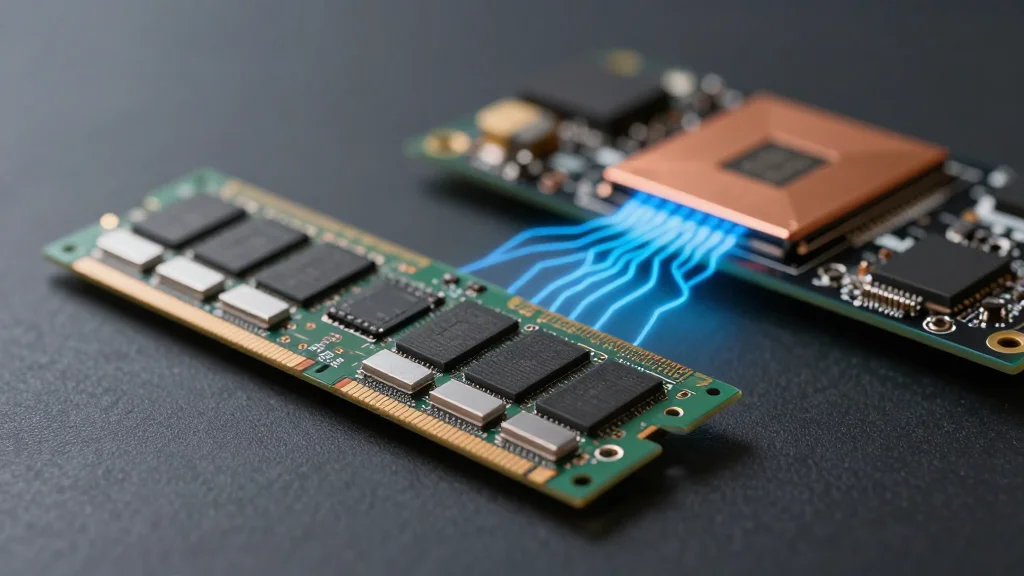
Samsung Secures HBM4 Supply Deal with AMD, Targeting AI Accelerator Market

Why It Matters
The Samsung‑AMD HBM4 agreement illustrates how memory suppliers are becoming strategic partners rather than mere component vendors in the AI hardware value chain. By securing a dedicated supply of next‑generation memory, AMD can accelerate its AI accelerator deployments, which are central to its growth strategy and to major customers like Meta. For Samsung, the deal opens a pathway to diversify revenue beyond traditional DRAM and NAND markets, potentially positioning the company as a one‑stop shop for AI‑centric semiconductor solutions. If Samsung leverages this foothold to negotiate a broader manufacturing role, the competitive balance among the world’s leading foundries could shift. TSMC, which currently dominates AMD’s logic production, may face pressure to offer more flexible terms or to deepen its own memory capabilities. The ripple effects could reshape pricing, capacity allocation, and innovation cycles across the B2B AI hardware sector.
Key Takeaways
- •Samsung will supply sixth‑generation HBM4 memory to AMD for its next AI accelerator.
- •AMD's market cap stands at roughly $258.8 billion, with shares at $201.33 as of March 20.
- •The deal could pave the way for Samsung to participate in AMD's advanced chip manufacturing.
- •AMD's AI roadmap includes a multi‑year, up‑to‑six‑gigawatt GPU deployment with Meta by 2026.
- •First HBM4 shipments are slated for the second half of 2026, with annual reviews of the partnership.
Pulse Analysis
Samsung's entry into AMD's AI supply chain is more than a simple component sale; it reflects a broader trend where memory manufacturers are seeking to embed themselves in the design and production loops of high‑performance compute. Historically, memory and logic have operated in parallel silos, but the escalating data‑intensity of AI workloads forces tighter integration. Samsung's massive scale in memory fabrication gives it a unique bargaining chip, allowing it to negotiate terms that could include joint R&D on advanced packaging or even shared fab capacity.
From AMD's perspective, diversifying its supply base mitigates the risk of bottlenecks that have plagued the AI hardware market in recent years. The company's reliance on TSMC for logic has been a strength, but it also creates a single point of failure. By adding Samsung as a memory partner—and potentially a manufacturing ally—AMD can improve supply‑chain resilience, a factor that investors are increasingly valuing. The partnership also aligns with AMD's aggressive AI growth targets, as the company aims to capture a larger share of the data‑center GPU market, which is projected to exceed $100 billion by 2027.
The competitive implications for TSMC are significant. While TSMC remains the premier logic foundry, the prospect of Samsung moving up the value chain could force TSMC to reconsider its own memory strategy or to offer more attractive terms to retain AMD's business. In the broader B2B ecosystem, the deal signals that companies with deep expertise in one semiconductor domain are now eyeing cross‑functional roles, potentially accelerating consolidation and reshaping the competitive landscape for AI hardware suppliers.
Samsung Secures HBM4 Supply Deal with AMD, Targeting AI Accelerator Market
Comments
Want to join the conversation?
Loading comments...