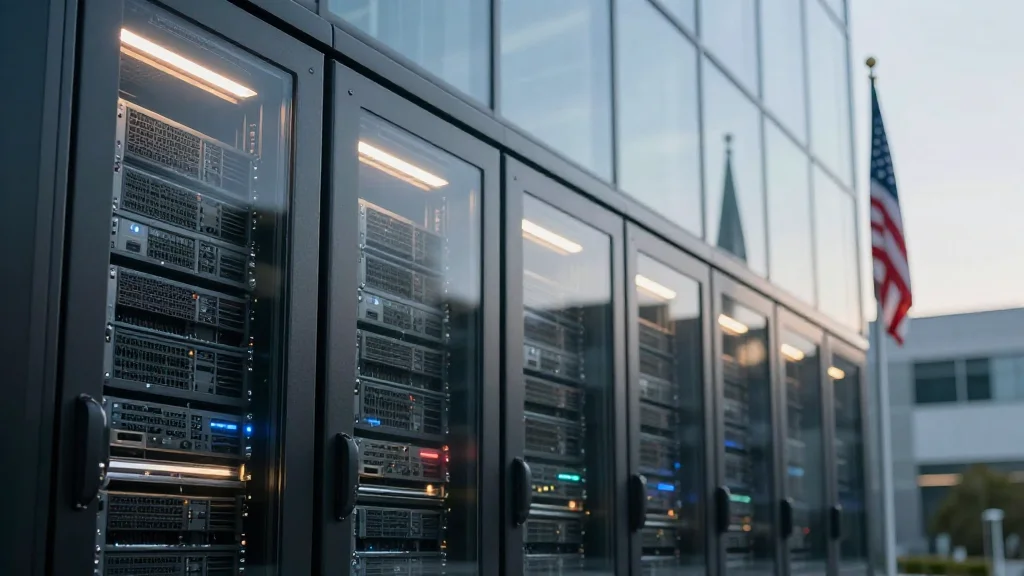
States Revamp Data Center Tax Breaks and Grid Fees, Sparking B2B Infrastructure Shift

Companies Mentioned

Why It Matters
The reconfiguration of state incentives directly impacts the cost structure of data‑center operators, which in turn influences pricing for downstream B2B customers that rely on cloud, AI, and high‑performance computing services. By altering the economics of site development, these policies can accelerate or stall the deployment of critical digital infrastructure needed for enterprise digital transformation. Moreover, the emphasis on grid‑cost recovery and sustainability criteria signals a broader shift toward aligning data‑center growth with public‑interest concerns such as energy affordability and environmental impact. Companies that adapt early will gain a competitive advantage in securing stable, cost‑effective capacity, while laggards may face higher tariffs, regulatory delays, or reduced access to tax‑benefit programs.
Key Takeaways
- •Alabama's S.B. 270 would force data centers over 150 MW to cover full grid costs
- •Florida's S.B. 484 protects ratepayers from data‑center resource demands
- •Arkansas cut tax‑exemption threshold from $500 M to $100 M and excluded crypto mining
- •California bills SB 886 and SB 887 tie incentives to tariff structures and water‑conservation standards
- •Georgia is considering the nation’s first statewide moratorium on new data‑center construction
Pulse Analysis
The current wave of state‑level reforms reflects a maturation of the U.S. data‑center market. Early growth was driven by aggressive tax incentives and minimal utility oversight, a formula that delivered rapid capacity expansion but also generated public backlash over rising electricity rates and water consumption. The new legislative mix suggests that states are now calibrating incentives to extract more public value—whether through grid‑cost recovery, environmental safeguards, or tighter eligibility criteria.
From a strategic perspective, B2B providers must treat regulatory heterogeneity as a core component of their total cost of ownership models. Multi‑state footprints will become a hedge against localized policy shocks, while firms that can lock in long‑term renewable‑energy contracts will likely secure preferential treatment in states that tie tax breaks to sustainability metrics. In the longer term, the pressure for a coordinated federal framework may intensify, especially if the patchwork hampers the United States' ability to compete with China and other AI powerhouses.
Ultimately, the policy shift could re‑balance the data‑center ecosystem: instead of a race to the bottom on tax subsidies, the focus may move toward operational efficiency, renewable integration, and community partnership. Companies that anticipate and align with these emerging priorities will be best positioned to capture the next wave of B2B growth in the AI‑driven economy.
States Revamp Data Center Tax Breaks and Grid Fees, Sparking B2B Infrastructure Shift
Comments
Want to join the conversation?
Loading comments...