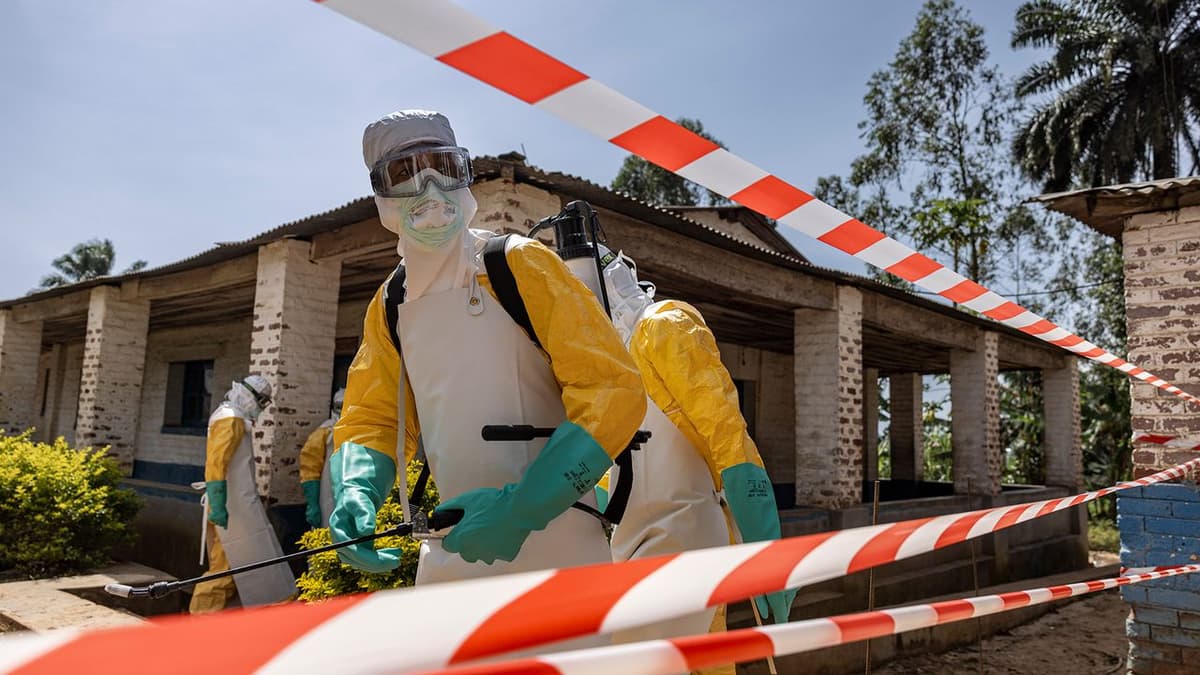
3 New Ebola Vaccines Are Being Fast-Tracked Amid the Current Outbreak — when Could They Be Ready?
Companies Mentioned
Why It Matters
If deployed quickly, the new vaccines could curb a potentially massive Ebola surge, protecting vulnerable populations and averting broader regional instability. Their development also tests the agility of global pandemic‑response mechanisms for future emerging pathogens.
Key Takeaways
- •CEPI backs three Bundibugyo vaccine candidates from IAVI, Oxford, Moderna
- •Vaccine platforms: rVSV, ChAdOx1, mRNA each offer distinct logistics
- •WHO estimates 7‑9 months for emergency use authorization
- •Outbreak could exceed 20,000 cases in three months without intervention
- •Cold‑chain gaps and hesitancy impede vaccine rollout in DRC
Pulse Analysis
The current Bundibugyo Ebola outbreak marks a departure from the more familiar Zaire strain that has historically driven vaccine development. With only two recorded Bundibugyo incidents, public‑health officials lack field experience, and the virus’s lower lethality has not spurred prior investment in countermeasures. Modeling by the CDC’s Morbidity and Mortality Weekly Report warns that, without swift intervention, case numbers could eclipse 20,000 in a quarter, stressing the urgency for novel tools beyond traditional contact tracing and isolation.
CEPI’s rapid‑response strategy hinges on three parallel vaccine platforms, each leveraging technology proven in other epidemics. IAVI’s rVSV vector mirrors the successful Zaire vaccine, delivering a single‑dose efficacy of up to 100 %. Oxford’s ChAdOx1 platform, familiar from the COVID‑19 AstraZeneca shot, offers easier storage at refrigerated temperatures, while Moderna’s mRNA approach promises rapid design cycles and scalable manufacturing at the Serum Institute of India. By funding late‑stage trials, CEPI aims to compress the WHO’s seven‑to‑nine‑month authorization window, potentially delivering emergency use doses while safety data are still being gathered.
Even with a viable vaccine, deployment in the DRC faces formidable obstacles. Remote clinics often lack reliable electricity, complicating cold‑chain logistics for rVSV formulations, while community mistrust can fuel hesitancy toward any foreign‑made product. Successful containment will therefore require a hybrid strategy: integrating ring vaccination with robust surveillance, strengthening health‑system infrastructure, and building local trust through transparent communication. The Bundibugyo response will serve as a litmus test for how quickly the global health community can translate accelerated vaccine pipelines into on‑the‑ground impact, informing preparedness for future zoonotic threats.
3 new Ebola vaccines are being fast-tracked amid the current outbreak — when could they be ready?
Comments
Want to join the conversation?
Loading comments...