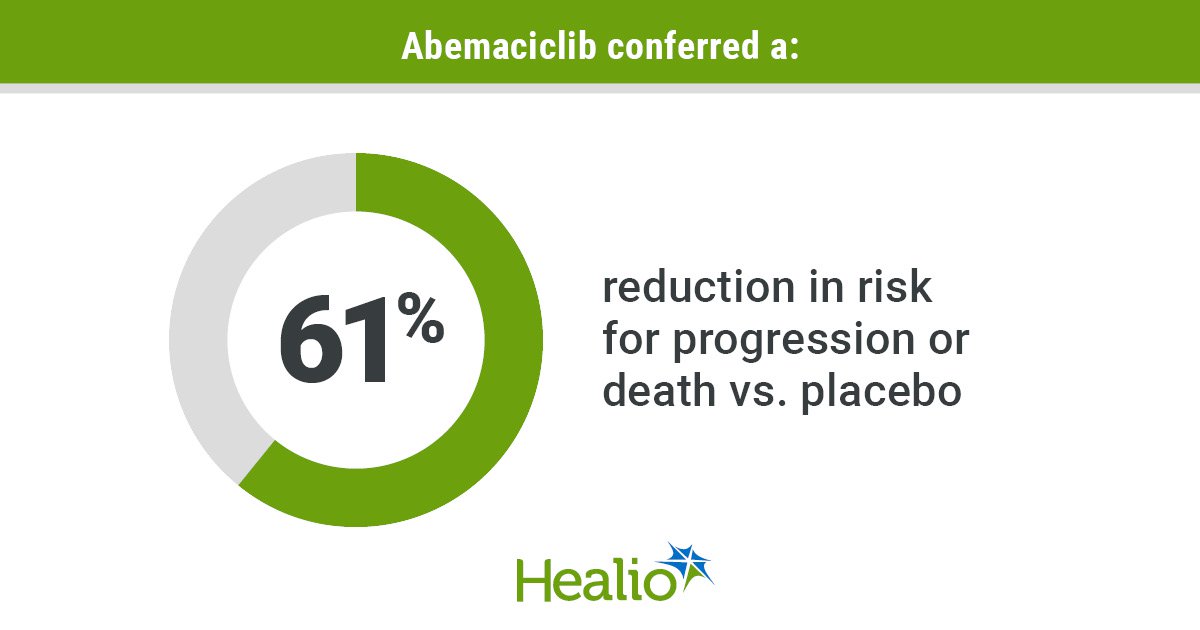
Abemaciclib May Be New Standard for Sarcoma Subtype
Companies Mentioned
Why It Matters
The trial provides the first robust evidence that a targeted oral therapy can meaningfully delay disease progression in dedifferentiated liposarcoma, offering clinicians a non‑chemotherapy alternative and reshaping treatment algorithms for this rare, aggressive cancer.
Key Takeaways
- •Abemaciclib median PFS 9.7 months vs 1.5 months placebo.
- •First positive phase‑3 trial (SARC041) in dedifferentiated liposarcoma.
- •Overall survival trend favorable; median OS not reached vs 25.5 months.
- •Grade 3‑4 neutropenia ~30%; dose reductions required in 39%.
- •First‑line abemaciclib yielded >16‑month median PFS, unprecedented result.
Pulse Analysis
Dedifferentiated liposarcoma, a rare soft‑tissue sarcoma driven by CDK4 amplification, has long relied on surgery and cytotoxic chemotherapy, which deliver modest benefit and considerable toxicity. The identification of CDK4 as a genomic driver opened the door for CDK4/6 inhibitors—already successful in hormone‑receptor‑positive breast cancer—to be repurposed for sarcoma. Early phase‑2 studies hinted at activity, but the field lacked definitive evidence until the SARC041 trial demonstrated a six‑fold improvement in progression‑free survival, establishing a clear efficacy signal that surpasses historical outcomes with doxorubicin‑based regimens.
The SARC041 results are noteworthy not only for the magnitude of PFS gain but also for the safety profile that mirrors the drug’s experience in breast cancer. Grade 3‑4 neutropenia affected roughly a third of patients, and dose reductions were required in 39%, yet these adverse events were manageable and did not offset the clinical benefit. Moreover, an exploratory analysis revealed that patients receiving abemaciclib as first‑line therapy achieved median PFS exceeding 16 months—a benchmark never before seen in liposarcoma trials—suggesting that earlier integration of CDK4 inhibition could become a strategic priority for oncologists.
Looking ahead, the positive trial outcome is likely to accelerate regulatory discussions and may prompt inclusion of abemaciclib in NCCN guidelines as a preferred systemic option for unresectable or metastatic dedifferentiated liposarcoma. Ongoing research is already exploring synergistic combinations with MEK inhibitors and anti‑PD‑1 immunotherapies, which could further enhance response durability. For investors and pharmaceutical stakeholders, the data open a new market segment for CDK4/6 inhibitors beyond breast cancer, potentially expanding the drug’s lifecycle and revenue streams while addressing a critical unmet need in sarcoma care.
Abemaciclib may be new standard for sarcoma subtype
Comments
Want to join the conversation?
Loading comments...