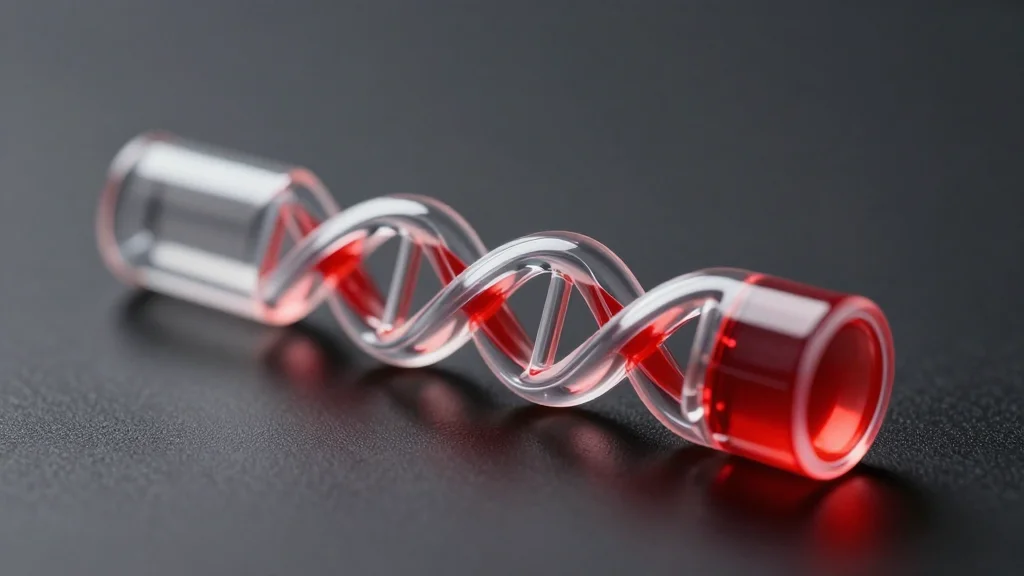
Left-Handed DNA Tubes Double Cancer Drug Killing by Boosting Cell Uptake
Why It Matters
Chiral DNA nanocarriers can double therapeutic potency while limiting off‑target effects, offering a pathway to safer, more effective chemotherapy for AML and potentially other cancers.
Key Takeaways
- •Left‑handed DNA tubes double Daunorubicin killing efficacy
- •Chirality drives selective uptake of CD117‑targeted nanostructures
- •Right‑handed tubes attach but are rejected, reducing delivery
- •Chiral design could cut off‑target toxicity of conventional chemotherapy
Pulse Analysis
The emergence of DNA origami as a programmable scaffold has opened new horizons in precision medicine, but most designs have focused on sequence composition rather than three‑dimensional geometry. Chirality—an intrinsic property of many biomolecules—has now been demonstrated to influence how nanocarriers interact with cell‑surface receptors. By arranging aptamers on a left‑handed tube, researchers created a molecular “glove” that fits the left‑handed binding sites of CD117, a marker prevalent on acute myeloid leukemia cells, thereby unlocking a previously untapped lever for cellular entry.
In the Illinois study, left‑handed tubes loaded with Daunorubicin achieved over 200% higher cytotoxicity compared with their right‑handed counterparts, despite identical aptamer sequences and surface attachment rates. Advanced imaging confirmed that the left‑handed constructs induced CD117 dimerization, triggering endocytosis and rapid drug release inside the malignant cells. Conversely, right‑handed tubes were internalized far less efficiently and were often shed from the membrane, illustrating a clear enantioselective barrier that can be exploited to sharpen therapeutic windows. This breakthrough suggests that future nanomedicines could be engineered with a “handedness code” to match specific tumor phenotypes, potentially extending beyond AML to solid tumors that express distinct receptor chiralities.
Translating chiral DNA nanocarriers into the clinic will require rigorous assessment of immunogenicity, biodistribution, and large‑scale manufacturing. Nonetheless, the prospect of halving chemotherapy doses while preserving—or even enhancing—clinical outcomes could reshape oncology drug pipelines and reduce the costly burden of adverse events. Investors and biotech firms are likely to watch this space closely, as the integration of structural chirality into nanomedicine aligns with broader industry trends toward modular, highly specific therapeutic platforms that promise both efficacy and safety.
Left-handed DNA tubes double cancer drug killing by boosting cell uptake
Comments
Want to join the conversation?
Loading comments...