Linvoseltamab Data ‘Encouraging’ in Relapsed AL Amyloidosis
Companies Mentioned
Why It Matters
The results address a critical unmet need in a disease with limited treatment options, positioning linvoseltamab as a potential new standard for relapsed AL amyloidosis and expanding the role of off‑the‑shelf BCMA bispecifics in hematologic disorders.
Key Takeaways
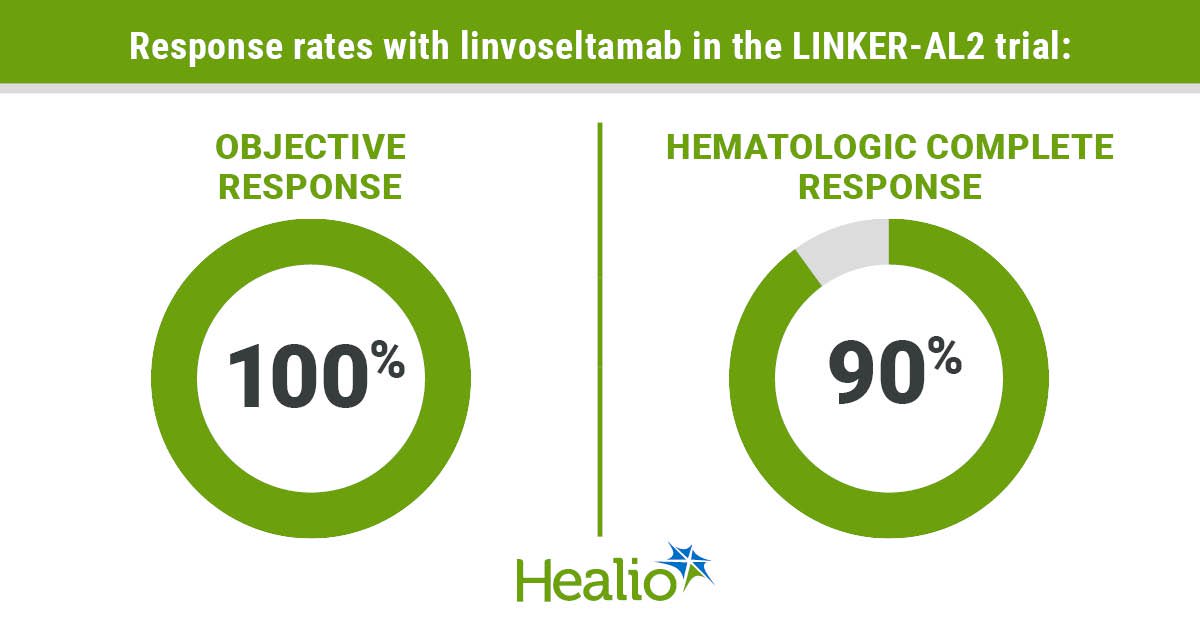
- •20 patients all achieved objective response; 18 reached complete hematologic response.
- •No dose‑limiting toxicities observed across step‑up and weekly dosing.
- •Median time to complete response was ~1.5 months.
- •Renal response rate 73%; cardiac response rate 50% in this cohort.
- •Phase 2 will randomize 80 mg vs 240 mg with registrational intent.
Pulse Analysis
AL amyloidosis remains one of the most challenging plasma‑cell disorders, with organ‑depositing light‑chain fibrils driving heart and kidney failure. Existing therapies, such as daratumumab‑based regimens, are approved only for newly diagnosed patients, leaving those with relapsed or refractory disease reliant on off‑label multiple‑myeloma drugs that often produce slow or incomplete responses. The emergence of BCMA‑directed bispecific antibodies offers a mechanistic shift, harnessing T‑cell engagement to eradicate plasma cells more efficiently and potentially curbing fibril production at its source.
The LINKER‑AL2 phase 1 data presented at ASCO underscore linvoseltamab’s potency: a 100% objective response rate and a 90% hematologic complete response rate in a frail cohort with prior daratumumab exposure. Responses materialized quickly, with median complete remission in just six weeks and rapid normalization of free light‑chain levels. Safety signals were modest; while grade 3‑4 adverse events occurred in two‑thirds of patients, no dose‑limiting toxicities emerged, and severe cytokine‑release syndrome was rare. These outcomes suggest that linvoseltamab can deliver deep, durable remissions without the prolonged infusion schedules typical of CAR‑T or other cellular therapies.
Looking ahead, the upcoming phase 2 portion will expand enrollment and randomize dosing to refine the optimal regimen, aiming for registrational approval. If larger studies confirm these early signals, linvoseltamab could quickly become the first FDA‑approved therapy for relapsed AL amyloidosis, reshaping treatment algorithms and offering community oncologists an off‑the‑shelf option. The drug’s market potential is significant, given the disease’s rarity but high unmet need, and it may also pave the way for bispecific strategies in other light‑chain mediated conditions.
Linvoseltamab data ‘encouraging’ in relapsed AL amyloidosis
Comments
Want to join the conversation?
Loading comments...