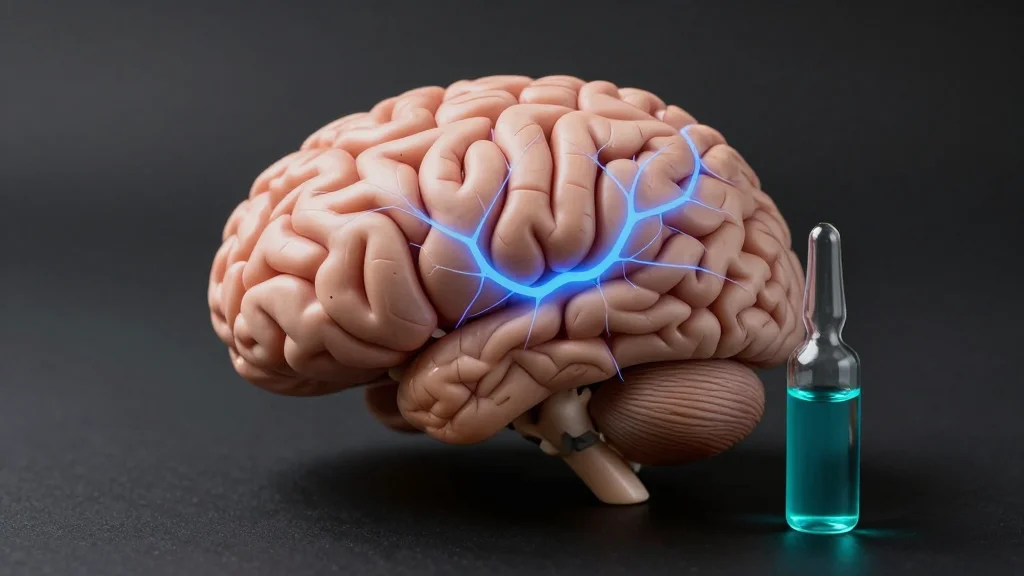
Pyrazole-Derived TRPC3 Antagonist Ameliorates Synaptic Dysfunctions and Memory Deficits in Alzheimer’s Disease Models
Why It Matters
Targeting TRPC3 offers a mechanistic alternative to NMDA‑based drugs, potentially slowing disease progression rather than merely alleviating symptoms.
Key Takeaways
- •New TRPC3 antagonist crosses blood‑brain barrier and is metabolically stable
- •Aβ oligomers upregulate TRPC3, causing calcium overload and neurotoxicity
- •Blocking TRPC3 restores synaptic plasticity in 5xFAD and APPKI mice
- •Treated mice show rescued spatial memory in Morris water maze
- •Human AD brains exhibit elevated TRPC3 versus controls
Pulse Analysis
Calcium dysregulation lies at the heart of Alzheimer’s pathology, yet most approved therapies focus on downstream NMDA receptors. While memantine provides modest symptomatic relief, it does not address the upstream ion channels that may drive calcium overload. Recent research has highlighted the transient receptor potential canonical (TRPC) family, especially TRPC3, as a contributor to neuronal excitability and calcium influx, making it an attractive yet underexplored target for disease‑modifying interventions.
In a series of rigorous in‑vitro and in‑vivo experiments, scientists synthesized a pyrazole‑based TRPC3 antagonist with enhanced metabolic stability and brain penetrance, overcoming the limitations of the earlier compound Pyr3. Primary neuronal cultures exposed to soluble amyloid‑beta oligomers showed a marked increase in Trpc3 expression, leading to excessive intracellular calcium and cell death. Administration of the new antagonist normalized calcium levels, preserved dendritic spine density, and prevented neurotoxicity. When delivered to transgenic 5xFAD and APPKI mouse models, the drug rescued long‑term potentiation and improved performance in spatial memory tasks such as the Morris water maze, indicating functional recovery at the behavioral level.
The demonstration that selective TRPC3 inhibition can mitigate both synaptic and cognitive deficits reshapes the therapeutic landscape for Alzheimer’s disease. By intervening upstream of NMDA receptors, this strategy may curb the cascade of calcium‑mediated neuronal loss, offering a potential disease‑modifying approach. Ongoing work will need to assess long‑term safety, optimal dosing, and efficacy in larger animal models before moving to human trials, but the data provide a compelling proof‑of‑concept that TRPC3 is a viable drug target in neurodegeneration.
Pyrazole-derived TRPC3 antagonist ameliorates synaptic dysfunctions and memory deficits in Alzheimer’s disease models
Comments
Want to join the conversation?
Loading comments...