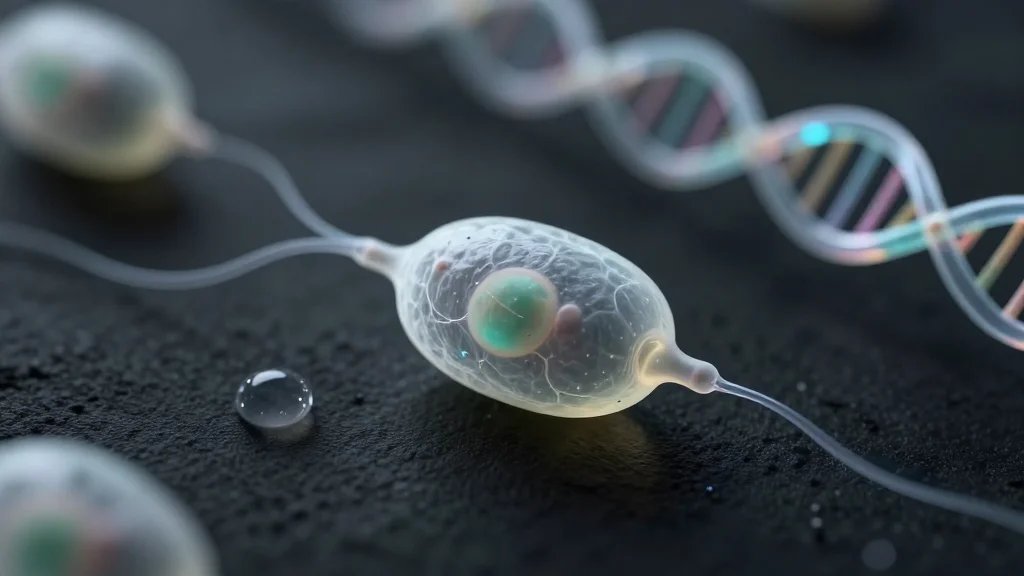
Reading Genetic Activity From Living Cells without Destroying Them
Why It Matters
NTVE provides a reusable, live‑cell readout of gene activity, accelerating cell‑therapy development and drug discovery by allowing continuous molecular monitoring.
Key Takeaways
- •NTVE extracts mRNA without lysing cells
- •Method matches conventional transcriptomics accuracy
- •Enables daily monitoring of stem cell differentiation
- •Works in neurons and mixed cell cultures
- •Facilitates long‑term organoid and tumor studies
Pulse Analysis
Traditional transcriptomic profiling requires cell lysis, limiting researchers to a single snapshot of gene expression. The team at Technical University of Munich and Helmholtz Munich has now introduced Non‑destructive Transcriptomics via Vesicular Export (NTVE), a virus‑like particle system that ferries messenger RNA out of living cells. By capturing extracellular RNA bubbles, scientists can sequence the transcriptome while keeping the cell intact. Early validation shows NTVE data aligns closely with standard bulk RNA‑seq, proving the approach reliable for repeated measurements over days.
The ability to sample gene activity repeatedly opens new avenues in regenerative medicine and drug discovery. Stem‑cell biologists can now track cardiomyocyte or germ‑layer differentiation on a day‑by‑day basis, sharpening quality control for cell‑based therapies. Pharmacologists can observe how candidate compounds modulate pathways in real time, reducing reliance on endpoint assays. Moreover, NTVE functions in neurons and heterogeneous co‑cultures, enabling researchers to map intercellular communication in organoids, tumor spheroids, and other complex models without disrupting the microenvironment.
From a commercial perspective, NTVE could become a core technology for biotech platforms that require longitudinal molecular readouts, such as cell‑therapy manufacturers and high‑throughput screening services. The non‑destructive nature lowers consumable costs and accelerates data cycles, potentially shortening development timelines. While scaling virus‑like particle production and ensuring regulatory compliance remain challenges, the method aligns with the industry’s push toward more predictive, patient‑specific assays. As investors seek tools that de‑risk early‑stage programs, NTVE is poised to attract funding and partnership interest.
Reading genetic activity from living cells without destroying them
Comments
Want to join the conversation?
Loading comments...