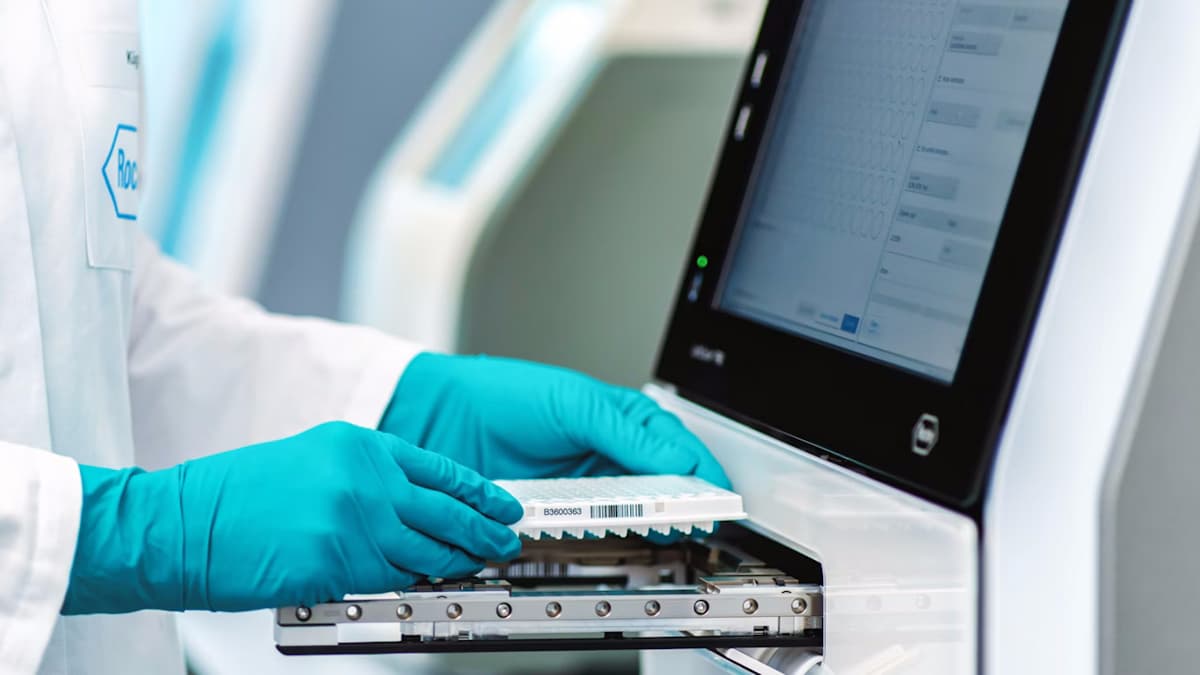
Roche Develops Bundibugyo Ebola Test in Six Days
Companies Mentioned
Why It Matters
Accelerating diagnostic availability shortens the time to isolate cases and start treatment, a critical advantage in a high‑mortality Ebola outbreak and a proof point for rapid‑response diagnostic platforms.
Key Takeaways
- •Roche developed Bundibugyo Ebola PCR test in six days
- •Test currently for research use, supports lab validation
- •Outbreak: 397 cases, 65 deaths, 16% fatality rate
- •Rapid diagnostics crucial where vaccines are unavailable
- •TIB Molbiol’s library holds 15,000 pathogen pre‑designs
Pulse Analysis
The Bundibugyo strain of Ebola, first identified in the Democratic Republic of Congo and Uganda, has triggered a WHO public health emergency of international concern. With 397 laboratory‑confirmed infections and 65 deaths—a case‑fatality rate near 16%—the outbreak strains already limited health infrastructure. Because no licensed vaccine or therapeutic exists for this rare variant, early detection becomes the primary tool for breaking transmission chains. Laboratories on the front lines therefore require fast, reliable assays that can be deployed in remote, resource‑constrained settings.
Roche’s molecular‑diagnostics unit TIB Molbiol answered that need by leveraging its ‘rapid response’ library of more than 15,000 pre‑designed pathogen tests. Within six days of receiving the Bundibugyo genome sequence, the team produced a PCR assay for research use, distributing it to regional labs for validation. The speed of this effort underscores how a curated repository of primers, probes and positive controls can compress what traditionally takes months into a matter of days. Early‑phase, research‑use assays enable health authorities to build testing capacity while awaiting regulatory clearance.
The rapid‑development model demonstrated by Roche signals a shift in how the diagnostics industry prepares for emerging infectious diseases. By maintaining a broad, ready‑to‑customize portfolio, companies can shorten the gap between pathogen discovery and field deployment, reducing the window for unchecked spread. For governments and NGOs, such agility translates into faster quarantine decisions, more timely supportive care, and stronger community trust. As pathogen surveillance intensifies worldwide, the market for on‑demand, modular diagnostic platforms is likely to expand, rewarding firms that invest in extensive pre‑design libraries.
Roche develops Bundibugyo Ebola test in six days
Comments
Want to join the conversation?
Loading comments...