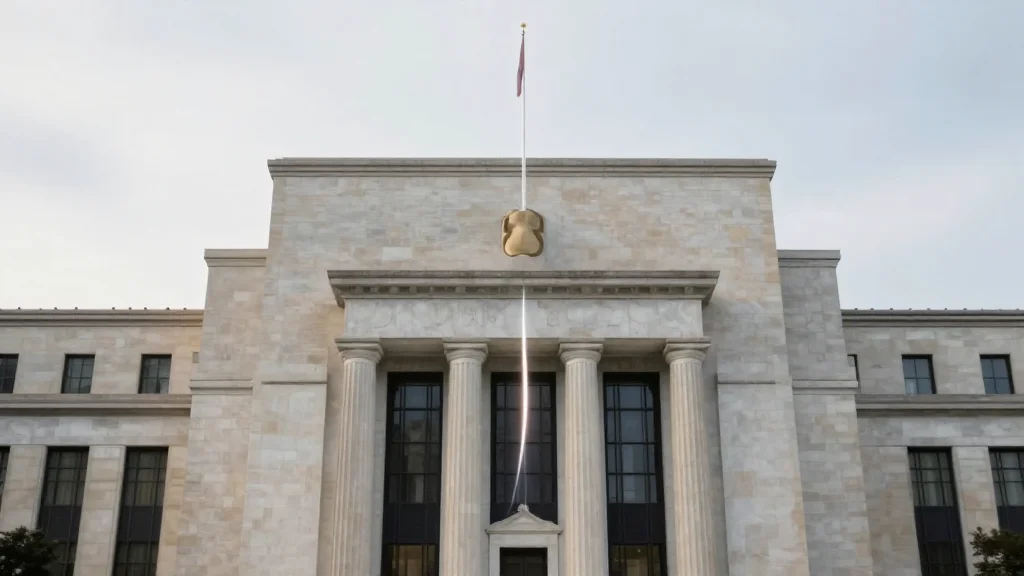
Trump's Fed Pressure Sparks Bond Market Volatility Fears

Why It Matters
Bond markets are the backbone of global financing, and Treasury yields set the benchmark for virtually all other credit. Political interference that erodes the Fed’s independence could force investors to price in a larger uncertainty premium, raising borrowing costs for corporations, municipalities, and the federal government alike. Higher yields also affect pension funds, insurance companies, and retail investors whose portfolios rely on stable, predictable returns. Moreover, a precedent of political meddling could embolden other governments to pressure their own central banks, potentially destabilizing emerging‑market debt markets that already grapple with volatility. The ripple effects would extend beyond U.S. Treasuries, influencing global capital flows and the valuation of risk assets worldwide.
Key Takeaways
- •President Trump urges the Fed to meet off‑schedule and cut rates immediately.
- •Historical examples—Nixon’s 1972 rate cuts and Turkey’s 2021 policy shifts—preceded bear markets and inflation spikes.
- •ECB chief economist Philip Lane warned that political control would cause bond markets to reprice, raising long‑term yields.
- •Premature rate cuts could reignite inflation, forcing the Fed to reverse policy and trigger a bond sell‑off.
- •Higher Treasury yields would increase borrowing costs across the economy and raise risk premiums for investors.
Pulse Analysis
The current episode highlights a recurring dilemma: the trade‑off between short‑term political gains and long‑term market stability. While a rate cut could provide a temporary boost to equities and reduce borrowing costs for the administration’s agenda, the bond market’s reaction to perceived political risk is swift and often punitive. Historically, markets have punished policymakers who appear to compromise central‑bank independence, as seen in the 1970s U.S. bear market and Turkey’s 2021 currency crisis. The key metric to watch will be the 10‑year Treasury yield; a sustained rise above 4.5% would signal that investors are demanding a premium for uncertainty.
From a strategic standpoint, bond investors should reassess duration exposure and consider hedging against a potential yield spike. Portfolio managers might tilt toward shorter‑duration Treasuries or inflation‑protected securities (TIPS) to mitigate the impact of a sudden rate hike reversal. At the same time, corporate issuers could lock in current financing rates before any policy shift, especially in sectors with high leverage.
Looking ahead, the Fed’s response will be the decisive factor. If Chairman Jerome Powell maintains a data‑driven stance and resists political pressure, the market may view the episode as a temporary flashpoint, limiting volatility. Conversely, any concession could set a precedent that erodes confidence in the central bank’s autonomy, prompting a broader re‑pricing of risk across global bond markets.
Trump's Fed Pressure Sparks Bond Market Volatility Fears
Comments
Want to join the conversation?
Loading comments...