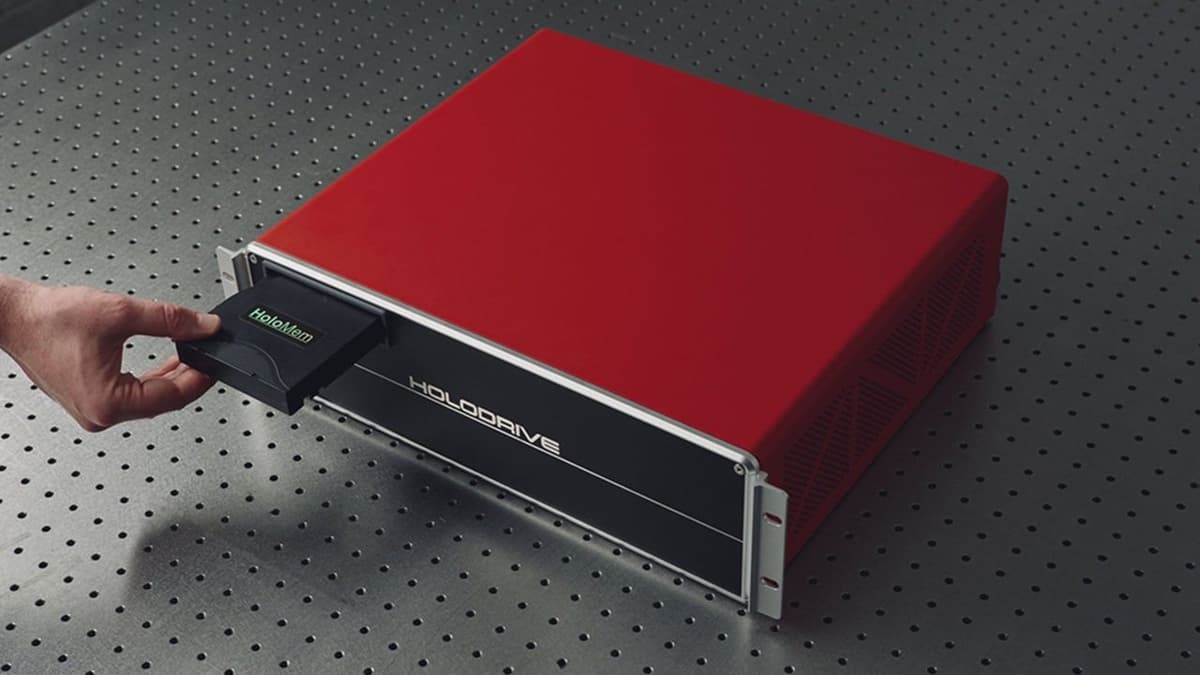
Holographic Tape Inches Closer to Mass Market Ahead of Silica, Ceramic Media - 200TB WORM Tech Set to Debut in 2027 After Successful Dry Run in an LTO Tape Library
Why It Matters
Integrating holographic tape into legacy tape libraries accelerates adoption of ultra‑high‑density cold storage, offering a scalable path for enterprises facing exponential data growth. Its compatibility reduces capital expense and simplifies compliance‑driven archival strategies.
Key Takeaways
- •200 TB per cartridge, WORM archival format
- •Fits existing LTO library robots, no hardware changes
- •Design targets 50‑year data longevity
- •Mass production planned for 2027, ahead of competitors
- •Pilot deployments scheduled through 2026
Pulse Analysis
The holographic tape breakthrough arrives at a time when enterprises grapple with exploding cold‑data volumes and the high cost of scaling traditional disk arrays. By leveraging polymer‑ribbon media and layered holographic recording, HoloMem can pack 200 TB into a form factor identical to LTO tapes, delivering a dramatic density jump without demanding new robotic infrastructure. This compatibility lowers the barrier to entry, allowing organizations to augment existing tape libraries with a high‑capacity tier that meets stringent write‑once‑read‑many compliance requirements.
From a technical standpoint, the system’s reliance on inexpensive laser components and a WORM architecture addresses two longstanding challenges: cost per gigabyte and data integrity over decades. While laboratory tests have shown impressive raw density, the real value lies in the successful dry run within a production‑grade LTO library, where software and hardware interoperability were validated. Such integration mitigates the risk of vendor lock‑in and eases certification processes, making holographic tape a viable candidate for regulated industries that need immutable, long‑term storage.
Looking ahead, HoloMem’s roadmap targets mass production by 2027, positioning the technology ahead of competing silica and ceramic archival media that still require bespoke handling systems. If the commercial hardware matches the trial’s performance, the market could see a shift toward holographic tape as the preferred cold‑storage tier, especially for organizations seeking to defer data center expansion costs. Analysts will watch pilot deployments through 2026 closely, as real‑world reliability and cost metrics will ultimately determine whether holographic tape reshapes the archival storage landscape.


Comments
Want to join the conversation?
Loading comments...