Panthalassa Secures $140 Million to Deploy Wave‑Powered Floating Data Centres

Companies Mentioned
Why It Matters
The financing round positions Panthalassa at the intersection of two accelerating trends: exponential AI compute growth and the urgent need for carbon‑free power. By decoupling data‑centre energy from terrestrial grids, the technology could alleviate grid stress in regions where renewable integration is lagging, while also reducing the carbon footprint of AI workloads. Successful deployment would also diversify the renewable portfolio beyond wind and solar, adding a marine‑based, dispatchable source that operates continuously regardless of weather. Beyond the immediate environmental benefits, the approach could reshape supply‑chain dynamics for the data‑centre industry. Reliance on steel and shipbuilding expertise sidesteps the rare‑earth bottlenecks that have plagued battery‑based storage and some wind turbine designs. If the cost per megawatt of wave‑generated power becomes competitive, cloud providers may increasingly consider offshore sites as a strategic asset, potentially spurring new regulatory frameworks for marine data‑centre zoning and maritime safety.
Key Takeaways
- •Panthalassa raised $140 million, led by Peter Thiel, valuing the start‑up at ~ $1 billion.
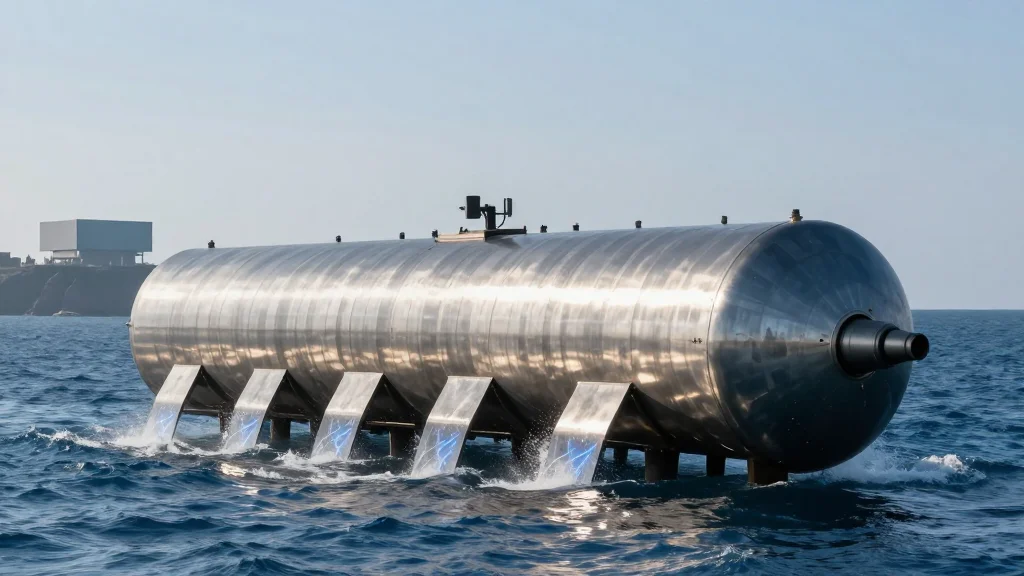
- •The floating nodes are 85 metres tall, made of 25‑40 mm steel hulls, and can survive 15‑metre waves and Category 5 hurricanes.
- •Wave turbines generate electricity that powers AI chips in hermetically sealed, seawater‑cooled containers.
- •IEA projects data‑centre energy use to grow 30% annually through 2030; AI could consume 3% of global energy.
- •Pilot manufacturing facility to be built in the U.S., with first commercial deployments expected in 2025.
Pulse Analysis
Panthalassa’s $140 million raise reflects a broader shift in capital allocation toward infrastructure that can reconcile the data‑centre boom with climate imperatives. Historically, cloud providers have expanded on land, relying on grid upgrades and large‑scale solar or wind farms. Those solutions are increasingly constrained by land availability, transmission bottlenecks, and the intermittency of wind and solar. By moving compute offshore, Panthalassa offers a vertically integrated model where power generation and consumption coexist in a single marine platform, potentially reducing transmission losses and land‑use conflicts.
The involvement of heavyweight investors such as Thiel, Benioff and Doerr signals that the venture is not merely a niche experiment but a strategic bet on a new asset class. Their track records suggest they see a long‑term payoff, likely tied to the expectation that major cloud operators will need to diversify energy sources to meet ESG commitments and regulatory pressures. However, the path to commercial viability is fraught with engineering, regulatory, and ecological hurdles. Marine construction costs are high, and the need for robust maintenance regimes in corrosive saltwater environments could erode the cost advantage of wave power.
If Panthalassa can demonstrate reliable, low‑cost power output at scale, it could catalyze a wave of offshore data‑centre projects, prompting ports and maritime authorities to develop new permitting pathways. Conversely, failure to achieve economic parity with land‑based renewables could relegate the technology to a niche role for remote or military applications. The next 12‑18 months—pilot plant completion, sea trials, and first customer contracts—will be decisive in determining whether wave‑powered floating data centres become a mainstream climate‑tech solution or remain a high‑risk venture.
Panthalassa Secures $140 Million to Deploy Wave‑Powered Floating Data Centres
Comments
Want to join the conversation?
Loading comments...