Chery Teams with Autobacs to Launch Electric Kei‑Car in Japan by 2027

Companies Mentioned
Why It Matters
The partnership illustrates how Chinese EV makers are adapting their go‑to‑market strategies to overcome Japan’s stringent vehicle regulations and strong domestic brand loyalty. By coupling Chinese technology with Japanese retail and quality expertise, Chery aims to lower entry barriers and accelerate adoption of electric kei‑cars, a segment that could become a testbed for ultra‑compact EVs worldwide. The venture also raises the stakes in the China‑Japan automotive rivalry, where market share in export volumes is already contested. If EMTA succeeds, it could trigger a wave of similar collaborations, prompting Japanese retailers and parts suppliers to partner with foreign EV firms. This would reshape supply chains, influence pricing dynamics, and potentially accelerate the overall electrification of Japan’s small‑car fleet, aligning with the country’s carbon‑neutral goals for 2050.
Key Takeaways
- •Chery and Autobacs Seven form EMT joint venture to launch electric kei‑car in Japan by 2027
- •Ownership split: Chery 27.27%, Yueda 27.27%, Autobacs 18.18%, Gotion 18.18%, Anest 9.09%
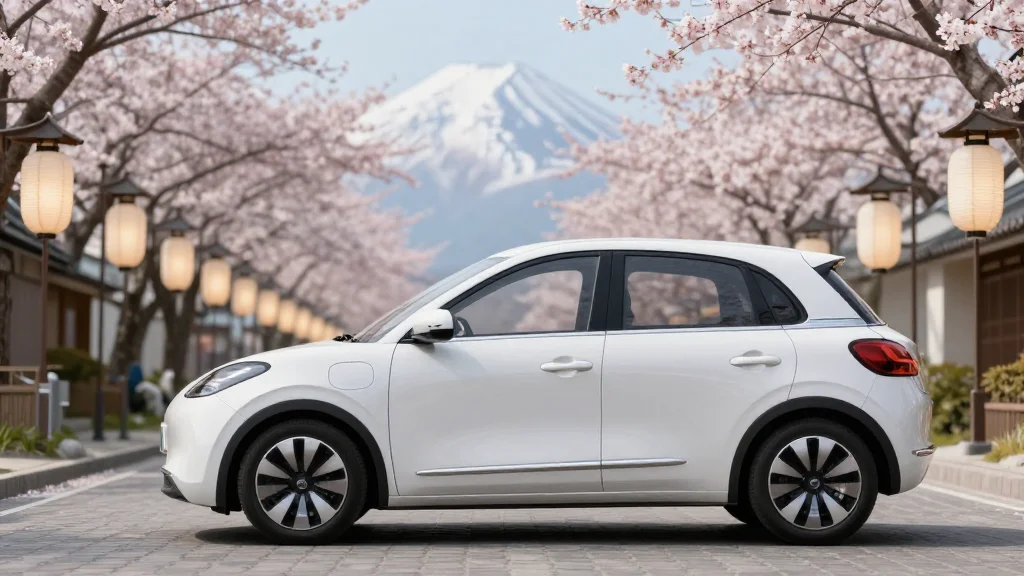
- •First model, EMTA #01, fits Japan’s 3.4 m length and 1.48 m width kei‑car limits
- •BYD’s competing Racco priced at ¥2.5 million (~$15,670)
- •Chery exported 177,573 vehicles in April 2026, surpassing BYD’s 135,098
Pulse Analysis
Chery’s entry into Japan via a retail‑focused joint venture reflects a pragmatic shift from outright plant acquisitions to asset‑light collaborations. This approach mitigates the financial exposure of building a domestic factory while still granting access to critical distribution channels. Historically, foreign automakers have struggled to gain traction in Japan’s kei‑car market because of entrenched consumer preferences and strict size regulations. By leveraging Autobacs’ nationwide dealer network, Chery can reach end‑users directly, a tactic that mirrors successful European‑Asian partnerships in the premium segment.
The competitive pressure from BYD adds urgency. BYD’s Racco, priced competitively, will test EMTA’s value proposition on both price and technology. Chery’s advantage lies in its proven EV platforms and the ability to source batteries from Gotion, a partner with a solid track record in high‑energy density cells. However, success will depend on how well the joint venture can translate Chinese engineering into a product that feels authentically Japanese—a challenge highlighted by the Japanese‑led design team and the emphasis on safety standards comparable to larger vehicles.
Looking forward, the EMTA initiative could serve as a blueprint for other Chinese manufacturers eyeing mature markets with strict regulatory frameworks. If the 2027 launch meets sales expectations, it may unlock incentives for local production after 2030, further embedding Chinese EV technology in Japan’s automotive ecosystem. This could accelerate the overall shift toward electrified small‑car mobility in Asia, reshaping market share dynamics and influencing policy decisions around urban emissions and vehicle taxation.
Chery Teams with Autobacs to Launch Electric Kei‑Car in Japan by 2027
Comments
Want to join the conversation?
Loading comments...