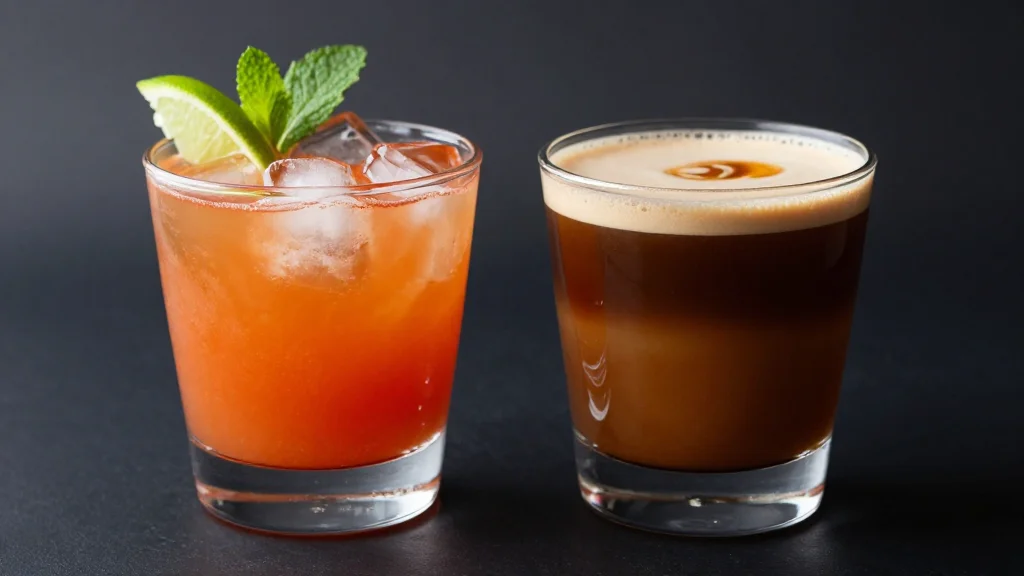
McDonald’s Rolls Out Premium ‘Dirty Soda’ and Refresher Line to Revive Afternoon Sales

Companies Mentioned


Why It Matters
The beverage launch signals a strategic pivot for McDonald’s, moving beyond its core sandwich and burger business to capture higher‑margin, trend‑driven categories. By creating a dedicated beverage specialist role and pairing the drinks with limited‑edition merchandise, the chain is testing a new revenue engine that could reshape fast‑food economics. Success would validate the notion that mass‑market quick‑service brands can compete with specialty coffee and soda chains on product innovation, potentially prompting a wave of similar investments across the industry. For marketers, the rollout offers a case study in leveraging visual appeal, social‑media‑ready packaging, and cross‑category collaborations to drive foot traffic. It also underscores the importance of aligning product development with operational feasibility—McDonald’s learned from its earlier CosMc’s experiment that complexity can hinder scalability. The current approach balances novelty with the operational simplicity needed to roll out across thousands of locations.
Key Takeaways
- •May 6 launch of six premium drinks (3 refreshers, 3 crafted sodas) at 14,000 U.S. McDonald’s restaurants
- •New "beverage specialist" role created to focus on drink preparation and visual presentation
- •CEO Chris Kempczinski cites the $100 billion beverage category as a high‑margin growth opportunity
- •Limited‑edition beaded drink carriers and $10 Arch Cards bundled with the launch
- •Follow‑up energy‑drink lineup, including a Red Bull‑style offering, planned for August
Pulse Analysis
McDonald’s beverage push is a textbook example of brand revitalization through category expansion. Historically, quick‑service restaurants have relied on low‑margin fountain drinks to pad ticket size; the shift to premium, handcrafted beverages reflects a broader industry migration toward experience‑driven consumption. By pricing the new drinks only modestly above standard sodas, McDonald’s aims to capture incremental spend without alienating price‑sensitive customers.
The operational gamble lies in scaling a product that traditionally requires more skilled labor and longer preparation times. The introduction of a dedicated beverage specialist role mitigates this risk, but it also adds a layer of labor cost that must be offset by higher margins. Early adopters will likely be locations with strong afternoon traffic and a youthful demographic that values Instagrammable products. If the rollout proves profitable, we can expect competitors to accelerate their own premium beverage programs, potentially compressing margins across the sector.
From a marketing perspective, the campaign leverages multiple levers: product differentiation (fruit‑infused refreshers, "dirty" sodas), visual storytelling (bright colors, cold foam), and limited‑edition merchandise. The partnership with designer Susan Alexandra creates a collectible element that extends brand engagement beyond the restaurant visit. This multi‑touch approach could become a template for other CMO teams seeking to rejuvenate legacy brands in saturated markets, emphasizing that product innovation must be paired with experiential and cultural relevance to drive measurable sales uplift.
McDonald’s Rolls Out Premium ‘Dirty Soda’ and Refresher Line to Revive Afternoon Sales
Comments
Want to join the conversation?
Loading comments...