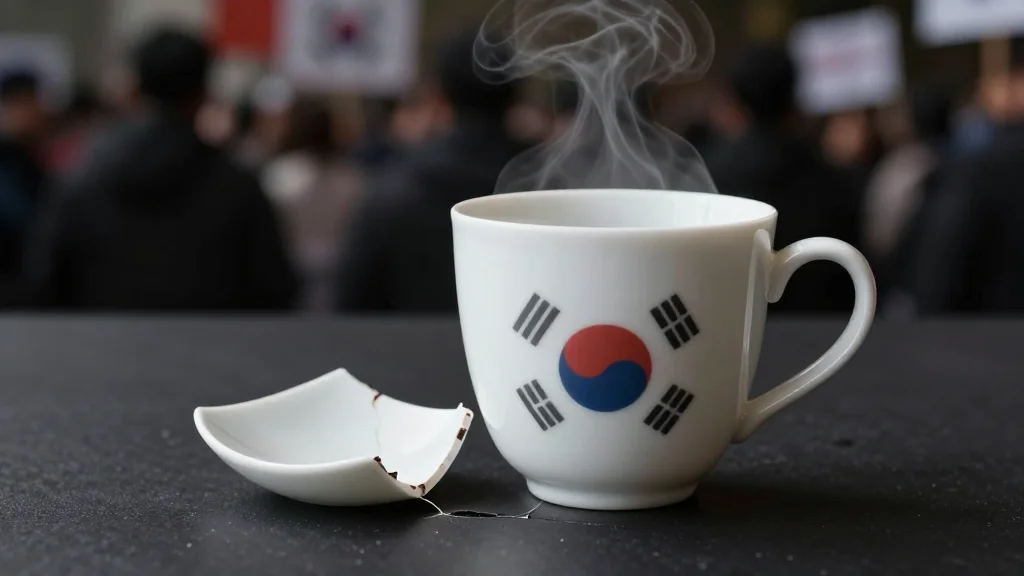
Starbucks’ “Tank Day” Promotion Triggers Nationwide Boycott and CEO Dismissal in South Korea

Companies Mentioned
Why It Matters
The Starbucks Korea debacle illustrates how cultural insensitivity can rapidly erode brand equity in a market that accounts for a significant share of global revenue—over 2,100 stores and a $260 million prepaid balance. For CMOs, the case underscores the necessity of integrating historical and sociopolitical risk assessments into campaign planning, especially in regions with heightened collective memory. It also highlights the speed at which digital outrage can translate into tangible sales declines, prompting a re‑evaluation of crisis‑response playbooks. Beyond Starbucks, the incident sends a warning to all multinational marketers: overlooking local historical context is no longer a tolerable gamble. Companies must embed culturally fluent teams, adopt rigorous calendar checks, and ensure AI‑generated content undergoes human review. Failure to do so can trigger regulatory sanctions, criminal investigations, and long‑term brand damage that outweigh any short‑term promotional gains.
Key Takeaways
- •Starbucks Korea launched "Tank Day" on May 18, 2026, the anniversary of the Gwangju Uprising.
- •Consumer boycott led to a 26% drop in card‑payment volume at Starbucks stores within a week.
- •CEO Son Jeong‑hyun was dismissed within 48 hours; chairman Chung Yong‑jin issued televised apologies.
- •Prepaid card balances of roughly 400 billion won ($260 million) faced refund demands.
- •South Korean ministries suspended partnerships; both Son and Chung are now criminal suspects.
Pulse Analysis
The fallout from Starbucks’ "Tank Day" promotion is a textbook case of cultural myopia colliding with a hyper‑connected consumer base. Historically, global brands have stumbled over local sensitivities—think of Dolce & Gabbana’s China ad debacle in 2018—but the South Korean episode is distinct in its speed and scale. Within hours, social media amplified the misstep, translating sentiment into a measurable 26% dip in card spend, a figure that dwarfs typical post‑campaign volatility.
From a strategic perspective, the incident forces CMOs to rethink the balance between global brand consistency and localized relevance. AI‑driven copy generation, as revealed by the campaign’s use of an AI tool for the "thwack on the desk" slogan, adds another layer of risk; without robust human oversight, algorithmic suggestions can inadvertently resurrect historical traumas. Companies will likely invest in hybrid approval models that combine AI efficiency with cultural‑expert sign‑off, a shift that could reshape agency‑client dynamics.
Finally, the regulatory response—suspension of government ties and criminal investigations—signals that cultural offenses are moving from reputational to legal domains. In markets where historical events are woven into national identity, missteps can trigger not just consumer boycotts but state‑level sanctions. CMOs must therefore embed legal risk assessments into creative pipelines, ensuring that brand storytelling respects local narratives while still achieving global objectives. The Starbucks case will be dissected in business schools for years as a cautionary tale of how a single word can jeopardize a multi‑billion‑dollar market.
Starbucks’ “Tank Day” Promotion Triggers Nationwide Boycott and CEO Dismissal in South Korea
Comments
Want to join the conversation?
Loading comments...