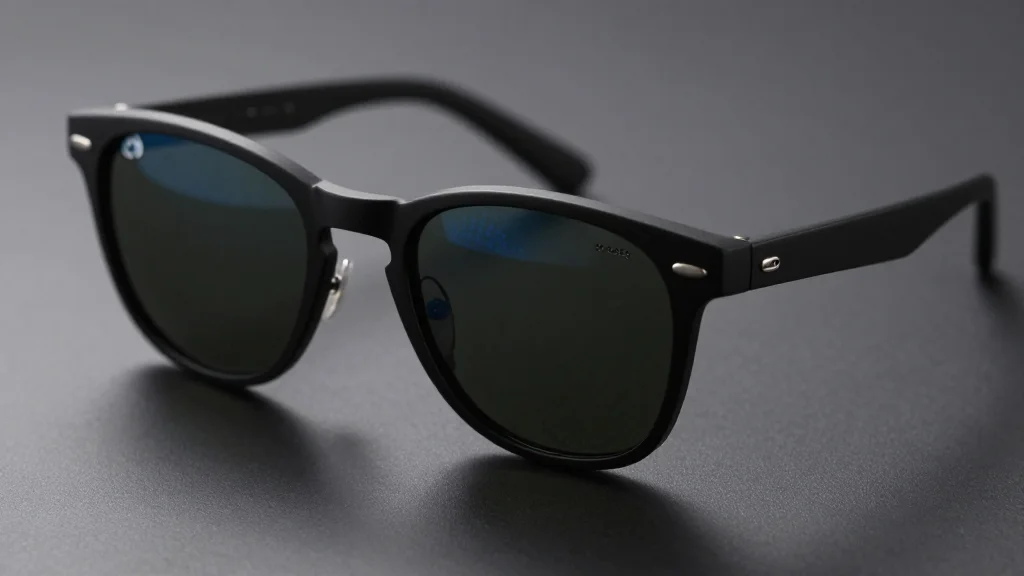
I Feel So Sorry for My A.I. Sunglasses
Companies Mentioned

Meta
META

Ray‑Ban
Why It Matters
The launch spotlights the convergence of wearable tech and generative AI, forcing regulators, advertisers and consumers to confront new privacy and usability challenges in everyday accessories.
Key Takeaways
- •Meta's AI sunglasses embed cameras, microphones, and speakers in Ray‑Ban frames
- •Voice assistant offers celebrity voices, including Kristen Bell and Awkwafina
- •Devices raise privacy concerns by constantly recording audio and video
- •Consumer reception uncertain; novelty may outpace practical utility
- •Pricing expected near $300‑$500, competing with existing wearables
Pulse Analysis
Meta’s entry into the smart‑eyewear market marks a significant escalation in the race to embed generative AI into everyday accessories. By integrating high‑resolution cameras, five‑mic arrays and AI‑driven voice assistants into familiar Ray‑Ban and Oakley designs, the company aims to transform a simple fashion item into a constant, context‑aware companion. The novelty of celebrity‑voice personas adds a playful layer, but the core value proposition hinges on accurate real‑time perception—something early reviewers, including The New York Times Magazine, found lacking. Misidentifications, such as mistaking a cardinal for empty sky, underscore the technology’s infancy and raise questions about its readiness for mass adoption.
Privacy concerns dominate the conversation around Meta’s AI glasses. With microphones and cameras always active, the devices function as a “sting operation” on the wearer’s environment, feeding data to cloud‑based AI models that can infer personal habits, locations and even emotional states. This continuous surveillance model clashes with growing consumer wariness after high‑profile data scandals, prompting calls for stricter oversight and transparent data‑handling policies. Industry analysts predict that regulatory scrutiny could shape feature sets, limiting on‑device processing or mandating clear opt‑out mechanisms, thereby influencing the product’s market trajectory.
From a business perspective, the glasses are priced in the $300‑$500 range, positioning them against premium wearables like Apple Vision Pro and dedicated AR headsets. While the price point may attract early adopters and tech enthusiasts, broader consumer uptake will depend on demonstrable utility beyond novelty. If Meta can refine the AI’s accuracy, ensure robust privacy safeguards, and integrate seamless services—such as navigation, translation, or enterprise workflows—the glasses could become a cornerstone of the next wave of ambient computing. Until then, they remain a bold experiment that tests the limits of AI integration in personal fashion accessories.
I Feel So Sorry for My A.I. Sunglasses
Comments
Want to join the conversation?
Loading comments...